
Do-it-yourself (DIY) projects are rewarding for sustainable home improvement, innovation, convenience of timing, family participation, and cost-saving, but require strict safety measures to prevent injury, such as wearing goggles, gloves, masks, using tools correctly, ensuring proper ventilation, and keeping a tidy, well-lit workspace. Key precautions include turning off power for electrical work, using sturdy ladders, inspecting tools for damage, and knowing your limits to avoid accidents. Family participation in DIY projects as a collaborative process bonds the family, helps in children’s education, skilling, positive attitude, self-confidence, and development.
DIY SAFETY MEASURES
Common occupational injuries like cuts & crush injuries from machinery accidents and sharp tools that are general in nature are avoidable with safety measures. Occupational injuries and safety measures specific to each profession are not of general interest and are not discussed here.
•Personal Protective Equipment (PPE): Wear safety glasses/face shields, dust/fume masks or respirators, sturdy shoes, and gloves (but not when using rotating blades). Gloves should not give a false sense of security, causing operators to place their fingers closer to dangerous areas. A glove caught by a spinning blade can pull the operator’s hand and arm into the machine, turning a potential minor cut into an amputation or “degloving” injury. Instead of gloves, use push sticks, push blocks, or proper guards to keep your hands at a safe distance.
•Avoid loose clothing, jewellery, or dangling hair that can get caught in moving parts.
•Maintain a clean, well-lit area, free of debris and cables to prevent trips and falls.
• Use clamps or a vise to hold the material, keeping your hands free, especially when using saws, hammers, grinders, and drills.
•Use proper lifting techniques (do not bend your spine; instead, bend your hips and knees) or use a pulley or get help for heavy items. Operation theatre (OT) patient cranes/lifts/hoists are designed to safely lift, transfer, and position obese patients. Similar small mobile devices are available for use at home and the office.
•Concentrate on the task to avoid injuries with power tools. Never leave power tools unattended, and keep them away from children. Avoid vibration stress, strain, and fatigue from prolonged use, and burns from overheating tools or friction.
•Inspect tools for damage (frayed cords, rust) before use. Keep tools sharp, as dull tools are more dangerous.
•Do not use electric tools in damp environments unless they are rated for it.
•Power safety: Unplug power tools when changing accessories or not in use. Use GFCI (ground fault circuit interrupter) protection for the power supply. Always turn off the power, or circuit breaker, or remove the fuse before starting electric repairs.
•Hazardous materials & ventilation: Ensure good airflow when painting, staining, or using chemicals to avoid inhaling fumes.
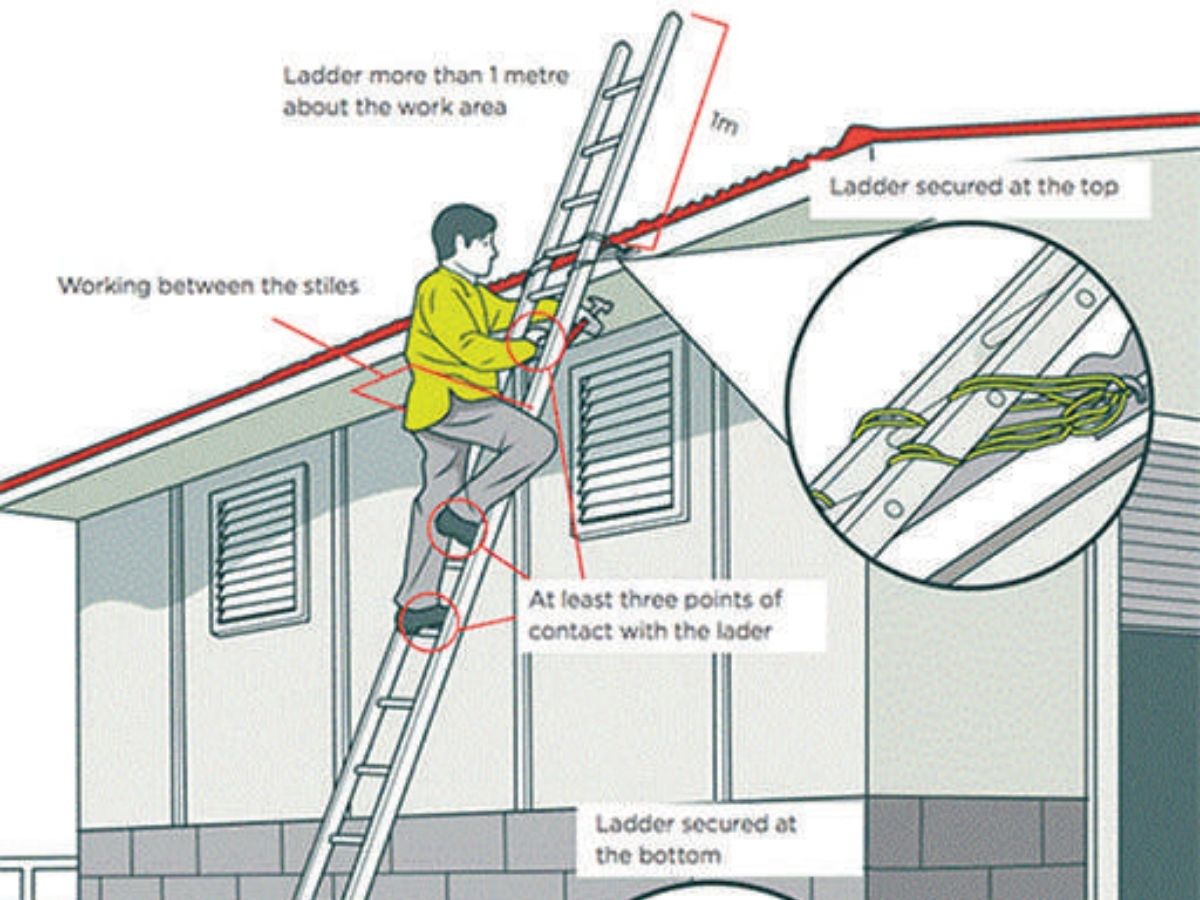
•Preventing falls from height: These involve loss of balance on an unstable ladder or ladder-like support (Step Stools or Chairs), or elevated structure (Attics, tree houses, roof gutters, balconies, and terraces) with slippery surfaces, or lacking proper safety supports or railings. Position ladders on firm ground, following a 4:1 ratio (1 foot away from the wall for every 4 feet of height), and never stand on the top two rungs. Avoid reaching too far sideways on a ladder.
•Fire safety: Keep a fire extinguisher and a well-stocked first-aid kit nearby. Keep away inflammable materials from flames and sparks.
•Know your limits, do not attempt tasks beyond your skill level or in a hurry, or when assistance is required but not available. When unsure of safe use of tools or lacking proper tools or safety equipment, call a professional.
POISONING BY ACCIDENTAL INGESTION OF CHEMICALS
Commonly found dangerous chemicals in homes and workplaces include caustic drain cleaners, ammonia-based glass cleaners, chlorine bleach, pesticides, and hydrocarbons like gasoline or paint thinner.
These substances can cause severe skin burns, respiratory distress, or fatal poisoning if ingested.
Handle them with rubber gloves and eye protection in a well-ventilated area. Never mix cleaning products (especially bleach with ammonia or acids). Store all chemicals and medicines in original, labelled containers, in a locked cabinet out of reach of children, in a well-ventilated area. If a chemical splash occurs, rinse with water for at least 15 minutes. If ingestion is suspected, seek immediate medical help.
SAFE HOUSING BY DESIGN
The Gangaram seven-story hotel and shopping complex collapsed in 1983, in Bengaluru, due to gross under-design and poor supervision of construction, killing 123 people and injuring over 120. On October 3rd, 2018, a specially trained team of six firefighters lost their lives while trying to save a drowning teenager fishing at a low-head dam in Malaysia. Its sloping design, low height, and water flow velocity created a vortex that entangled the rescuers. Hence, all building and public infrastructure builders need to ensure sustainable, healthy, safe design (to prevent loss of life, injury, and crime), secure construction methods, good quality, healthy materials, and proper maintenance.
Smoke detectors, carbon monoxide detectors, and remote-monitoring security systems are desirable. Unsafe house designs ignore structural integrity (inadequate foundations and poor construction), or practical safety (building on unstable, under-supported soil), environmental factors (using curved glass that acts as magnifying glasses, creating hazardous heat by “death ray” effect), or installing impractical features like steep, railing-free ‘floating’ stairs, or disabled-unfriendly split-level flooring, lack of fire or emergency exit, poor air/water sealing, inadequate ventilation and drainage. Natural disaster-prone areas need specific design and construction techniques to withstand heatwaves, blizzards, earthquakes, floods, hurricanes, cyclones, and avoid areas prone to wildfires, tsunamis, subsidence, landslides, avalanches, and volcanic eruptions.
GARDENING – HORTICULTURE – AGRICULTURE
Gardening for pleasure, aesthetics, or food in a home setting acts as a stress buster for plant lovers. Horticulture is the small-scale, often manual cultivation of high-value plants like fruits, vegetables, and ornamental plants. Farming (agriculture) involves large-scale, often mechanized cultivation of commercial crops (grains, fibre, etc) and livestock. All these physical activities are beneficial, with common general injuries and safety requirements. Tractor, harvester, grain silo, livestock, etc., related injuries are specific to agriculture, not discussed here.
To avoid:
•Back strain and musculoskeletal Injuries caused by bending, lifting, and repetitive motions (“weeder’s wrist,” and “pruner’s neck”), bend at the knees and ankles, not the back; use long-handled tools to avoid bending; use a wheelbarrow for heavy items; rotate tasks every 15 minutes.
•Cuts and lacerations from sharp tools (secateurs, shears, and knives) or debris, keep tools sharpened, use safety locks on pruners, and wear protective gloves.
• Slips, trips, and falls due to uneven terrain, hoses, or ladder use, clear work areas, keep paths clear to prevent trips, fence off hazardous areas like irrigation ponds and deep pits, ensure proper lighting, and use ladders on solid, level ground.
•Thorn, splinter punctures, and skin infections, wear durable gloves (leather for thorny plants) and wash hands immediately after work.
• Eye injuries caused by flying debris from lawn mowers or walking into bamboo canes like projections, wear safety glasses or goggles, especially when using power tools, and cover the ends of plant stakes.
•Heat-related illnesses, such as sunburn, dehydration, and heatstroke, wear a wide-brimmed hat and cover your body or apply sunscreen to exposed skin, and take frequent water breaks.
•Allergic reactions, contact with plants like poison ivy or sap from euphorbia, wear long sleeves and pants, and learn to identify hazardous plants.
•Lock up agrochemicals and use protective clothing when handling them.
•Injuries from power tools and equipment require the use of closed-toe security boots (gum boots in flooded areas), gloves, and, when needed, ear and eye protection. Ensure all machinery has guards in place and never remove safety features. Regularly check tools and machinery for damage. Watch for hazards like power lines and uneven ground.
SAFE HANDLING OF FIREWORKS
Fireworks contain numerous toxic metals, including barium, strontium, copper, aluminium, and lead, used for their colours or as contaminants. When ignited, these metals are released into the air as fine particles that can be inhaled, leading to respiratory and other health issues, and can also contaminate soil and water.
The loud explosions can damage eardrums, particularly in those with sensitive hearing, and can cause temporary or permanent hearing loss. Safe handling of fireworks requires lighting them one at a time outdoors in a clear area, using eye protection, a mask, and keeping a water bucket nearby. Position yourself upwind of the fireworks to avoid smoke. Use a long-handled lighter or torch to light fireworks. Never hold lit fireworks, or allow young children to use them, or attempt to relight “duds”. Sparklers can reach more than 1000 C, hot enough to melt metal, and should not be used by young children. Never use fireworks while under the influence of alcohol or drugs.
Properly dispose of used fireworks by soaking both spent and unused fireworks in a bucket of water for several hours. It is safer to watch public firework displays. Injuries are preventable with awareness, safety measures, protective equipment (Helmets, gloves, goggles, ear protection, etc), stress management, proper training, and ergonomics.
Dr. P.S.Venkatesh Rao is a Consultant Surgeon, Former Faculty CMC (Vellore), AIIMS (New Delhi), and a polymath in Bengaluru, drpsvrao.com




