
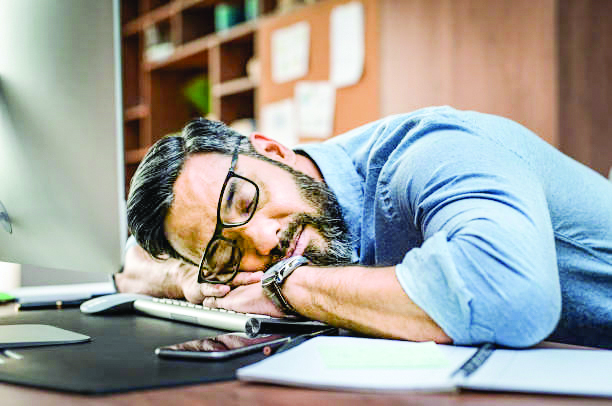
In this globalised, networked, hypermobile, 24×7 world we live in, many people work across time zones, or in “Clopening” shifts and worse in 32 hour shifts with 16 hour breaks, as this author and colleagues did for 3 years as a trainee at CMC Hospital, Vellore and again for 3 years as a junior surgeon at AIIMS, New Delhi. “Clopening” shift is a closing shift; eg, 5:00 p.m. to 11:30 p.m., followed 5 hours later by an opening shift, 4:30 a.m. to 10:30 a.m. in cafes, hotels, shops, gas stations, etc.
In emergencies, wars, and natural or manmade disasters, many remain on duty continuously or are forced to stay active to survive or help others survive. Appointed provisional incharge and coordinator of emergency services at AIIMS, New Delhi, during the 1984 riots after PM Indira Gandhi’s assassination, this author was stuck on duty 3 days and nights in a row, eating and nodding off whenever possible, in the emergency department amid hundreds of victims.
In Japan, the practice of napping at work is called inemuri (“present while sleeping”), considered a sign of dedication to the job, having worked to the point of complete exhaustion, and may be excusable. Understaffing, cost-cutting, and excessive workloads in critical occupations can have deadly consequences for personal safety and the safety of others. A sleep deprived and exhausted driver, pilot, air traffic controller, crane, earthmover and heavy machinery operator, explosives or inflammable materials handler, sentry at prisons, defence, nuclear or other high risk facilities, emergency duty, disaster management and rescue operations person, can lead to deaths due to inability to concentrate, or dozing on the job.
CIRCADIAN RHYTHM AND MELATONIN:
The recommended number of hours of sleep varies with age. Adults generally need 7-9 hours of sleep per night. Phases of a typical 90-minute sleep cycle, dreams, nightmares, insufficient sleep caused hormonal imbalances, yawning, Microsleep, siesta, sleep disorders, and requirements for good sleep were explained in an earlier article on April 20th, 2025. Circadian rhythm is an internal biological clock that regulates the sleepwake cycle and is influenced by light, darkness, and social cues. Melatonin (“sleep hormone”) is released in response to darkness and signals the brain to prepare for sleep. Disturbed sleep leads to lower melatonin and elevated cortisol (“stress hormone”) levels, making it harder to fall asleep and stay asleep.
The many causes of disturbed sleep, including stress, exposure to light before bed, lifestyle factors, shift work, jet lag, caffeine, alcohol, and substance abuse, were detailed in the earlier article. Circadian rhythm disruption can contribute to sleepiness at work, fatigue, difficulty concentrating, reduced productivity, mood swings, irritability, anxiety, depression, and an increased risk of metabolic disorders such as obesity, diabetes, and cardiovascular disease. It has also been associated with impaired immune function, increased risk of certain cancers, and even neurodegenerative diseases.
JET LAG: Jet lag is a mismatch between your body’s internal clock (circadian rhythm) and the external day/night timings after rapid travel across time zones. To overcome jet lag, it takes at least 2 to 3 days, and sometimes up to 2 weeks, for the body clock to adjust to local time. Traveling east (losing time) leads to more severe and prolonged jet lag than the west (gaining time). An intercontinental flight for a conference or business meeting and a return flight in 3 to 5 days, as this author has taken many times, causes one to be disoriented, asleep in the day, and sleepless at night. Only some pilots can manage to adapt to such frequent flights across multiple time zones, and my gratitude to them for keeping flights safe.
A pilot’s maximum flight duty period (FDP) in India is generally 8 hours, with a maximum of 2 landings. However, this can be extended under specific conditions, but not beyond 12 hours. A pilot cannot fly more than 125 hours in any 30 consecutive days, and more than 1000 total flight hours per year. The duty period includes flight time and other activities like briefings and aircraft preparation, and can be significantly longer than flight time alone. Astronauts experience “space lag” on returning to Earth, which can include vertigo, nausea, and other symptoms of disrupted sleep patterns.
JET LAG WITHOUT FLYING:
A “Jet lag” like sleepwake cycle disruption can happen even without flying, by irregular or rotating shifts, night shifts with short turnaround times, long commute times, working across time zones, or significantly altering daily schedules, especially in physically or cognitively demanding jobs and repetitive, boring jobs. Jet lag and sleep deficit caused worktime fatigue, difficulty in concentrating and staying alert in critical jobs listed earlier can lead to accidents and serious injuries, and the death of the sleep-deprived person and those he or she is responsible for.
Nearly 50% of all fatal car accidents occur at night, especially in the hours before sunrise. In nations near the Arctic and Antarctic Circles, where the sun does not set in summer and does not rise in winter, in submarines, underground facilities and deep mines where there is no sunlight, in the International Space Station (ISS) that orbits the Earth once about 1.5 hours (90 minutes) and experiences 16 sunrises and sunsets every Earth day, sleep-wake cycle needs to be regulated with artificial lights and darkness.
This author, on summer trips to Sweden and Norway, was able to sleep only after darkening his room. Lack of acclimatization at high altitude can significantly disrupt sleep. Working from home or anywhere across multiple time zones, frequent changes in work hours, or even a change to or from daylight savings time can cause a form of jet lag. The critical period of sleep in the body’s internal clock is from midnight to 4 am, and being woken up for an emergency call during these hours can significantly disrupt sleep.
MANAGING SLEEP WHEN TRAVELLING OR WORKING RED EYE SCHEDULES:
Pilots mitigate jet lag by adjusting sleep-wake schedules, seeking sunlight or bright light, staying hydrated, managing caffeine intake, being physically active, exercising, and using relaxation techniques to get quality sleep during layovers. Red-eye flights and long work schedules are popular for their potential to save time, offer 24×7 services, and reduce staffing needs and accommodation for multiple shifts; however, cost-cutting should not be at the cost of safety.
Passengers and off-duty pilots on long flights can utilize eye masks, earplugs, noise-cancelling headphones, and comfortable clothing to optimize sleep on the flight, drink water to stay hydrated, plan for potential delays, and factor in extra time for rest upon arrival. Adjusting sleep schedule before and after a long flight and medication with melatonin sleep supplement pills can help. Taking short breaks to stretch, walk around, or engage in light exercise can help combat fatigue.
Some companies have adopted the concept of workplace “power naps” as a way to promote employee well-being and improve productivity. The “military sleep method” developed to help US Navy pilots in World War II is similar to meditation, involving systematically relaxing all parts of the body, deep, slow breathing, and clearing the mind to induce sleep quickly (in 2 to 10 minutes) and efficiently, anywhere and at any time when given a chance. Ensuring adequate sleep, establishing a consistent sleep schedule, managing stress, heat, and high humidity, and creating a relaxing bedtime routine, avoiding caffeine, alcohol, and medications that cause drowsiness, can help combat sleepiness at work.
Dr. P.S.Venkatesh Rao is a Consultant Endocrine, Breast & Laparoscopic Surgeon, and a polymath, in Bengaluru.




