
When a social arrangement is given the name of religion, it becomes nearly impossible to dismantle. You can legislate against it, protest against it, write constitutions that explicitly forbid it, and it will survive, because people will obey the law in the open and worship the belief in private. This is the secret of caste’s longevity in India, and no regulation has yet found an answer to it.
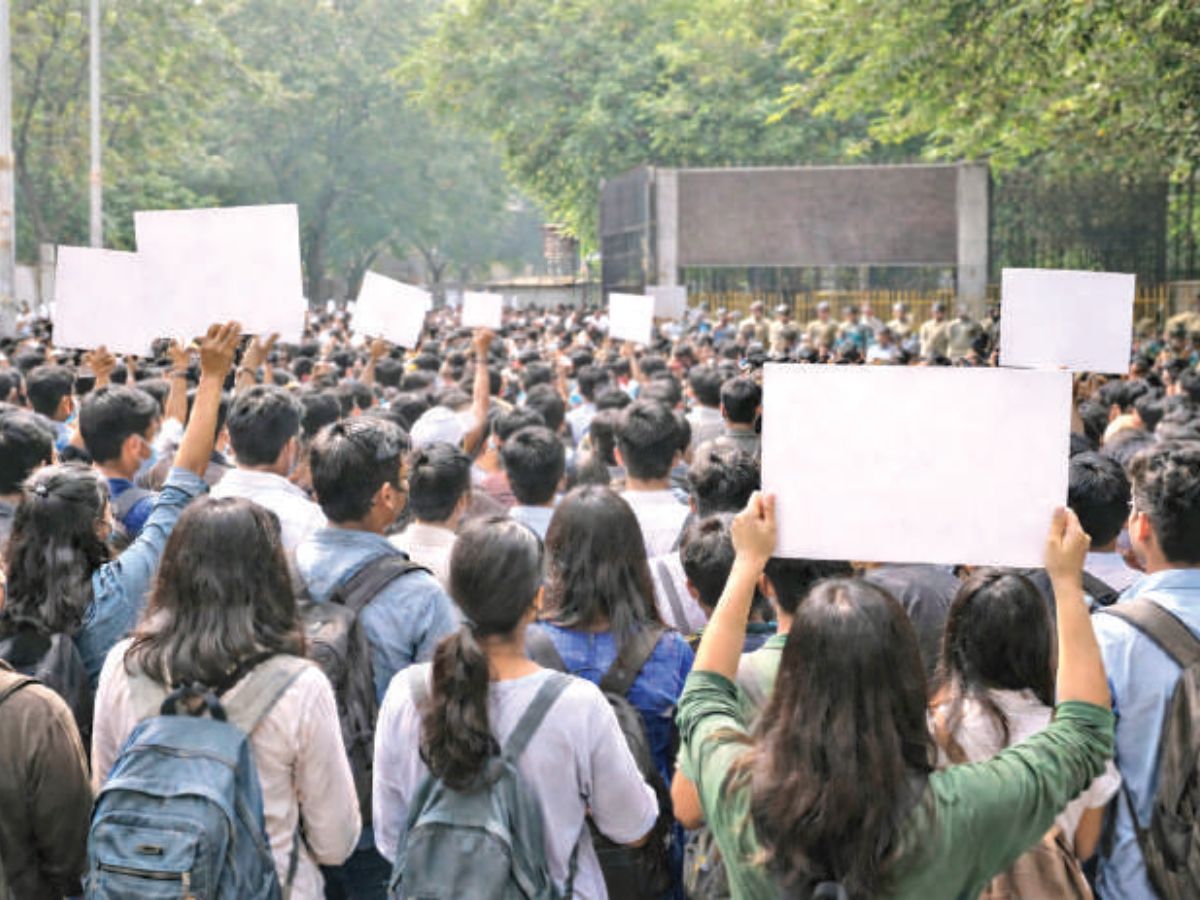
Two mothers filed a petition before the Supreme Court in 2019. One had lost her son at a university in Hyderabad; the other had lost her daughter at a hospital in Mumbai. Both deaths occurred inside institutions meant to educate and equalise. The petition asked for stronger mechanisms against caste-based discrimination on campuses. Six years later, the University Grants Commission notified the Promotion of Equity in Higher Education Institutions Regulations, 2026, replacing the largely ineffective 2012 advisory framework with enforceable provisions. Protests followed swiftly. Within weeks, the Supreme Court stayed the regulations, calling them prima facie vague, and asking: “Whatever we have gained in terms of achieving a casteless society, are we now going backwards?” The question echoed across campuses, television studios, and political platforms.
A fair question, but it does not go nearly deep enough. The pattern barely needs narration: a policy arrives, positions harden, noise fills the air, and in a month or two the news cycle carries us elsewhere. Then another trigger comes, another eruption, and the performance repeats. We debate each explosion with great energy, yet we never examine what keeps producing the explosions. The UGC regulations are only a spark. The explosive charge beneath them is centuries old, and no commission has yet dared to reach it.
The Soil Beneath the Rangoli
An example I frequently give is that our constitutional principles resemble rangoli patterns on the ground: beautiful in design, but unable to change the soil underneath. That soil pervades everything. Around ninety percent of Indian marriages remain within caste. Lineage maps out towns and villages. Trades favour one community over another. When voting time comes, we rarely cast our vote; we vote our caste. Between 2019 and 2024, caste discrimination complaints reported to the UGC rose 118 per cent. Between 2019 and 2023, more than half of the thirty-one students who died by suicide at the IITs belonged to SC, ST, OBC, or minority communities. These are not statistics to be cited and filed away; they are the exposed nerves of a civilisation that formally abolished hierarchy but never touched the belief system that sanctified it.
Why has no reform reached the root? Because caste was not sold to India as a social arrangement. It was sold as dharma. And dharma is shashvat, eternal, the one thing you do not question. The moment caste wrapped itself in that sacred cloth, it became untouchable in a way no Dalit ever was: untouchable by law, untouchable by reform, untouchable by reason. What is worshipped will not be questioned, and what is not questioned will not change.
This is the gunpowder. Not the UGC notification, not the street protests, not the Supreme Court’s stay order. The explosive material is something far more intimate: the unexamined conviction, lodged in the deepest chamber of the collective psyche, that birth determines worth and that this determination carries divine sanction. Every regulation we draft is a new matchstick. The barrel of powder has been sitting there for centuries.
The Inversion
India’s foundational scriptures contain the strongest possible arguments against caste. The Upanishads do not merely reject birthbased differences; they reject body-identification itself. If you are not the body, how can the body’s lineage define you? The Vajrasuchika Upanishad directly declares caste to be unreal. The Bhagavad Gita assigns varna to guna and karma, to individual tendencies and individual choices, never to the accident of birth. The Purusha Sukta of the Rigveda, so often weaponised as caste’s scriptural origin, is a metaphor for the unity of all work within one living whole; it speaks of emergence from a single Being, not of hierarchy among the emerged.
Yet these insights remained confined to a few meditative individuals, who composed sublime philosophy but chose not to carry it into the streets. While Vedantic realisation was being articulated at its height, the social order continued to harden. Over centuries, the Dharmasutras and later the Dharmashastras codified “dharma” as social convention rather than inner truth; the Manusmriti reread spiritual metaphor as social law, asserting Brahmin superiority, restricting access to the Vedas, and prescribing punishments for those who stepped outside their assigned place. The Puranas cemented the distortion by declaring the social order divinely ordained, so that rebelling against caste came to mean rebelling against God himself. What Vedantic philosophy had dissolved, mythology sanctified. The sage spoke of oneness and dissolution; the priest enforced division. And the priest won, not because his argument was stronger, but because his audience was larger.
Resistance arose repeatedly. The Buddha rejected Brahminical authority. Kabir Saheb mocked the priest; Sant Ravidas declared the divine cares nothing for caste; and Guru Nanak challenged hierarchy head-on. Over two and a half centuries of modern reform, from Raja Ram Mohan Roy through Dr. Ambedkar and beyond, have chipped at the edifice, and still it stands. This should astonish us far more than it does. The rishis and philosophers of this very tradition condemned caste in the most unambiguous terms available to human language, and the ordinary Hindu continues to believe in it, practise it, transmit it to his children with the morning prayers. How did we accept that you can sort Homo sapiens by birth, like goods in a warehouse, and call the sorting sacred? The question is so basic it should embarrass us, and yet it rarely even gets asked.
What We Keep Missing
Our media, understandably, follows the smoke. When there is an explosion, cameras arrive and voices rise, but those two or four days of agitation is a momentary excitement that produces no lasting reform. The explosion subsides, the cycle moves on, and the gunpowder sits undisturbed. If not these regulations, then another policy, another campus incident, another round of accusation and counteraccusation. The friction is constant; only its occasions change.
And there is a cost to these dividing lines that no policy debate captures. Caste does not merely assign rank; it destroys the simple human capacity to see another person without a filter. Once the filter is installed; and it is often installed right from childhood, subtly; every face becomes a surname, every surname a judgement, every judgement a wall. You cannot legislate that wall away because the person standing behind it does not know he built it. He thinks the wall was always there. He thinks it is dharma. Meanwhile, real wounds go unnoticed because every camp is too busy fortifying its own walls to see what is bleeding on the other side. The atmosphere itself is the disease; the regulation is at best a painkiller.
People constitute systems. As long as people do not change from within, systemic change is rearrangement, not reform. You can mandate an equity committee, but you cannot mandate the dissolution of a belief that has become indistinguishable from identity. That belief does not live in the UGC’s jurisdiction. It lives where dharma and ego have been fused, and it will not yield to any force except honest understanding.
The Return
Sanatan Dharma was never meant to be a frozen inheritance. It was the dharma of shruti, of direct seeing; social order was to be a living outcome of individual realisation, not a cage hammered together from inherited convention. Over time, we stopped living by shruti and began living by smriti, by frozen law and fossilised social code, and mistook the fossil for the living thing. Much of what passes for Hindu practice today is drawn more from the Manusmriti and the Puranas than from the Upanishads. We invoke Vedic heritage while obeying hierarchies that arose after the Vedic period and in direct contradiction to its spirit.
The shruti texts do not merely fail to support caste; they condemn it. Once this fact reaches the common person as a living understanding rather than a scholarly footnote, the religious scaffolding begins to crack. But scripture alone has never been enough; for every truthful scripture we also need an equally truthful interpreter, and that interpretation must leave the library and enter the street, the school, the village square. The philosopher cannot remain in his cave; he must enter the din of public life and ensure that the light he has seen becomes the living light of the common person. Shruti must be accessible not as a Brahminical privilege but as a birthright of consciousness.
No interpretation of any scripture can be valid if it violates the Mahavakyas: “Aham Brahmasmi” and “Tat Tvam Asi.” If I am Brahman, and you are That, then on what basis does one body claim superiority over another? The Upanishadic view begins where hierarchy ends.
Legal and economic measures remain necessary. The UGC regulations, in some improved form, may well serve that effort. But policy without the cultural shift that disarms the deeper belief is a bandage on a fracture; it holds things together while the bone continues to grind. The real question before India is not which clause to draft or which provision to stay. It is whether we are willing to confront the false marriage of caste and religion that has outlasted every reformer, every constitution, and every commission. Until that confrontation happens, in our schools, our temples, our public discourse, and most urgently within the individual mind that still quietly believes birth settles everything, the explosions will keep coming. The triggers will change; the charge will remain. And we will keep pretending the problem is the spark.
Acharya Prashant is a teacher and author whose work centres on self-inquiry and its application to contemporary life.




