
Till now, Iceland, with a harsh, unique climate and geographical isolation, was the only country in the world that was completely free of mosquitoes. Three mosquitoes were found in the Kjos valley in October 2025. Scientists blamed rising temperatures due to climate change and increased travel for these arrivals. Mosquitoes are vectors for deadly diseases like malaria, dengue, chikungunya, Japanese encephalitis, Zika, yellow fever, West Nile virus fever, and filariasis. In 2023, there were an estimated 263 million malaria cases and 597,000 deaths globally. World Malaria Day on 25 April and National Dengue Day on May 16th in India highlight the need for public education, continued investment, and sustained political commitment for prevention and control measures, especially before the monsoon season. ‘Chikungunya’ means “to become contorted,” (due to severe joint pains) in the Kimakonde language in Tanzania and Mozambique.
MOSQUITO-BORNE DISEASES:
- Malaria is a potentially deadly parasitic disease transmitted by Anopheles mosquitoes. It presents with fever, chills, headache, muscle and joint pain, and fatigue in cycles. There may be nausea, vomiting, sweating, and abdominal pain. If you visit or live in a tropical region where malaria is common, do not ignore these symptoms as just another flu. Early diagnosis and treatment are essential.
- Dengue is a viral infection transmitted by Aedes mosquitoes that causes mild to incapacitating high fever, with severe headache, pain behind the eyes, rash, and muscle and joint pain. Most cases are mild, but a few can progress to dengue haemorrhagic fever, a medical emergency, and can lead to shock, internal bleeding, and even death if not treated promptly. In any similar fever, it is crucial to avoid aspirin and NSAIDs like until dengue is ruled out, due to the risk of bleeding.
- Chikungunya is a viral infection transmitted by Aedes mosquitoes that causes severe, debilitating joint pain along with fever and rash. It can affect multiple organs and systems, though it primarily causes joint pain. In rare cases, it can lead to complications in the brain (encephalitis, meningitis), heart (myocarditis), kidneys (nephritis), eyes (uveitis, retinitis), and systemic inflammation affecting the skin and nerves.
- Japanese encephalitis is a viral infection transmitted by Culex mosquitoes from infected pigs and wading birds. It affects the central nervous system, causing fever, headache, confusion, and in severe cases seizures, and can be fatal. It can be prevented with a vaccine. It is endemic in China, India, Vietnam, Nepal, and parts of Australia.
- Zika is a viral infection transmitted by Aedes mosquitoes that can cause serious birth defects if a pregnant woman gets infected. It presents with fever, rash, joint pain, headache, muscle pain, or conjunctivitis (red eyes). It is endemic in many parts of the Americas, Africa, Asia, and the Pacific Islands. As it can be sexually transmitted, it is recommended to use condoms and avoid unprotected intercourse for a specific period after traveling from an endemic area.
- West Nile fever is a viral infection. Humans, horses, and other mammals can be infected, but the virus is maintained in a cycle between birds and Culex mosquitoes. It leads to fever, headache, body aches, vomiting, diarrhoea, or rash. In severe illness, it can affect the central nervous system, present with neck stiffness or paralysis, and result in death. It is endemic in Africa, Europe, the Middle East, West and Central Asia, North America, and Australia, and found globally except for Antarctica.
- Yellow fever is a serious viral infection that causes jaundice and is primarily transmitted by the Aedes mosquitoes. It can be prevented with a vaccine. It is endemic in tropical regions of Africa and Central and South America. Travel to these regions requires vaccination.
- Filariasis is a parasitic infection that causes chronic swelling of the limbs and genitalia, known as elephantiasis. Different types of mosquitoes transmit different strains of the parasite. Filariasis affects over 120 million people in 80 countries and is a major social and economic problem. It is endemic in tropical and subtropical regions, particularly in parts of Africa, Asia, South America, the Caribbean, and Pacific islands. Within India, states like Bihar, Uttar Pradesh, Kerala, Andhra Pradesh, Tamil Nadu, and West Bengal have endemic areas.
AVOIDING MOSQUITO BITES:
The detection of a CO2 plume from a potential host activates resting mosquitoes and guides their initial upwind flight towards the victim. Larger individuals and pregnant women exhale more CO2 and attract more mosquitoes. Once a mosquito is within a meter of a potential host, it relies on skin odours, heat, and visual cues to pinpoint the landing spot. Human body odour is a complex mix of chemicals like lactic acid, ammonia, uric acid, and various carboxylic acids produced when the natural bacteria on our skin metabolize compounds in our sweat. These volatile compounds contribute to the “human scent cocktail” that attracts mosquitoes. Due to variations in personal odour, some people are “mosquito magnets” while others are less targeted. To avoid mosquito bites:
- Wear protective clothing to cover most of the body.
- Sleep in mosquito nets or a room with screened doors and windows, or under a fan, or in an air-conditioned room.
- Place fans on porches or patios, as the airflow makes it difficult for mosquitoes to fly and helps disperse the CO2 emanated in the breath or odours from the skin that attract mosquitoes.
- Apply insect repellent like DEET or picaridin-based products, essential oils like lavender, tea tree, citronella, lemon, eucalyptus, or neem to exposed skin, but avoid applying to cuts, irritated skin, or the face, and wash hands after use.
- Mosquito coils contain insecticides or aromatic substances. Essential oils in a diffuser, or burning camphor, are alternatives.
- Follow all mandated precautions if you use insecticides.
- Avoid fishponds when fogging shaded areas like dense bushes near your home.
- Plant basil, citronella, rosemary, or lavender around your home.
- Place mosquito traps strategically, in and around the perimeter of your property.
MOSQUITO ERADICATION:
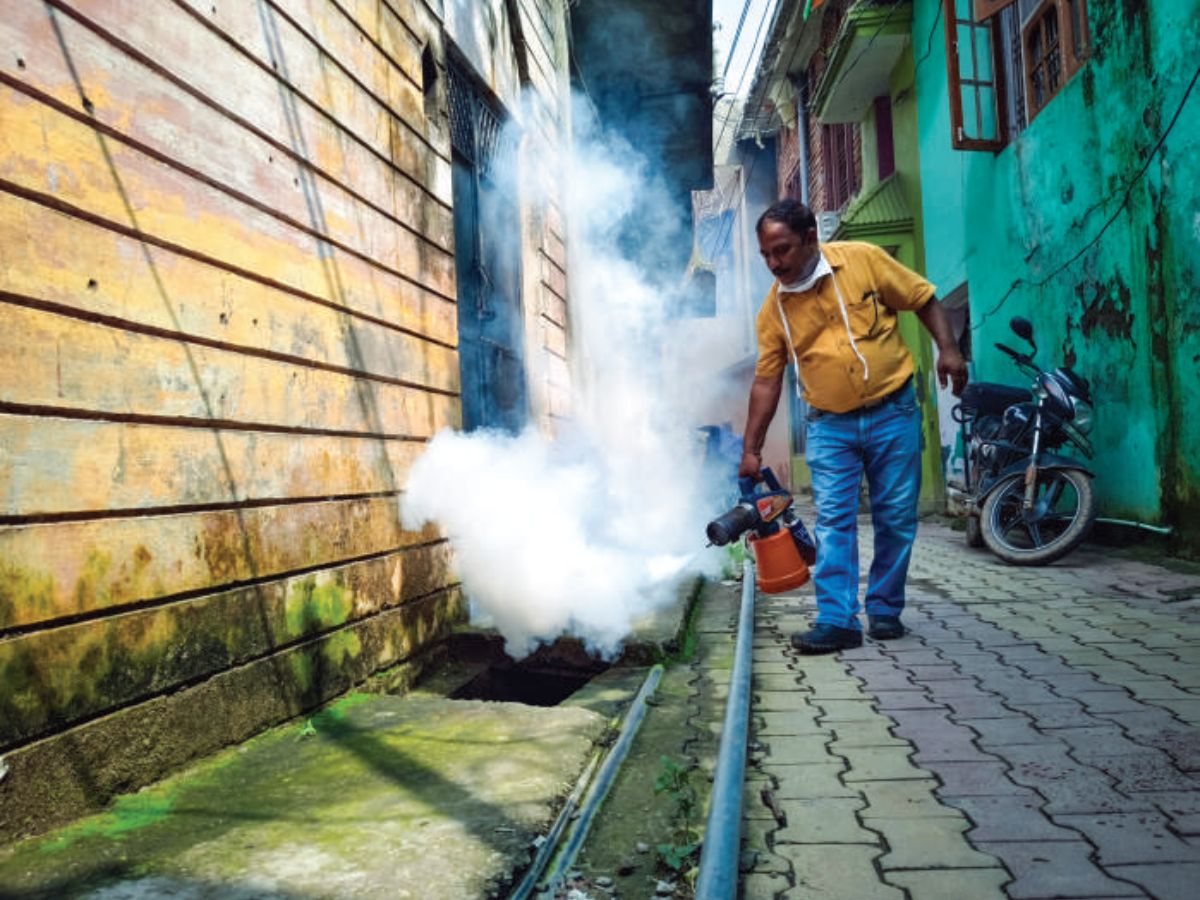
Adult mosquitoes can survive a few days without water, but need still water for egg-laying, larval, and pupal development. Some mosquito eggs can survive for months in a dry state and will hatch when exposed to water. Mosquito fogging uses a fine spray of insecticide, such as a synthetic pyrethroid, and provides relief for a few days to two weeks. It is done early in the evening, and considered safe for people and pets when done correctly by professionals, but can harm beneficial insects like pollinators.
Mechanical methods in use:
- Eliminate mosquito breeding sites by emptying all standing water and clearing open trash. Regularly empty items that collect water, such as plant saucers, pots, buckets, tires, blocked drains, and gutters. Keep dustbins covered.
- Use a pump or fountain to agitate water in bird baths and ponds, or keep it moving to deter mosquitoes from laying eggs.
- Regularly clean and treat swimming pools and other water features to prevent them from becoming breeding grounds.
Biological control agents in use:
- Release of fish (like guppies or koi), copepods (water fleas), or other mosquito larvae predators in breeding sites.
- Application of Bacillus thuringiensis israelensis (Bti), Bacillus sphaericus, fungal pathogens, and other eco-friendly biopesticides for larger water bodies that cannot be emptied or covered.
- Transfer of eco-friendly biopesticides to breeding sites via contaminated adults.
Genetic and reproductive approaches under trial:
- Sterile Insect Technique (SIT) involves mass release of radiation or chemically sterilised males.
- Release of Aedes mosquitoes infected with the gram-negative bacteria Wolbachia.
- Release of genetically engineered (with the CRISPR tool) mosquitoes with defective fertility or sex ratio genes.
Chemical traps and lures under trial:
- Attractive toxic sugar baits (ATSB) that attract and kill adult mosquitoes.
- Attractive devices that lure adult mosquitoes, contaminate them with larvicides or fungal spores, and rely on them to spread pathogens to breeding sites.
Surveillance, sensing, and supportive technologies:
- Remote sensing is used to detect residual populations, to guide targeted elimination.
- Entomological suppression data paired with disease incidence is used to evaluate public-health impact and cost-effectiveness.
Key constraints and considerations:
- Some species of mosquitoes are developing resistance to insecticides and breeding in new environments like hill regions.
- Ecological consequences and impacts on beneficial insects limit some interventions.
- Regulatory hurdles, ethical issues, and transparent risk assessment to get community consent.
- Scaling and long-term cost of mass-rearing manipulated mosquitoes in the lab, quality control, and sustainable programs.
- Mosquitoes bite a wide variety of animals, including mammals like dogs, cats, horses, and cattle, as well as birds, reptiles (like snakes—through their eyes), and amphibians (like frogs). Each mosquito species prefers certain hosts, and they will bite other animals when the preferred host is scarce or competition is high. Long-term exposure to certain chemical repellents poses health risks, particularly to children. For severe infestations, consider seeking professional pest control services. Seek immediate medical advice if you experience symptoms of mosquito-borne illnesses, such as fever, severe headache, or joint pain.
Dr. P.S. Venkatesh Rao is a Consultant Surgeon, Former Faculty CMC (Vellore), AIIMS (New Delhi), and a polymath in Bengaluru.




