
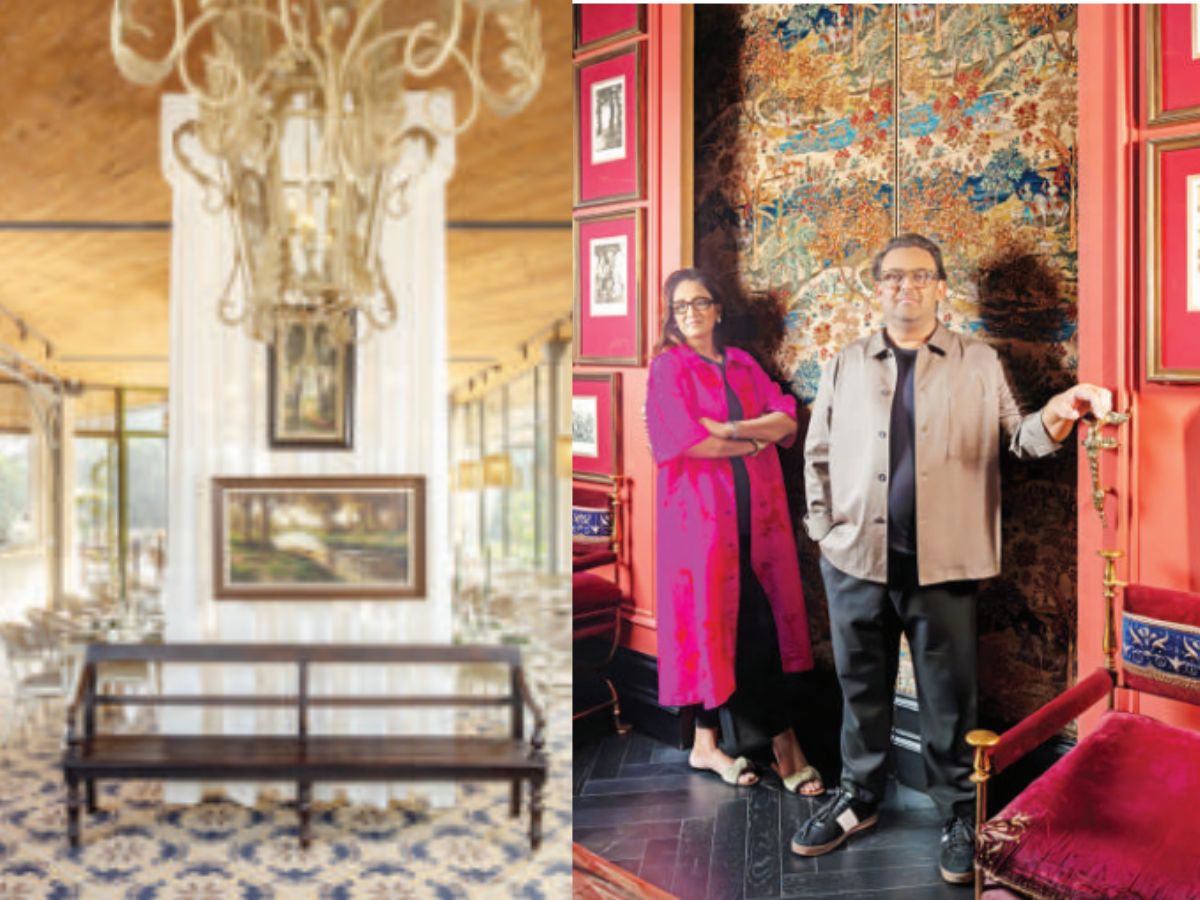
foodie haven, it’s hard to stand apart in its dining scene. Yet sometimes a restaurant makes its presence felt for its delicious cuisine and the story it’s serving. Forest Table, the newly completed 30,000 sq. ft. fine-dining destination designed by Beyond Designs at the Teen Murti Bhavan Estate, is one such.
In keeping with the philosophy of ‘meaningful maximalism’ that luxury interior design atelier, Beyond Designs is known for, this new eatery is rooted in heritage, while being global in its aesthetics and cuisine. Sachin Gupta, co-founder and design principal at Beyond Designs joins the Sunday Guardian for an exclusive chat about their largest civic scale hospitality project to date. Excerpts from an edited interview:
Q. Please tell us about the journey of opening this restaurant. Whose idea was it?
A. Forest Table grew out of our long-standing relationship with hospitality and our belief that dining is an expansive experience of belonging to a landscape and its history and memory. As Beyond Designs marks 25 years, this felt like the right moment to create a project that bridges the past and the future, architecture and nature along with refinement and restraint. When we were invited to rethink the terrace of the Nehru Planetarium, we saw an extraordinary opportunity to design a site-attentive insertion that reinforces the cultural continuity of this historic estate. Both of us felt instinctively that this site deserved a space that would sit lightly on the estate, feel organically rooted, and renew the campus with thoughtful, design-led stewardship.
Q. How did you choose this unique location?
A. The location chose us, in many ways. The terrace of the Nehru Planetarium is part of one of Delhi’s most historically rich estates, flanked by the Teen Murti House, the 700-year-old Kushak Mahal, and wide lawns with deeply rooted old trees. Unlike typical public monuments, where the balance between renewal and preservation often becomes muddled, Teen Murti Estate retains its civic dignity and cultural continuity. That’s precisely what drew us to it. We wanted to create a dining experience that dissolves into its context rather than overtakes it. The panoramic views, the banyan canopies, the calm lawns and the estate’s layered civic memory made this an exceptional setting for a restaurant rooted in sensitivity and history.
Q. Who has curated the menu?
A. The menu has been curated by Neha Gupta, bringing together modern Indian, Vietnamese, Asian, and continental cuisines. Each dish is crafted with a focus on slow techniques and quiet luxury, such as reductions, fermentations, and controlled heat. The menu reflects the same philosophy as the architecture. It is multi-layered, restrained and elegant in an understated way. Each dish is treated like an extension of the space as it is refined, intentional and crafted with a focus on technique and patience.
Q. Please talk about the idea behind the Forest theme.
A. The ‘forest’ in Forest Table is a sensibility shaped by the estate itself. Teen Murti’s banyan canopies, neem trees and the gentle movement of light through leaves guided our palette and philosophy. We wanted a space that feels composed, rooted and in dialogue with nature, where refinement meets restraint. From the muted colours to the grain of wood, every detail takes inspiration from the landscape. The name is a homage to this dialogue. It is a reminder that the restaurant exists because of the forested character of the site and in connection to its layered history.
Q. The décor amps up the ambiance and the overall dining experience. What went into creating it?
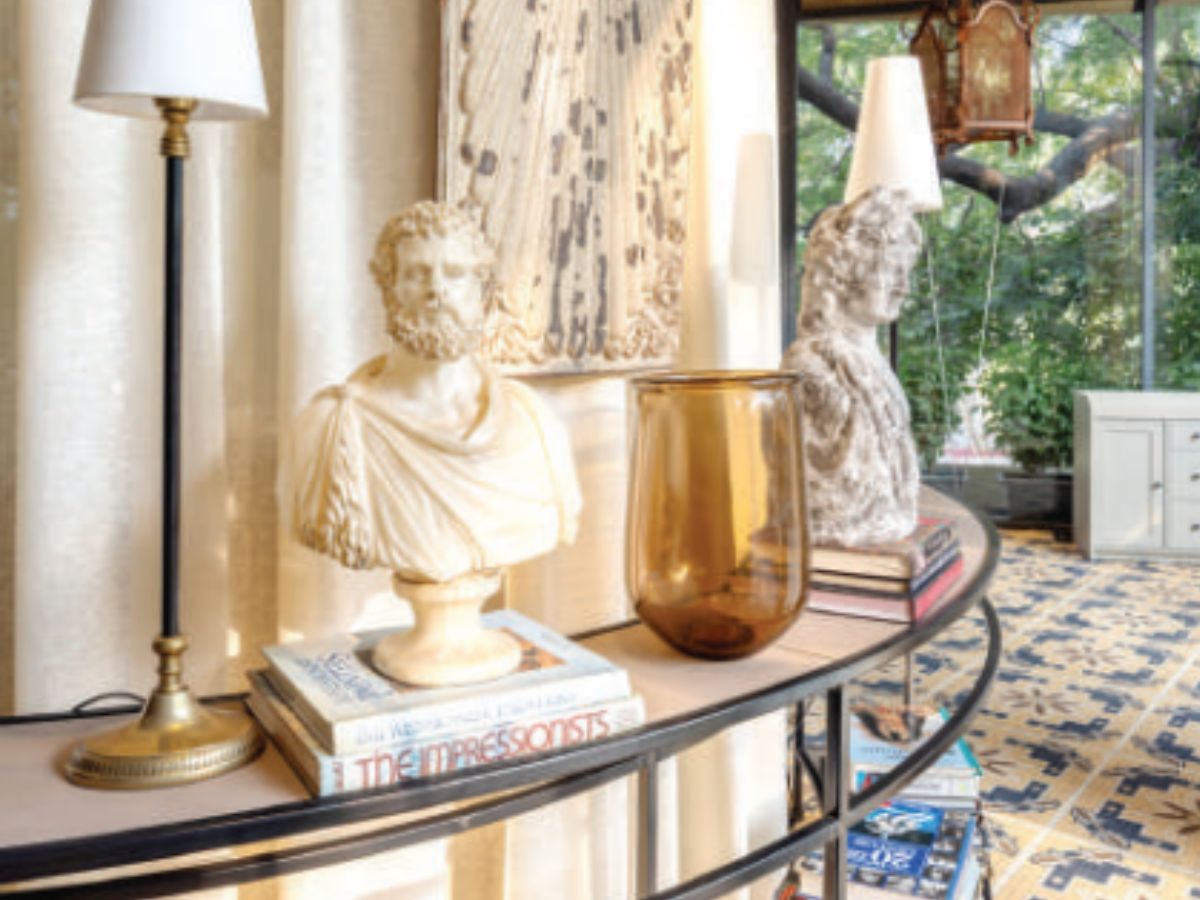
A. The décor blends vintage European café sensibilities with Delhi’s rich architectural legacies. We wanted an interior language that felt timeless and gently romantic without overpowering the landscape or the history around it. Pastel mosaics, wrought-iron colonettes, rubble masonry, rattan and wooden furniture and curated vintage pieces such as pianolas and wooden cabinets echo India’s long encounter with European craftsmanship. The material palette of sage, dove, blush, wood and glass, creates what we call ‘living frescoes’ of the surroundings by framing tree canopies and the Kushak Mahal. A grand crystal chandelier anchors the language of meaningful maximalism. Overall, the décor is defined by transparency and restraint, allowing the banyan canopies, the sky and the 700-year-old monument to remain the constant backdrop to the dining experience.
Q. What were the challenges of creating this unique design?
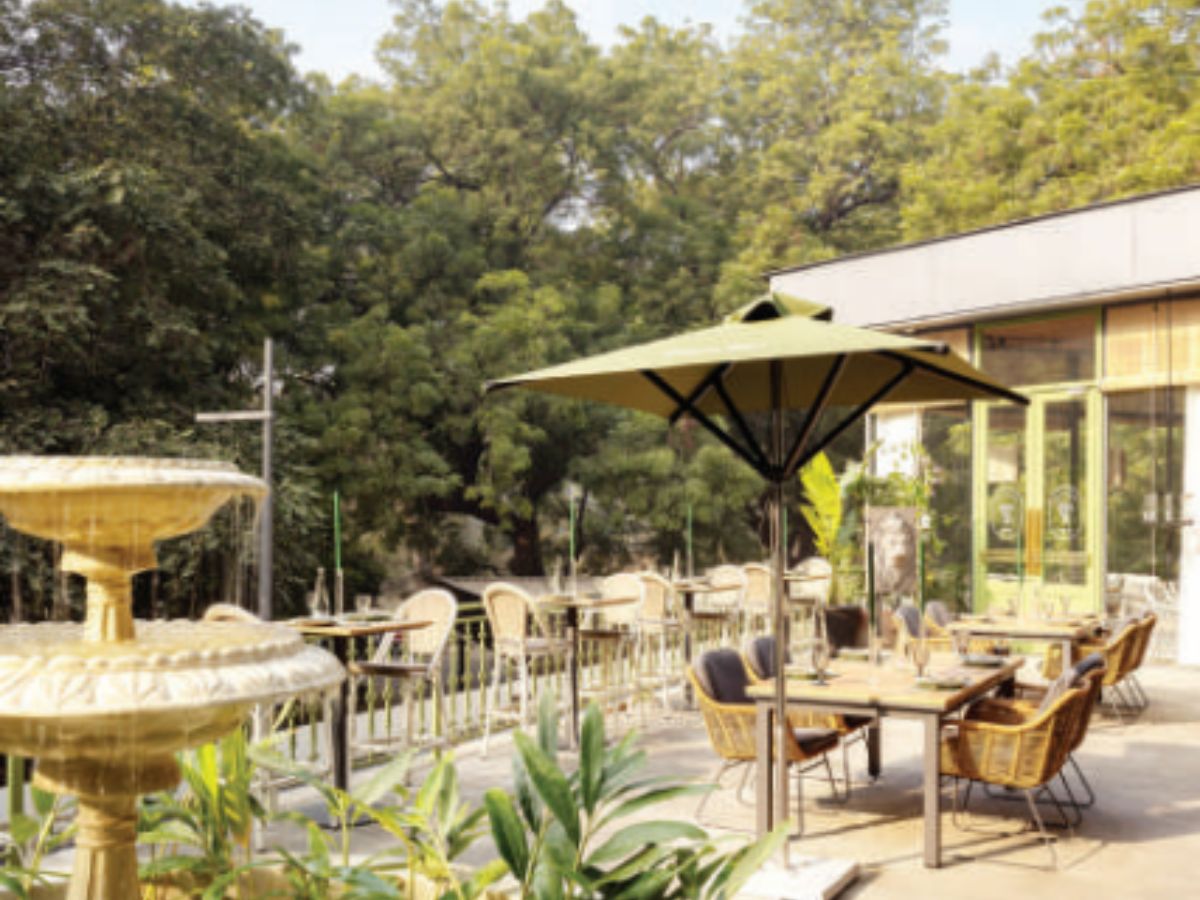
A. Working within a historically dense, ecologically sensitive estate required immense restraint. The challenge was to design a 30,000 sq. ft. restaurant that feels almost weightless and respectful of the landscape. No trees could be disturbed. The architecture had to sit lightly on the terrace, echo the octagonal geometry of the dome and frame views of the Kushak Mahal. Balancing structure with openness, integrating services discreetly, and ensuring the restaurant dissolves into its surroundings were constant considerations.
Q. How does Forest Table stand apart?
A. Forest Table’s USP lies in its ability to transform dining into a quiet act of belonging to history, landscapes and the city. Situated atop the Nehru Planetarium, the 30,000 sq. ft. restaurant offers a rare hospitality experience which seeks to bring alive the civic memories spread across seven centuries. Few destinations in Delhi bring together the Kushak Mahal, the Lutyensera Teen Murti precinct, and the post-independence legacy of the Planetarium in one continuous visual and cultural frame.
The architecture is intentionally designed to dissolve into the landscape. The glass-and-steel pavilion sits lightly on the site, creating living frescoes of banyan canopies, neem trees and the stepped terraces of the Kushak Mahal. Indoors, pastel mosaics, wroughtiron details, and curated vintage furniture reinterpret old-world European cafés through an Indian sensibility, allowing nature and heritage to shape the ambience. The restaurant is also part of a larger civic renewal effort, including upgraded landscape lighting, improved accessibility, estate-wide signage, and the transformation of the campus canteen into a 100-seater restaurant.
Q. Please tell us about the importance of design in civic stewardship.
A. Forest Table is part of a larger project we undertook to renew the Teen Murti Estate sensitively. Beyond the main restaurant, we redesigned and refurbished the on-campus canteen (now ‘Canteen Stories’) and upgraded landscape lighting, accessibility and estate-wide signage.
This project is as much about civic stewardship as it is about hospitality, ensuring the estate remains relevant, welcoming and experientially rich for the public. It is the ideal way for us to celebrate a milestone year for Beyond Designs as we celebrate 25 years of creating spaces that bridge the past and the present with care, restraint and continuity.
Noor Anand Chawla pens lifestyle articles for various publications and her blog www. nooranandchawla.com




