From personal loss to public impact: AI cancer care comes of age
At a time when India is positioning itself as a global force in artificial intelligence, innovation in healthcare is showing how technology can tackle some of the country’s most urgent challenges. Among these initiatives is BigOHealth, a health-tech startup founded by Gaurav Kumar, who transformed a deeply personal tragedy into what he calls a national mission to reshape cancer care.
India accounts for nearly 18% of the global cancer burden but contributes less than 2% to clinical trial participation. Kumar links this disparity largely to fragmented and unstructured patient data. By organising anonymised information such as tumour profiles, treatment history, co-morbidities and genetic markers, BigOHealth aims to intelligently match eligible patients with suitable clinical trials. “Access to innovation should not depend on geography or personal networks,” Kumar says. “It should depend on eligibility — and data makes that possible.”
Speaking to The Sunday Guardian, Kumar clarified that BigOHealth is not designed to replace doctors, but to function as a decision-support layer within India’s overstretched healthcare ecosystem. His mother’s survival well beyond her initial prognosis strengthened his conviction that timely direction and specialised care can alter outcomes. “Cancer doesn’t just test the body; it tests families, systems, and fairness,” he says. As India advances in AI adoption, BigOHealth aims to build infrastructure that ensures informed and equitable access to care — so that no family is left without guidance. At the core of the venture lies a deeply personal turning point.
In 2023, at the age of 27, Kumar was informed that his 49-year-old mother, diagnosed with stage IV gallbladder cancer, had only “three months, love, care, and family” remaining. The prognosis, delivered at a leading cancer hospital, felt definitive and unyielding. “For most families, that would have been the end,” Kumar says. “I wasn’t just afraid of losing my mother — I was paralysed because I didn’t know what to do next.” The words, he recalls, “reduced the future to a number.”
Despite his background in healthcare as co-founder and CEO of BigOHealth, established with his classmate Shubham, Kumar found himself unprepared for the emotional and logistical burden of his mother’s diagnosis. Like many families confronting advanced-stage cancer, he travelled across Delhi, Mumbai and other cities seeking second opinions, only to encounter stacks of reports and increasing uncertainty.
With nearly 70% of cancers in India detected at advanced stages, families are often forced to make urgent decisions under extreme stress — requiring not only treatment options but also clear guidance and direction.
A critical moment in Kumar’s journey underscored how precarious access to cancer care can be. At a reputed hospital in Delhi, doctors initially ruled out surgery after the cancer had spread to the liver — a conclusion that might have ended hope for most families. Unwilling to accept it, Kumar sought a reassessment through his professional network.
Another department reviewed the case and determined that hepatic surgery was viable. The procedure extended his mother’s life by nearly two years. “That changed everything,” he says. “But I could do it because I understood the system. Most families can’t.”
For many patients from smaller towns or rural regions, one medical opinion often becomes final — not due to lack of alternatives, but due to lack of navigation support.
As treatment continued, Kumar faced yet another obstacle — the overwhelming volume of medical documentation. Cancer patients frequently accumulate between 1,000 and 1,500 pages of records, including scans, biopsy reports, chemotherapy summaries and laboratory results. Caregivers must organise these documents before every consultation, while doctors are expected to assess years of history within minutes. “Caregivers become data managers when they simply want to care for their loved one,” Kumar says, noting the absence of continuity and clarity in the system.
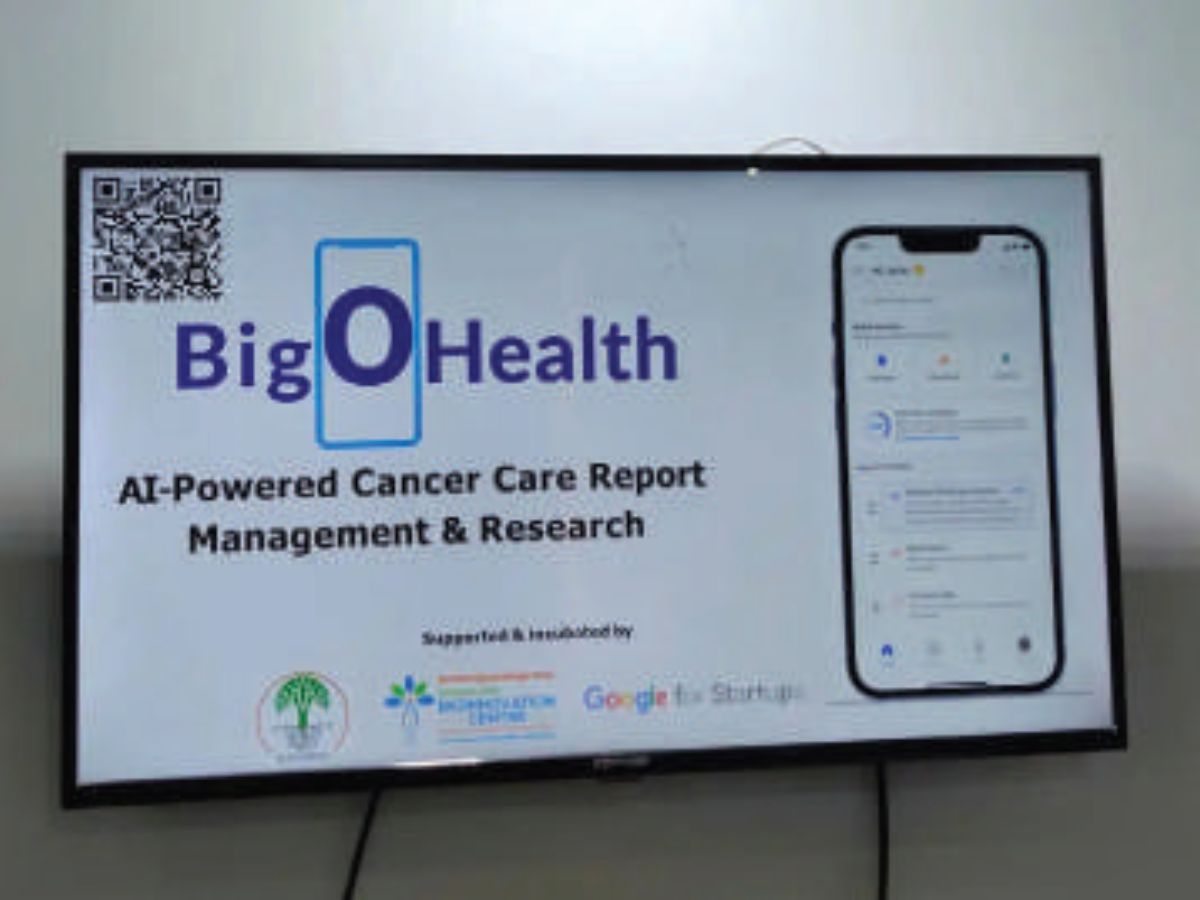
These experiences ultimately led to the development of BigOHealth’s oncology AI platform, OncoVault. The system consolidates medical records into a secure digital framework, automatically categorises reports, creates a chronological treatment timeline, flags missing documents, and produces a concise one-page clinical summary for quick review. It also facilitates access to leading oncologists, second opinions and virtual tumour boards. “Doctors need structured context, not more paperwork,” Kumar says. All data is fully de-identified to safeguard privacy while enabling scalable, data-driven insights.
