
In a vast nation like India, with poor driver behaviour, compulsory, automated enforcement of road rules with GPS speed controllers is essential. “Speed thrills but kills,” say highway warnings, but ironically encourage speeding, or enable high-risk driving behaviours and unsafe overtaking. “Emergency Landing Facility” or “road runway” should not make highways a race track for speed freaks. Expensive high-end high-status cars, with top speeds of 250 to 450 km/hr, have been involved in multiple fatal accidents across the country. At high speeds, any unexpected event, road problem, or minor error can result in severe, fatal crashes. In June 2025, a Nashik-based industrialist, who was not wearing a seat belt, was killed despite 9 airbags, when another vehicle splashed water on his speeding Merc SUV windshield, suddenly blinding the driver (his son), and the SUV skidded, flipped over, crossed the opposite lane, and slammed into the roadside rock face. Poor infrastructure, irresponsible human behaviour, enforcement gaps, and systemic neglect contribute to one death every three minutes on Indian roads, and road accidents cost 3% of Indian GDP. The government’s “5Es” strategy of engineering of roads, engineering of vehicles, education, enforcement, and emergency care lacks implementation. Dainik Bhaskar team tested the eyesight of 112 truck drivers on the Nagpur Mumbai highway and found 42% had poor vision.
ROAD DESIGN FOR SAFETY:
Many modern highways have seen multiple fatal accidents at high-risk zones or “black spots,” due to design flaws, high shoulders at the road edge, absence of water drainage systems, substandard construction, maintenance lapses, inadequate signage, missing barriers, or lack of pedestrian/bicycle infrastructure. Former Tata Sons head Cyrus Mistry, who was not wearing a seat belt, died when his Merc car hit a divider at a spot with faulty road design. Roads can be designed to prevent crashes as follows:
• Curve Design to improve horizontal alignment with proper superelevation and widening to maintain control at higher speeds, even for long vehicles.
• Bright lighting at intersections and roundabouts that is visible from afar.
• Raised pedestrian crossings and better visibility (no parking or visual obstructions) at intersections.
• Scientifically designed, well-marked Speed Humps/Rumble Strips at high-risk zones with early warning to slow down.
• High-Friction Surface Treatments (HFST) that reduce braking distances, on approach to roundabouts or high-risk curves.
• Wide medians to physically separate opposing traffic, especially on four-lane roads.
• Crash barriers as per specifications, because poorly placed low barriers, mounted on sloping concrete bases, can cause a vehicle to flip over instead of being safely stopped.
• Dedicated, separated cycle tracks and pedestrian footpaths.
• Safe resting points on pedestrian-crossings, particularly on multi-lane roads.
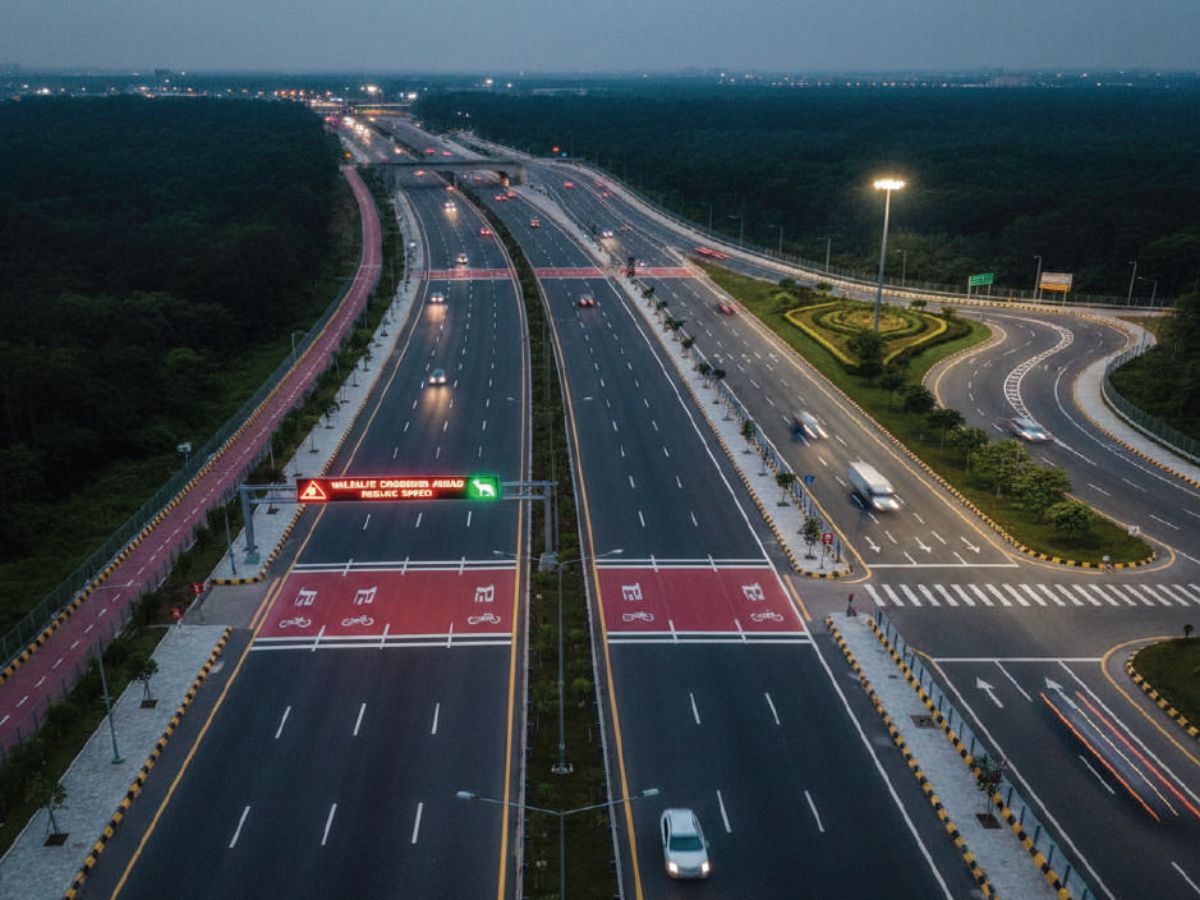
• LED-activated, high-visibility signage to warn of hazards. Recently, the highway passing through Nauradehi Sanctuary was painted across with long, vivid red bands (red tabletop markings) as a warning to slow down to protect wildlife, in addition to the provision of underpasses for animal crossings.
UNSAFE CAR ROOFS
The car roof is the weakest part of the cabin, further weakened by a sunroof. Modern car roof safety is typically measured by pressing down a large metal plate onto the vehicle’s roof at a slow, constant speed till it is crushed by 5 inches (127 mm), and not by a crash test.
• SUVs, pickup trucks, and vans are the most likely vehicles to roll over due to their high centre of gravity, which makes them unstable during sharp turns or sudden manoeuvres, especially at high speeds. Hitting a curb, guardrail, or uneven pavement can trigger a rollover. SUVs have the highest rollover rate at 3.3%, followed by pickup trucks and vans, especially when heavily loaded.
• The car roof is supported by A-pillars at the front, B-pillars between doors, C-pillars or D-pillars at the rear in a sedan or an SUV, engineered to prevent the roof from caving in. On February 13, 2026, on a highway near Bengaluru, an SUV speeding at nearly 160 kmph, fatally struck a bike rider, then swerved and crashed into the rear undercarriage of a truck, shearing off the roof, and killing all six teenagers in the car.
• A panoramic sunroof with laminated glass is preferred to prevent shattering and the risk of passenger ejection during a violent crash. Children standing through sunroofs are at risk of hitting overhead obstacles (bridges, branches, barriers), as in a recent case in Bengaluru of a child hitting a low-hanging railway beam.
• Convertible top cars are exempt from the strict roof crush standards and offer minimal protection in a rollover, even if provided with automatic pop-up roll bars behind the seats to mitigate this risk. They are also highly vulnerable to pollution, heat, dust, and security risks, such as theft.
• If a weakened tree or branch, or pole, or heavy object from a truck, or bridge, or hillside falls on a car, or a car hits a narrow, rigid object (like a tree or pole) on the roof edge, people inside the car will get crushed. On February 16, 2026, in Pratapgarh district, UP, a high-mast pole being erected suddenly collapsed, crushing and killing a political leader who was driving by in his car.
• Roof racks and accessories are not designed to enhance crash safety and, if overloaded, can become dangerous projectiles in a crash, and so can unsecured items inside the car cabin.
SPEED LIMITS RELEVANCE
Speeding reduces reaction time to less than a second, diminishes vehicle control, and intensifies crash impact (due to greater kinetic energy), contributing to fatal accidents. High-speed driving in a hurry, under the influence of alcohol or drugs, aggressive, reckless manoeuvring, combined with environmental hazards, poor road conditions, driver fatigue, and distractions, significantly increases the risk of fatalities and severe injuries. Last year’s Pune Porsche crash, the BMW Mumbai accident, and the recent Lamborghini crash in Kanpur are well-known because celebrity teenagers were involved, and they are only a few of the over 66% of crashes in India caused by speeding.
• Beyond 120 km/hour, human reaction time to an unexpected event is too slow to control the vehicle, and the distance needed to stop and the severity of impact are increased. Low visibility conditions at high speeds lead to multi-vehicle pileups.
• Alcohol or drug impairment reduces cognitive ability, reaction time, and decision-making skills, increasing the risk of a fatal crash, even at low blood alcohol concentrations (BAC).
• Using a cell phone or engaging in other distracting activities when driving contributes to high-speed crashes.
• A sudden episode of uncontrollable sleep, or reduced alertness due to fatigue or inexperience, makes high-speed driving deadly.
• Adverse weather (rain, fog, ice) reduces visibility and traction, causing a speeding car to skid uncontrollably (Hydroplaning). Poorly designed roads, such as sharp curves or those lacking proper infrastructure, further contribute to accidents.
• If a high-speed vehicle’s tyre hits a vertical median, it generates heat, risks a tyre burst, or even lifts the vehicle off the ground, leading to dangerous rollovers.
• Brake failure, tire blowouts, and faulty steering, or any other mechanical or electronic failure, can lead to loss of control at high speeds.
• Improper overtaking or tailgating or sudden swerving to avoid an unmarked parked vehicle, or obstruction, or animal, or pothole, or another vehicle that suddenly changes lanes/turns or comes the wrong way, leads to collisions, especially at high speeds.
• Sudden driver health incapacitation, such as a heart attack, stroke, seizure, or loss of consciousness, leads to a “runaway” vehicle, which is more catastrophic if the driver’s foot presses down on the accelerator.
SPEED LIMITS AUTOMATED ENFORCEMENT
In a vast nation like India, with poor driver behaviour, compulsory, automated enforcement of road rules with GPS speed controllers is essential.
• Driving licence suspensions for traffic rules violations have increased with advanced digital surveillance using high-definition cameras, and AI enabled databases.
• GPS speed controllers should be made compulsory in all vehicles capable of speeds above 120 km/hour to ensure compliance with road regulations. These are advanced vehicle safety systems that use GPS, cameras, and digital maps to monitor real-time location and speed, automatically limiting engine power when speed limits are exceeded.
• Accident prevention systems or Advanced Driver Assistance Systems (ADAS) use cameras, radar, and Li-DAR (Light Detection and Ranging) to monitor surroundings, addressing risks like driver fatigue, lane departures, and blind spots. These include Automatic Emergency Braking (AEB), Anti-Collision Devices, Lane Departure Warning and Keeping Assist (LDW/LKA), Blind Spot Detection (BSD), Adaptive Cruise Control (ACC), Driver Fatigue Monitoring, and Alcohol Detection Systems.
Due to a lack of awareness and a casual approach to vehicle and road safety, India has the highest number of road accident fatalities in the world, with reports indicating over 4.5 million accidents and more than 1.8 lakh deaths annually, while the United States has far fewer fatalities despite a higher number of total accidents (estimated at 6.5 million). Better road design, a ban on unsafe vehicles, and automated enforcement of road rules are essential to reduce accidents and fatalities.
Dr. P.S. Venkatesh Rao is a Consultant Surgeon, Former Faculty CMC (Vellore), AIIMS (New Delhi), and a polymath in Bengaluru, drpsvrao.com




