Korean diplomat Sang Woo Lim’s India tenure blended diplomacy and storytelling, building India–Korea ties through museums, cinema, language and G20
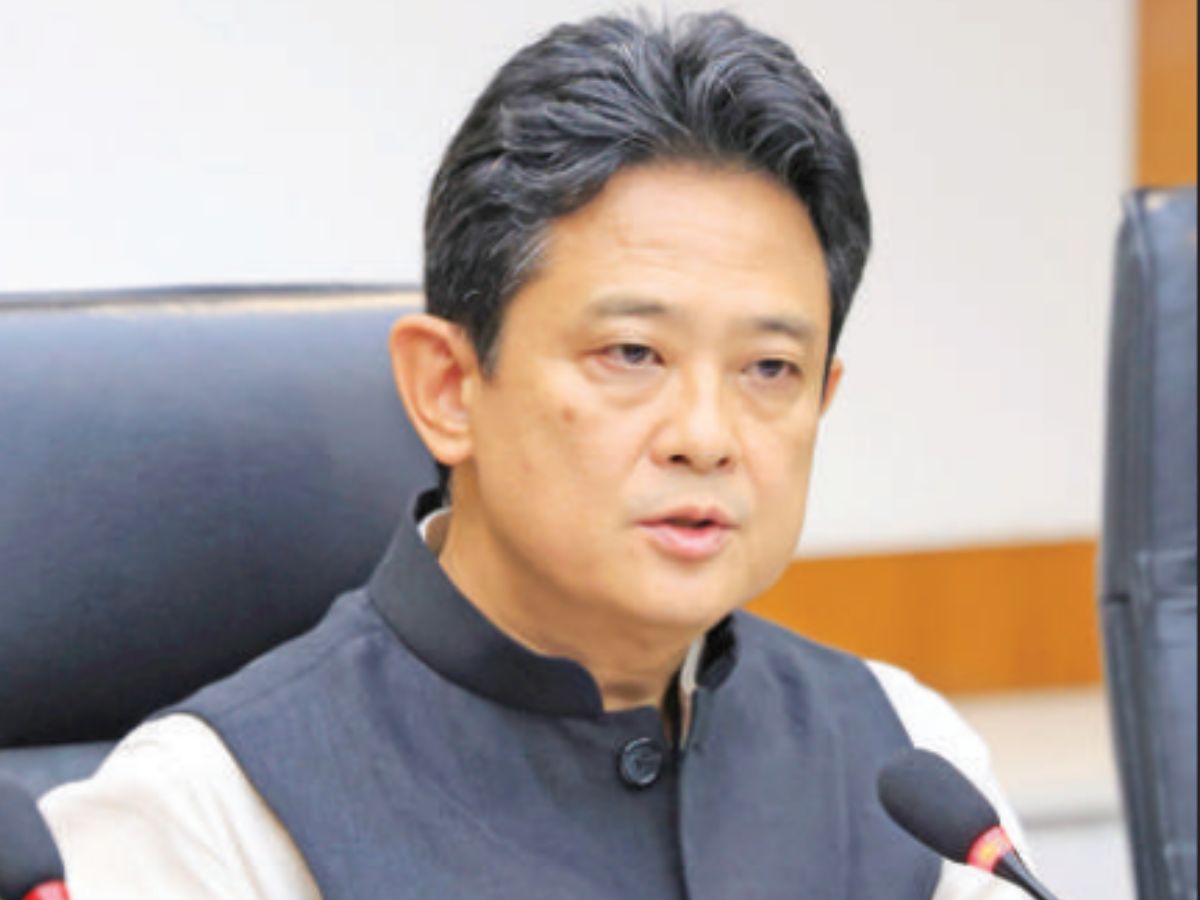
Senior South Korean diplomat Sang Woo Lim
On most days, the National Museum in Delhi hums with the soft murmur of school groups, scholars, and tourists tracing the long arc of Indian civilisation. But on certain weekends, visitors pause a little longer, surprised—not by the artefacts, but by the man explaining them.
“I am not here as a diplomat today,” Sang Woo Lim tells his group, smiling as he gestures toward an ancient sculpture. “Today, I am only a storyteller.”
For nearly three years, Lim served as the Deputy Chief of Mission at the Embassy of the Republic of Korea in India. It was his seventh overseas posting, but India, he insists, was unlike any other. “Every country teaches you something,” he says. “India teaches you patience—and scale. The scale of history, of diversity, of ambition.”
Lim arrived in New Delhi in January 2023, at a moment when India was stepping confidently onto the global stage. The G20 presidency, the 50th anniversary of India–Korea diplomatic relations, and a rapidly expanding strategic partnership made it one of the busiest diplomatic postings in Asia. “The first year itself felt like three years,” Lim recalls with a laugh. “There was no gentle introduction.”
As Deputy Chief of Mission, Lim covered every domain—political coordination, economic diplomacy, multilateral engagement. But amid the formal meetings and protocol-heavy schedules, he gravitated toward something quieter, more enduring: cultural diplomacy.
“I genuinely believe people-to-people exchange is the bedrock of any relationship,” he says. “Governments may change, policies may evolve, but culture stays. It stays in memory.”
That belief shaped his India years. He attended film screenings, museum walks, literary discussions, and academic panels—not out of obligation, but curiosity. It was at the Delhi premiere of ‘Past Lives,’ the Korean-American film that would later sweep global audiences and reach the Oscars, that Lim encountered a familiar response. “The emotional reaction in India was incredible,” he recalls. “People told me, ‘This feels like our story too.’ That’s when I realised how deeply our sensibilities overlap.”
For Lim, cinema is not merely entertainment; it is a bridge. “Films like ‘Parasite,’ ‘Past Lives,’ even ‘Squid Game’—they work in India because the emotional grammar is similar,” he says. “Family, aspiration, sacrifice, moral conflict—these are shared ideas.”
That sense of shared heritage, Lim believes, stretches back centuries. “Our connection did not begin with embassies,” he says. “It began with ideas.” Buddhism, which travelled from India across Asia under Emperor Ashoka, left deep imprints in ancient Korea. “One of Ashoka’s stupas reached the Korean kingdom of Goguryeo,” Lim notes. “That is not a footnote. That is a foundation.”
Those connections come alive during his museum tours. The idea to volunteer at the National Museum, however, came entirely by chance. During an embassy cultural outing, Lim was struck by the depth of the guide’s storytelling. “I asked her if she was a professional,” he recalls. “She said, ‘No, I am a volunteer.’ That surprised me.”
Even more surprising was the realisation that diplomats could apply. “They were a bit taken aback,” Lim admits. “They had never had a diplomat volunteer before.” But he persisted, arguing that he could offer tours not just in English, but in Korean— bringing the Korean community closer to Indian heritage.
After two months of rigorous training—weekday classes, weekend selfstudy—Lim began leading tours in August. He limited groups to twenty, worried about straining his voice, but demand quickly grew.
During the tours, Lim does not merely explain objects; he builds bridges. Standing before the Kirtimukha, he tells visitors, “In Korea, we have Dokkaebi. Different names, same purpose—to guard, to protect, to ward off evil.” The resemblance, he says, always fascinates audiences. “People suddenly realise we are not as distant as we imagine.”
Even Indian visitors, initially skeptical of a foreigner explaining their own heritage, warm quickly. “They realise that knowing history and knowing artefacts are two different things,” Lim says. “I had to study just as hard.”
Language became another doorway into India. Despite English being widely spoken in Delhi, Lim committed himself to learning Hindi. “I wanted to read signboards, understand conversations, not live in a bubble,” he says. He took classes two to three times a week—right up until his final week in India.
The effort paid off. Lim and his wife, who was also posted in Delhi, became the first foreign service officers to clear the Hindi proficiency test at Korea’s foreign ministry. “It was an exam,” he laughs. “A very real exam.” But beyond certification, the language offered something deeper. “When you try to speak someone’s language, even imperfectly, doors open.”
The defining diplomatic experience of Lim’s tenure, however, was the G20. “It was massive,” he says, choosing the word carefully. “What impressed me was not just the scale, but the imagination.” Meetings were held across the country, giving foreign delegates rare glimpses into India’s regional diversity.
“I went to Darjeeling for one meeting,” Lim recalls. “Just two or three months after arriving in India. And I remember thinking—this is a completely different country from Delhi.” The organisation, he says, was seamless. “India mixed culture with diplomacy beautifully. It wasn’t just policy—it was identity.”
Watching India lead the G20 reshaped his understanding of global power. “India is not just rising,” he says. “India is shaping the narrative of the Global South.” Korea, he believes, shares that responsibility. “We are both model democracies. We can show the world that development with values is possible.”
As Lim prepares to take up his new role as Deputy Minister for Public Diplomacy in Seoul, India remains central to his vision. “India will be at the top of my list,” he says without hesitation. “I will come back often. Public diplomacy is about continuity.”
Asked how he would sum up his India years, Lim pauses. “If I ever want to remember what I did here,” he says slowly, “I should just read one story and feel it all come back—the people, the places, the conversations.”
On that winter morning at the National Museum, as his tour ends, visitors linger. Lim steps aside, letting the artefacts speak for themselves. Outside, Delhi rushes forward, impatient as ever. Inside, centuries remain still.
“Diplomacy begins,” Lim says quietly, almost to himself, “when you learn to listen.”
