Malta marks sixty years of relations with India, boosting ties through trade, culture, education.
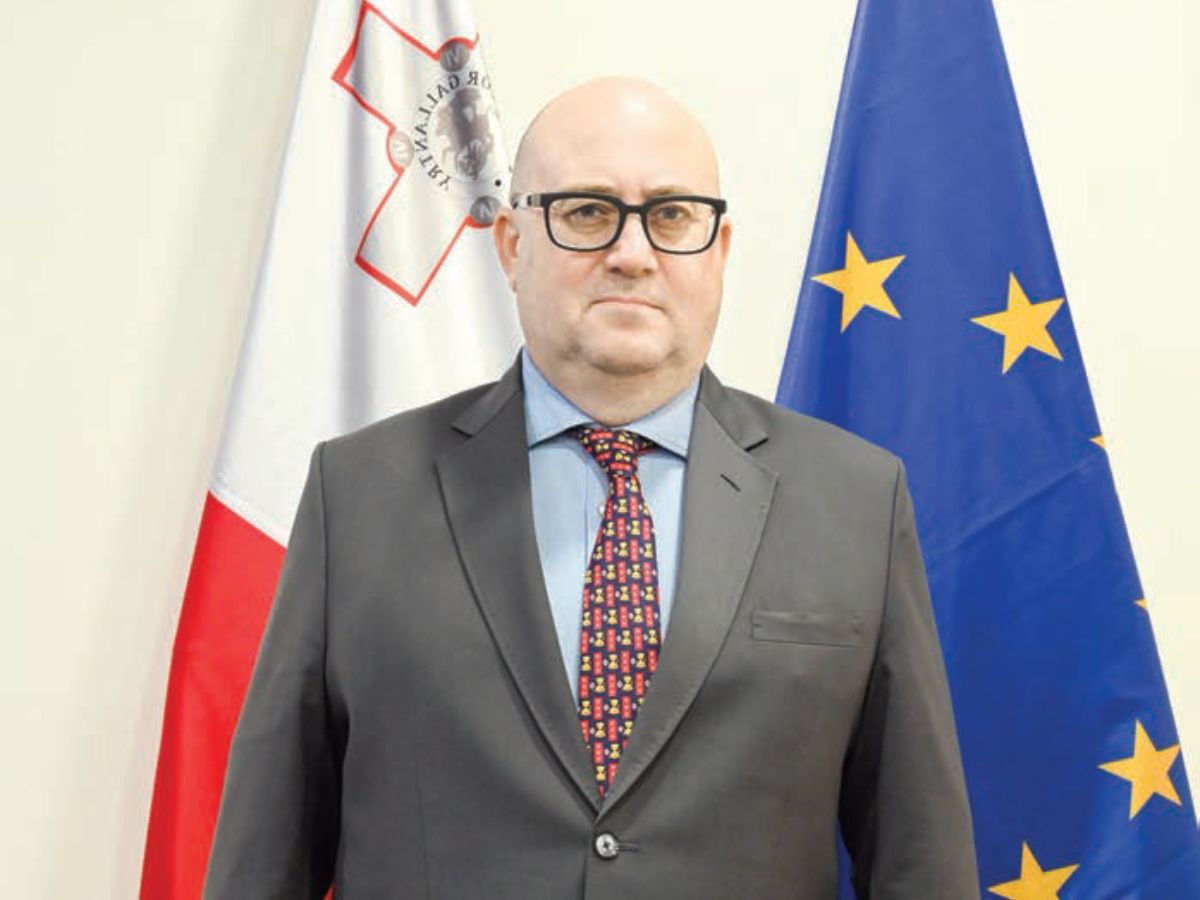
Reuben Gauci, High Commissioner of the Republic of Malta to India
As Malta and India mark 60 years of diplomatic relations, Malta’s High Commissioner to India, Reuben Gauci, believes the story of this partnership is far older—shaped by empire, strengthened by people, and now propelled by culture, commerce, cinema, education, and shared aspirations.
“This is the 60th anniversary of Malta–India diplomatic relations. Our ties officially began on 10 March 1965—less than six months after Malta’s independence,” he says. “As you know, both Malta and India were under the British, and this shared legacy built many of our early bridges.”
The High Commissioner vividly traces the historical continuum between the two nations. When Malta joined the British Empire in 1800, Admiral Horatio Nelson described the island as “on the way to India”—a remark whose truth emerged decades later.
“When the Suez Canal opened in 1869, Malta became the gateway between Europe and the East. Indian soldiers passed through Malta in 1878. Indian traders and Sindhi entrepreneurs arrived soon after,” he recalls.
From the 19th century onward, Indian business families became part of the Maltese urban fabric. “When I was a boy in the 1980s, the best textile shops in Valletta were Indian-owned—names like Savita and Gopaldas. Malta still has old Indian families who have become Maltese not only by nationality but by culture.”
In a fascinating cultural twist, the Sindhi merchants also helped export Malta’s famed traditional lace across the British Empire, all the way to Java.
Looking back at his five-year tenure in India—which began amid the pandemic—Gauci recalls presenting his credentials virtually, in a surreal ceremony presided over by diplomat and novelist Vikas Swarup, famed for Q&A, the novel behind Slumdog Millionaire.
COVID did not slow him down. “We even assisted Maltese couples coming to India to adopt children during the lockdowns,” he says.
After restrictions lifted, the mission focused on strengthening economic linkages. “Since August 2022, four Maltese products have entered the Indian market—Chisk non-alcoholic beer, VGs (Maltese twisties), Go & Fun green energy drink, and Galletti water biscuits,” he notes with pride. “The fifth, we hope, will be Maltese pet food. There is a huge demand in India for high-quality pet products.”
He smiles as he adds, “I am a dog lover myself. Our dog came with us from Palestine when I was serving there.”
If trade has expanded, educational ties are booming. “After COVID, the demand for Maltese student visas increased sharply. There are now nearly 18,000 Indian workers and students in Malta—remarkable for a country of just half a million,” Gauci explains.
With English as the medium of instruction and a strong network of universities and vocational institutions, Malta has emerged as an attractive, safe, and familiar environment for Indian students.
“Students appreciate that they don’t need to learn a new language to study. And yes, we still drive on the same side as India,” he laughs.
Few know that Malta is one of the world’s most sought-after film locations. “Malta is a film destination—one of the best. Gladiator, Troy, Munich… all were shot there. We have the world’s largest film water tank, excellent crews, and strong tax rebates,” Gauci explains. “Bollywood has discovered this too. Thugs of Hindostan was shot in Malta, and many short films and commercials as well.”
Ridley Scott, he notes, is fond of Malta’s ancient walled city Mdina, using it in Gladiator and Napoleon. “Even though we’re a small island, filmmakers can recreate Europe, the Middle East, or Africa here,” he says.
Cinema is personal for him too. “I grew up acting a bit, and I love movies. Here in Delhi I am lucky to live next to the legendary Roshan Seth. Imagine meeting the actor from Passage to India as your neighbour!”
Malta also fosters its own cinema. “We recently screened the Maltese film Castillo at the Cervantes Centre as part of the EU Film Festival,” he announces.
From traditional bands like Cantera performing in India to classical Maltese duos touring earlier this year, cultural diplomacy remains at the heart of the mission’s vision.
Tourism, too, is rapidly rising. “Malta receives three to four times its population in tourists every year. Our hotels stay full almost year-round,” Gauci notes.
The High Commissioner believes the next decade will bring deeper connections. “Our countries share history, but we are now building a future based on education, culture, business, and cinema,” he says. “These ties will keep growing. There is so much potential.”
As Malta-India relations step into their seventh decade, the partnership feels both old and new—rooted in a shared past, yet driven by the energy of students, artists, entrepreneurs, filmmakers, and communities who continue to rediscover each other across borders.
And as Gauci puts it, “This relationship is not just diplomatic. It is human, historical, and full of possibilities.”
