
When a dhow packed with narcotics is intercepted in the Arabian Sea, there’s usually one difference between the Indian and Pakistani responses. In India, the operation ends with arrests, paperwork, and a courtroom. In Pakistan, it ends with a public relations fanfare without evidence.
A Decade of Consistent Enforcement
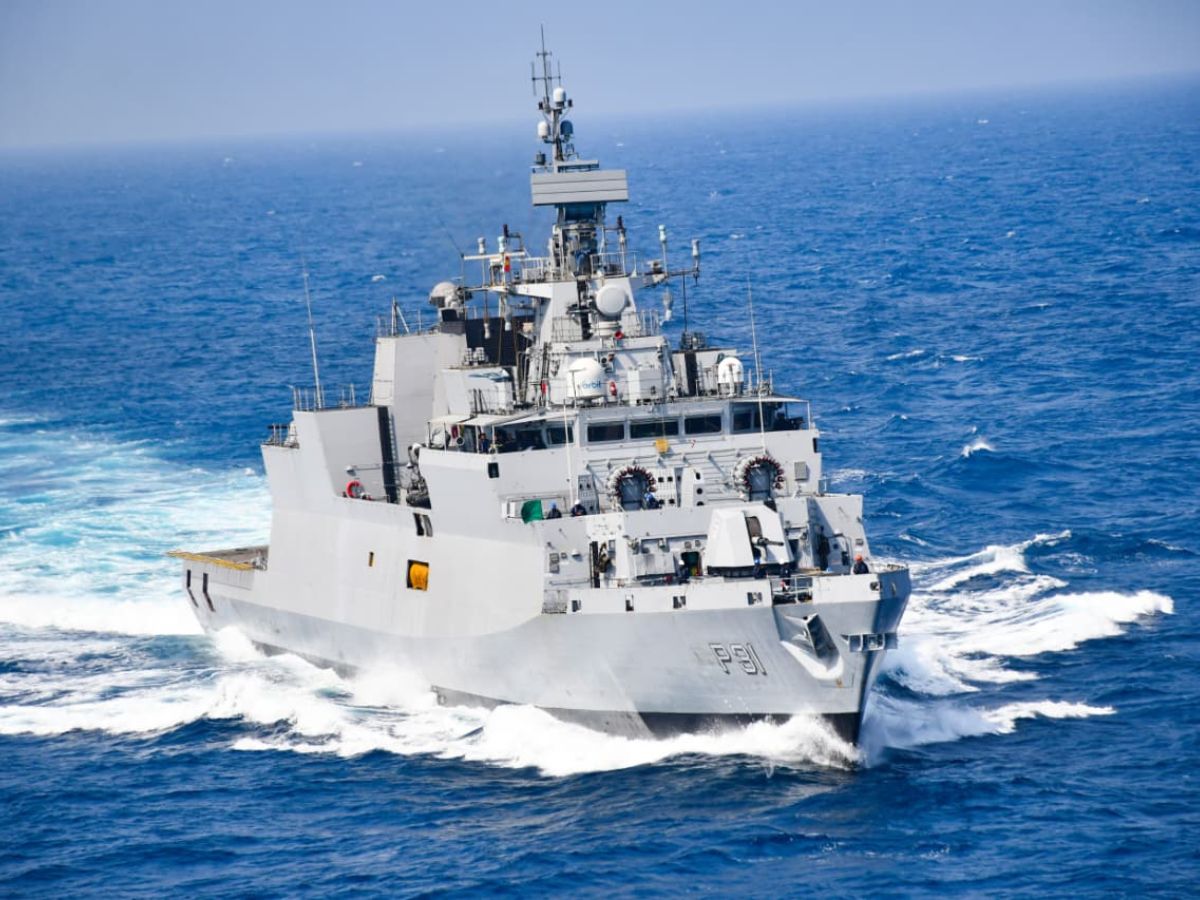
Since 2011, the Indian Navy and Coast Guard have quietly built a record of maritime drug interdictions that is now unmatched in the region. From the INS Suvarna bust in 2021 to INS Tarkash’s two-tonne seizure in April 2025, every operation follows the same template: credible intelligence, coordinated pursuit, full custody, and transparent prosecution. The agencies involved—Navy, Coast Guard, NCB, DRI, and the Narcotics Control Bureau—treat maritime narcotics as an intelligence-driven problem, not a media stunt.
Even the world’s largest meth seizure at sea—Operation Samudragupt in 2023—was handled without spectacle. No flags, no choreographed pressers. Just documentation, custody, and conviction.
How the System Works
At the heart of India’s success is an architecture that connects sensors, satellites, and sailors. The Information Management and Analysis Centre (IMAC) in Gurugram and the Information Fusion Centre–Indian Ocean Region (IFC-IOR) in Gurugram fuse radar, AIS, and partner-nation data into one live maritime picture. When a suspect dhow moves out of Pakistan’s EEZ, the Indian network often knows before the smugglers do.
A senior officer who has worked on IFC-IOR data integration explained: “What we see now is a data war at sea. The narcotics routes aren’t being discovered through luck—they’re being mapped algorithmically.” This isn’t rhetoric. IFC-IOR reports show a sharp fall in undetected smuggling attempts since India integrated partner feeds from Sri Lanka, Maldives, Seychelles, and Oman into its daily maritime plots.
Transparency as Deterrence
Every major Indian seizure is followed by a public case record. Cargo is weighed, photographed, logged, and sealed under NCB supervision. Crew members are presented in court within 48 hours. In several cases, the Drug Enforcement Administration (DEA) and Interpol have been involved in tracing international buyers. This transparency is what separates India’s enforcement model from Pakistan’s opacity. Where Islamabad stops at optics, India extends to outcome—turning arrests into evidence and evidence into sentences.
A Regional Security Dividend
India’s consistent record has transformed it from a participant to a regional coordinator. Its naval assets now form the operational backbone of Combined Task Force 150, responsible for counter-narcotics operations under the Combined Maritime Forces (CMF) in Bahrain. In 2024 and 2025, INS Tarkash and INS Talwar conducted joint interdictions alongside CMF assets, including a seizure of over 2.5 tonnes of hashish and heroin off the Gulf of Aden. For coalition partners, India’s approach offers what Pakistan cannot: reliability and credibility. For Gulf states, it signals that New Delhi’s maritime reach extends well beyond its own EEZ.
The Legal Endgame
The most overlooked aspect of India’s maritime enforcement is its legal closure rate. Indian courts have delivered convictions in multiple maritime narcotics cases, establishing jurisdiction, chain of custody, and compliance with international law. That matters because every conviction feeds into India’s standing at FATF and UNODC forums—proof of capacity and integrity. As one official put it, “We don’t just seize narcotics. We close loops.” That closing of loops—between intelligence, interdiction, and prosecution—is what makes India’s counter-narcotics strategy credible, not cosmetic.
A Model Under Pressure
Yet the system faces strain. Traffickers are shifting to multi-origin cargo loads, blending narcotics with legitimate trade. The Navy’s focus is widening—from narcotics to dual-use cargo, arms smuggling, and terror finance linkages.
Maintaining tempo will demand more inter-agency training, advanced forensics, and quicker data exchange with coastal states. But as the Indian Ocean becomes a narcotics highway, India remains the one actor turning seizures into sentences rather than selfies.
In a region where Pakistan turns enforcement into theatre, India turns it into policy. Its maritime counter-narcotics system doesn’t rely on slogans or timing—it relies on evidence. Every successful case reinforces a quiet truth: credibility is built not at sea, but in the courts that follow.
(Aritra Banerjee is a defence and security columnist)




