
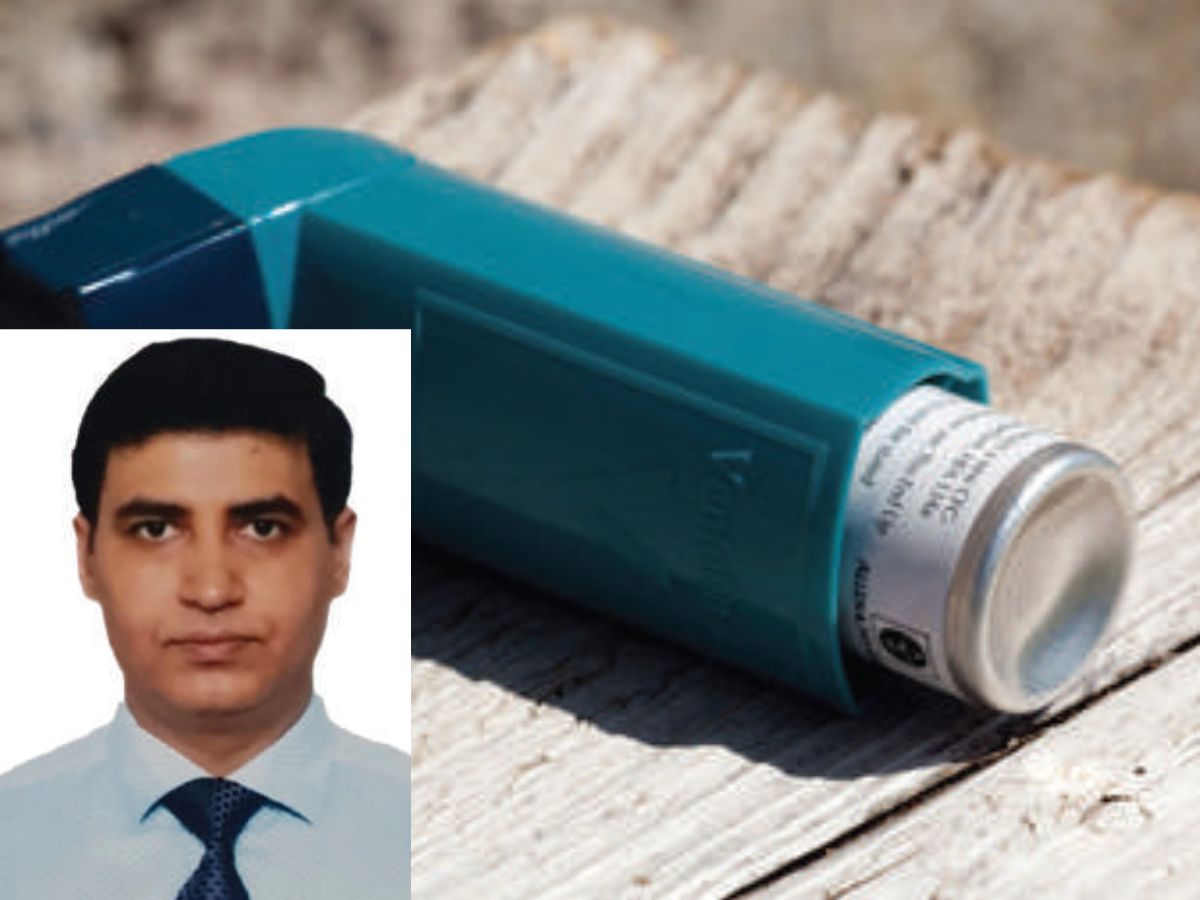
In an interview with The Sunday Guardian, Dr. Ankur Ohri, Pediatrician at Rainbow Children’s Hospital, Delhi, sheds light on the rising incidence of childhood asthma in India’s polluted cities, pointing to deteriorating air quality as the most aggressive trigger.
excerpt
Q: Are we genuinely seeing a rise in childhood asthma cases, or is increased awareness and better diagnosis leading to higher reported numbers?
A: We are experiencing a dual trend when it comes to childhood asthma. First, there was a genuine and alarming increase in the number of children with asthma symptoms. This real rise is deeply associated with worsening air quality, increased exposure to numerous indoor and outdoor pollutants, and the higher incidence of viral infections early in life. Such environmental factors grossly irritate the delicate, developing airways, rendering them hyper-reactive. In parallel, increased awareness among parents and pediatricians, clearer clinical guidelines, and, above all, better diagnostic means make us much more apt at diagnosing asthma early. A decade or so ago, many of those cases were mislabeled as mere “recurrent coughs” or “seasonal bronchitis.” Now we call it correctly-asthma-which is reflected in the higher numbers. So statistics reflect two parallel realities: a serious increase in the actual disease burden and a marked improvement in detection. Most importantly, early diagnosis is critical because it allows us to start preventive treatment early, which drastically reduces flare-ups and emergency visits, enabling most children to live completely active and unrestricted lives.
Q: What are the most common triggers for asthma flare-ups in young children in highly polluted cities like Delhi?
A: In grossly polluted cities, air quality is the main and most aggressive trigger. The tiny particulate matter PM2.5 and vehicle emissions irritate the airways and immediately lead to inflammation and narrowing of the airways, which is particularly troublesome for young children, whose lungs are still growing. During periods of heavy smog, symptom exacerbation may be provoked even by short exposure outdoors. Indoors, provoking factors may be dust mites, animal hair, tobacco smoke, and fumes from strong domestic chemicals such as chemical cleaners, incense, or mosquito coils. Viral infections can easily spread, especially during the colder season of the year, therefore being frequent provocateurs, as they further increase swelling in already sensitive airways. Moreover, sudden changes in weather, especially exposure to cold and dry air, can physically narrow the bronchial tubes. For the majority of children, flare-ups are not triggered by a single factor but are rather the result of combined action of those, so personally identifying triggers is crucial for effective management.
Q: What early warning signs should parents watch for when a child has wheezing or a persistent cough, to understand if it could be asthma rather than a seasonal infection?
A: Asthma, masquerading as a persistent cold, requires parents to be aware of the signs that distinguish a simple seasonal infection from early asthma. This is because many symptoms are similar to those of a cold. The warning signs include the onset of a chronic cough-one that has persisted for more than two to three weeks-particularly if it worsens at night or in the early morning hours, frequently waking the child from sleep. Another important red flag is a pattern of recurring episodes of coughing or wheezing, with the episodes returning every few weeks or months. Symptoms are commonly precipitated by physical exertion: a child coughs or wheezes severely after running, playing vigorously, or even laughing vigorously. If a child consistently requires nebulisation or emergency medication each time they catch a common viral cold, it suggests serious airway sensitivity. Symptoms of asthma thus wax and wane in response to specific triggers, such as dust or smoke or exercise or weather changes, rather than steadily improve. Parents should consult a doctor without delay if the child is breathing rapidly or labouring with their neck or rib cage to breathe or showing difficulty in completing a full sentence during a respiratory episode.
Q: How can parents help children manage asthma more effectively during colder months, school sports sessions or viral infections?
A: Effectively managing a child’s asthma during cold weather, school sports, or viral infections involves simple but crucial preventive steps. In winter and during pollution peaks, the child should be kept warm, outdoor activity should be avoided in the early morning cold, and an appropriate mask should be used on high-pollution days to reduce irritant exposure. Children who have been prescribed controller inhalers should continue them assiduously; stopping this preventative medication is the most common reason for winter flare-ups. Children who experience symptoms with exercise should take their prescribed reliever inhaler 10 to 15 minutes before school sports or strenuous physical activity, providing a prophylactic barrier. If a child catches a cold or a viral infection, parents should promptly activate the prescribed illness action plan, which will typically include more aggressive and early use of their inhalers, heading off the cold before it escalates into a severe asthma attack that may require a visit to the hospital.
Q: Do children typically outgrow asthma, or is it a condition that requires long-term management?
A:Whether a child “outgrows” asthma is heavily dependent on the severity and specific characteristics of his or her condition. For many children, especially those whose symptoms are rather mild and occur only with viral illnesses, symptoms may considerably reduce or completely disappear as they grow older. This fortunate turn of events occurs because the child’s airways naturally enlarge and become less reactive as their lungs mature. However, not all children are that lucky. Children with more severe asthma, co-existing conditions like eczema and strong allergies, or with a very evident family history of the disease are more likely to keep the underlying sensitivity of their airways into adolescence and even into adulthood; even though again, during this period, long symptom-free intervals may still be possible. Treatment is not about waiting for them to outgrow it, but about achieving excellent control-minimal symptoms, no night disturbances, sports fully participated in, and very few flare-ups. With appropriate consistent treatment and monitoring, almost all children can lead completely normal active lives irrespective of the longterm prognosis.
Q: Is it safe for children to use inhalers regularly, and how can parents help them overcome hesitation or stigma around it?
A: Inhalers are considered the safest and most efficient means of delivering asthma medicine to children. The medication is delivered directly to the lungs, which is the site of inflammation, in minimal and clinically-tested doses, hence effective with minimum systemic side effects, as opposed to oral drugs. Regular use of prescribed controller inhalers is important because it cuts down airway inflammation, thus making the disease not get worse and avoiding emergency care. Hesitation or stigma often results from misinformation or an outmoded idea that inhalers denote a serious illness. Parents can counter by normalizing the inhaler by equating it with a nonnegotiable tool for health, like tooth-brushing. A spacer device makes the inhaler both easy and effective for all ages. Emphasizing the consequences, that the inhaler helps them breathe better, sleep soundly, and be active, enables the parent to help their child regard the inhaler as a tool for freedom rather than one of weakness.




