Designers from India and South Asia dazzled Dubai, blending couture with innovation.
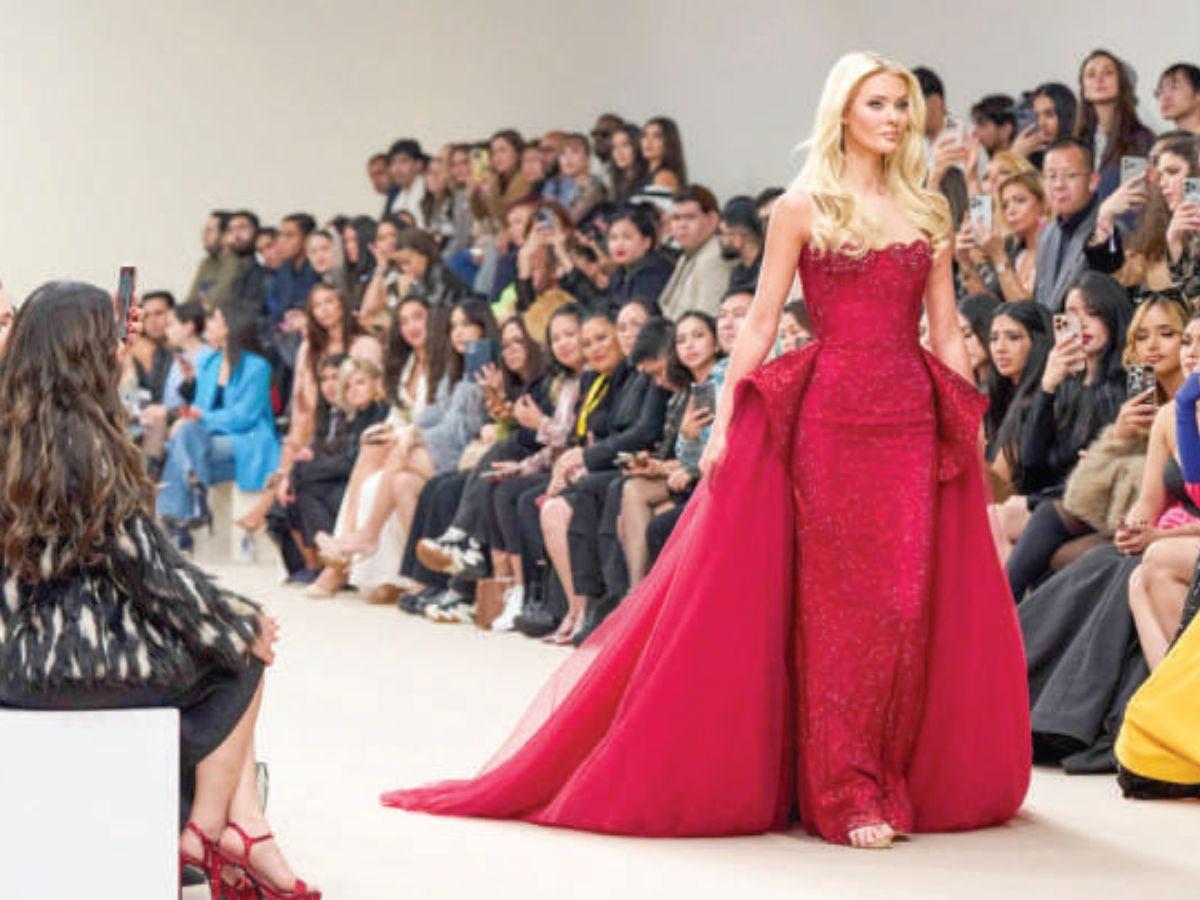
In Dubai’s ever-evolving landscape, the sky is rarely the limit. This extends to everything from its towering skyscrapers and industrial innovations to lifestyle and fashion. The fashion-forward cosmopolitan oasis is rewriting the geography of global style.
While the Big Four—Paris, Milan, New York, and London—continue to dominate headlines, Dubai is steadily positioning itself as a stage where East meets West, blending couture traditions with contemporary sensibilities.
Since its inaugural edition in 2023, Dubai Fashion Week (DFW), co-founded by Dubai Design District (d3) and the Arab Fashion Council (AFC), has been clear about its mission: to establish the city as a global fashion hub, fostering international collaboration while nurturing regional talent.
Jacob Abrain, founder and CEO of the Arab Fashion Council, explains, “Dubai Fashion Week is an umbrella for multiple designers and creatives. It is a neutral platform that allows designers to shine with their own themes and aesthetics. The only theme we usually follow is spring/summer or fall/winter, and then it is the stage for designers to astonish us with their creativity.”
He adds, “As Fashion Week, we are very careful that it is not only for the most established designers but also a platform to incubate emerging talent. We believe they have the capacity and aesthetics to grow. We don’t choose designers by picking one brand over another; we give everyone the opportunity to shine.”
At the recently concluded Spring/Summer 2026 edition, 40 designers showcased their seasonal aesthetics, and South Asia’s presence was unmistakable. Last year, Bollywood’s favourite couturier Manish Malhotra made a style statement at the finale. This year, Mumbai-based designer Krèsha Bajaj presented her ready-to-wear collection, The Archive of Hidden Things.
Divided into three chapters—Revelation, Obsession, and Liberation—the collection featured flowing, soft silhouettes in delicate layers of sheer fabrics in blush pinks and pearl tones, followed by structured embellished corsets, capes, and dramatic trousers paired with oversized hats.
“The amazing thing about Dubai is there are so many different people from so many different cultures,” said Krèsha.
Krèsha’s muse and close friend, actor Samantha Prabhu, has had memorable fashion collaborations with her—from warrior-inspired couture to reimagined classics. One standout moment was when Krèsha transformed Samantha’s wedding dress into a stunning evening gown.
“Krèsha has international sensibilities. Her collections are a romance between past and present, modern and traditional. I’m thrilled she’s finally landed here, and incredibly proud of her,” said Samantha, who flew in especially for the event. Dressed in a blue two-toned, heavily embellished Krèsha Bajaj top and cigarette pants, she added, “Fashion for me is about being real. As an actor, I’m always portraying someone else. Fashion allows me to express who I am, something I don’t get the chance to do on screen.”
Another Indian debut came from Bengaluru-based brand Fioletowy, which showcased its collection Elevation. Handcrafted in India from pure silk, the 30-piece collection featured layered panels, cascading ruffles, and asymmetrical tailoring in a vibrant palette of pastels and gold—reflecting a blend of artistry, sustainability, and innovative design.
Returning to Dubai after nearly a decade, supermodel Lisa Haydon turned showstopper for the brand. “Fashion seems to carry on even as I take moments of pause. It’s ever-changing and evolving. What I take away from fashion are pieces and elements that work for me, but I am never in a hurry to chase trends,” she said. She further added that she was impressed by how Dubai continues to evolve, offering a wide canvas to new and experimental designers.
Returning to Dubai Fashion Week for a second time were Malaysian designer duo Rizman Ruzaini, who presented their couture collection Rimba, inspired by the rainforests of Southeast Asia. Rich textures of velvet, deep green and cobalt blue hues, and intricately fitted embellished silhouettes defined luxury at its finest.
“The DNA of the brand, the intricate embellishment and aesthetics—matches Dubai well,” the duo said. Known for dressing several Indian celebrities, including Karisma Kapoor and Malaika Arora, they hope to showcase in India next.
As the six-day event drew to a close, Jacob Abrain reflected on Dubai’s distinctiveness:
“Dubai is extremely unique because it has become a melting stage of creativity. It’s creating a style that can be identified as Dubai style. It’s basically mixing luxury items with streetwear and couture wear. There is no rule that says, ‘You have to be dressed this way.’ When you see someone from far away, you can often identify that this person is from Dubai, because there is no single rule to follow. It’s about merging and styling different elements together—you could be wearing the most expensive bag with luxurious shoes, but at the same time wearing a very comfortable streetwear t-shirt or trousers.”
Dubai Fashion Week is proving that South Asian designers are not just participating—they are shaping the narrative, making the city a melting pot where couture knows no borders.
