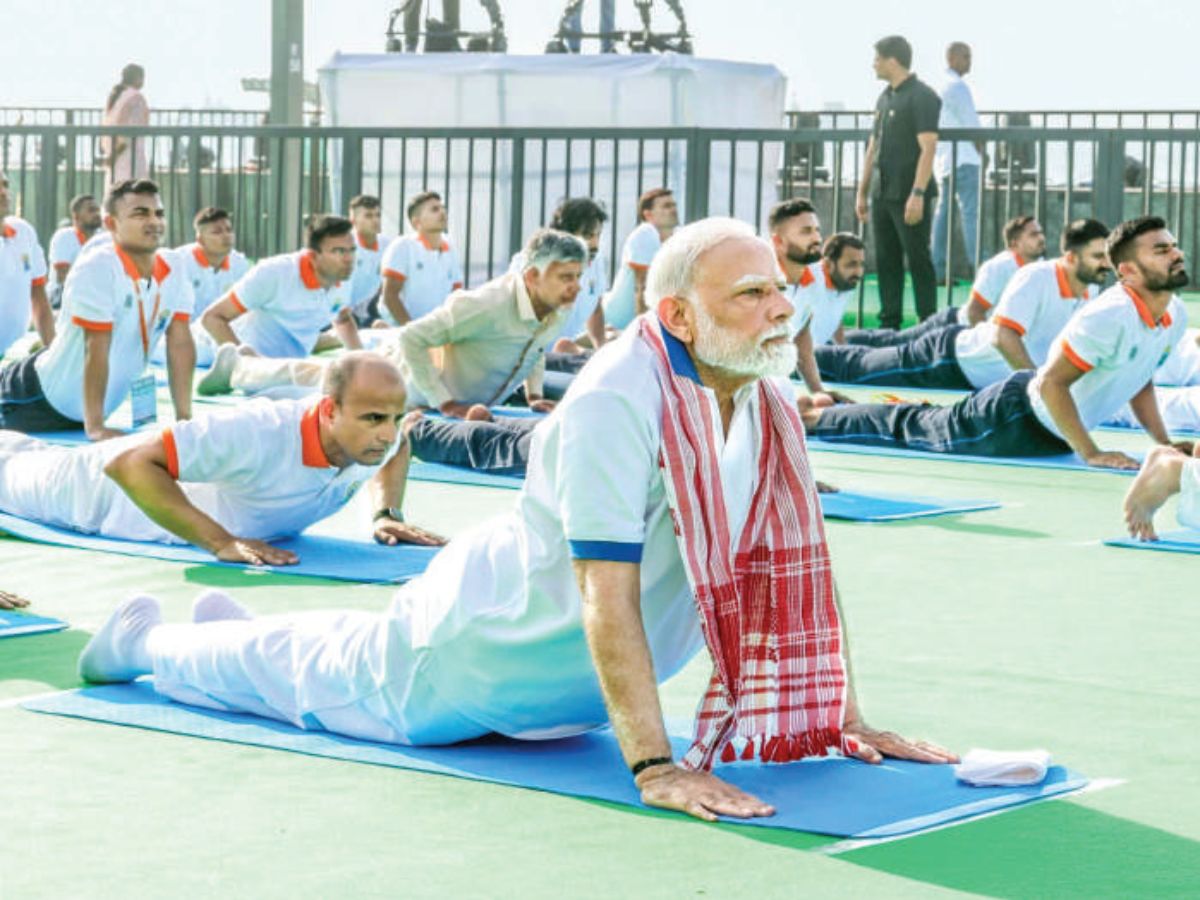
Each industrial revolution has been about increased efficiency and productivity. GDP rises with an increase in productivity and the number of contributors. PM Narendra Modi’s fitness regime, self-discipline, positive attitude, and dedication to a higher purpose in life exemplify individual proficiency, efficiency, and productivity, inspiring us to achieve greater heights. His long working hours with just four hours of sleep, leading the most populous nation in the world, his ability to manage hectic travel schedules, even globally without jet lag, the absence of altitude sickness on visits to troops on Himalayan heights, and staying fit, energetic, and focused at 75, is a marvellous example of what humans can achieve.
His lifestyle demonstrates that you don’t need to visit any fancy gym or follow a complicated diet to stay healthy. All you need is consistency, self-discipline, dedication, and a simple lifestyle of a man who practices what he preaches. Both physical and mental fitness are required to be a ‘superhit’ (extremely popular and successful) super achiever.
SELF-DISCIPLINE: PM Modi has often expressed his admiration for Benjamin Franklin's disciplined routine, which involved rising at 5 a.m., reducing excessive sleep, controlling diet, and managing work pressures. PM Modi has on many occasions commented on how his disciplined sleep, yoga, diet, and fasting routine keep him fit, energetic, and focused. Self-discipline is essential to stick to a healthy diet, regular exercise, an active lifestyle, a positive attitude, and avoid self-destructive addictions, wasteful expenditure, unethical behaviour, and violence, often under peer pressure. Hence, self-discipline begets health and success. Self-learning allows PM Modi to be knowledgeable, well-informed, and up-to-date.
FASTING: For PM Modi, fasting is both devotion and discipline. It is a tool for physical, mental, and spiritual balance. He often says that fasting never slows him down; instead, it makes his senses sensitive and sharp, accelerates his thinking process, and makes him more focused and productive. Fasting is defined as abstinence from all or some foods or drinks for a set period. There are many different ways of fasting. Fasting has several health benefits, including weight loss, improved blood sugar management, heart health, brain function, and protection against cancer and neurodegenerative disorders. Fasting has been associated with a lower risk of coronary heart disease and may help lower blood pressure, triglycerides, and cholesterol levels. Some studies have found that fasting along with resistance training could decrease several markers of inflammation and may be useful in treating inflammatory conditions. When fasting, stay hydrated, eat nutrient-dense foods, and rest adequately.
HEALTHY DIET: PM Modi is a ‘modest eater’, has a simple ‘sattvic’ diet, avoids processed or overly rich foods, and does not eat after 6 pm. A daily diet of raw and whole foods like fresh fruits, vegetable salads, anti-inflammatory herbs and spices, natural probiotics like curds (not processed yogurt), and whole grains like millets, in discrete amounts, fuels good health and delays aging. Japan's low obesity, heart disease, and cancer rates, and high life expectancy of 84.5 years, and the highest ratio of centenarians, are due to healthy diets, low in salt, fat, and red meat. Ideally, a nutritious breakfast, followed by a light working lunch and a light supper several hours before bedtime to support digestion, should all be consumed in a relaxed, non-stressful state. "Supper" is from the French word "souper," related to "soup," suggesting a lighter meal. "Dinner" in many cultures refers to the most substantial meal of the day, regardless of the time it's eaten. Drinking plain water improves digestion, supports detoxification, boosts metabolism, and even helps in weight management.
YOGA EXERCISES: Regular exercise improves physical health (stronger heart, muscles, and bones, better weight management) and mental well-being (reduced stress, better mood, and improved sleep). Exercise reduces risk factors like high blood pressure and cholesterol and the risk of chronic diseases like heart disease, diabetes, and certain cancers, and enhances overall quality of life by boosting energy, immunity, fostering better sleep, and prolonging lifespan. There are three types of exercise. Stretching exercises like Yoga exercises improve flexibility and strengthen the body. Mobility, agility, and stamina-improving exercises (Aerobic or Cardio) such as brisk walking, running, swimming, cycling, dancing, jumping rope, climbing steps, and sports. At least 150 minutes per week of such moderate activity is desirable to stay fit. Strength or Resistance training exercises involve body weight or external weights to strengthen bones and muscles and reduce body fat. Regular physical activity, especially aerobic exercise combined with strength training, increases cardiovascular endurance, improves circulation, and lowers resting heart rate, which lowers the risk of heart disease and promotes overall cardiovascular health.
PRANAYAMA: On his loss to Porus in his attempt to invade Bharathvarsha, Alexander approached the Taxshila scholars to learn Yogic exercises “designed to train the mind, control prana”. When he asked them what they thought of him, they answered that how can he who has not conquered himself, conquer the planet, and that he was on an empty quest, controlled by anger, greed, and violence. Pranayama (yogic practice of controlled breathing) significantly increases lung capacity and respiratory functions, and improves the digestive activity of the gut that lies beneath the diaphragm. By increasing oxygen supply and metabolic rate, it boosts energy levels and the immune system and helps in weight management. It prepares the mind for meditation, improves concentration levels, and enhances the ability to focus dispassionately. It reduces stress, anxiety, and blood pressure, increasing heart efficiency and enabling restful sleep. PM Modi has been practicing pranayama for five decades.
DEEP BREATHING AND ACCLIMATIZATION: "Swimmer lungs" refers to the larger lung capacity and broader chest found in competitive swimmers, which is even more than athletes and other sports persons. Aerobic exercise like swimming leads to the development of stronger respiratory muscles from water immersion and breath control, improves heart function and oxygen delivery to the body's tissues, and encourages the release of erythropoietin (EPO), a hormone that triggers red blood cell production and increased Haemoglobin. All these improvements help a swimmer, athlete, or pranayama practitioner like PM Modi to easily acclimatize to high altitudes and visit Himalayan heights without an oxygen mask. To avoid altitude sickness, all others should ascend gradually, with daily limits of 300-500 meters in altitude, take rest every few days, stay hydrated, eat high-carbohydrate meals, and avoid alcohol, strenuous activity, and overexertion, especially in the first 48 hours at altitude. Acetazolamide is the drug prescribed for preventing acute mountain sickness.
MEDITATION AND MENTAL CALM: Pranayama stabilizes the mind and withdraws awareness from the external world, thereby preparing one for deeper meditation. PM Modi relies on meditation to stay calm under pressure. Yoga meditation for just 10 minutes daily improves mental well-being through stress reduction, increased focus and mental clarity, improved mood and memory, and promotes an overall sense of balance, inner peace, and calm. Meditation offers significant emotional, mental, and physical benefits, including reduced stress and anxiety, better emotional regulation, improved focus and concentration, and enhanced self-awareness. It can also lead to lower blood pressure and heart rate, and a strengthened immune system, ultimately promoting overall well-being. Meditate, then, with a calm mind, focus on the problem at hand and how to solve it, rather than indulge in blame games and victimhood.
MELATONIN, SLEEP, AND JETLAG: Melatonin ("sleep hormone") is released in response to darkness and initiates and maintains sleep. Adults generally need 7-9 hours of sleep per night. In this author’s experience, 5 to 6 hours of good sleep, including the peak hours from 12 to 4 am, is sustainable in the long term and compatible with intense intellectual and physical activity. After a short, sound sleep, one gets up fully awake and alert compared to a long, disturbed sleep that leaves you drowsy afterwards. PM Modi says he gets sound sleep within 30 seconds of lying on the bed, and can manage with 4 hours, and credits yoga, meditation, and a disciplined lifestyle for keeping him energized and mentally sharp despite such limited rest. Drowsiness after a heavy meal (postprandial somnolence) occurs due to a hormonal shift and diversion of blood flow from the brain to the gut. Light meals, increased hydration, exposure to daylight on arriving at the destination, and an efficient short sleep help PM Modi overcome jet lag.
Dr. P.S.Venkatesh Rao is a Consultant Surgeon, Former Faculty CMC (Vellore), AIIMS (New Delhi), and a polymath in Bengaluru.
