India’s Air Littoral debate exposes resistance to true jointness; modern warfare demands shared, flexible command, not single-service control or institutional turf wars.
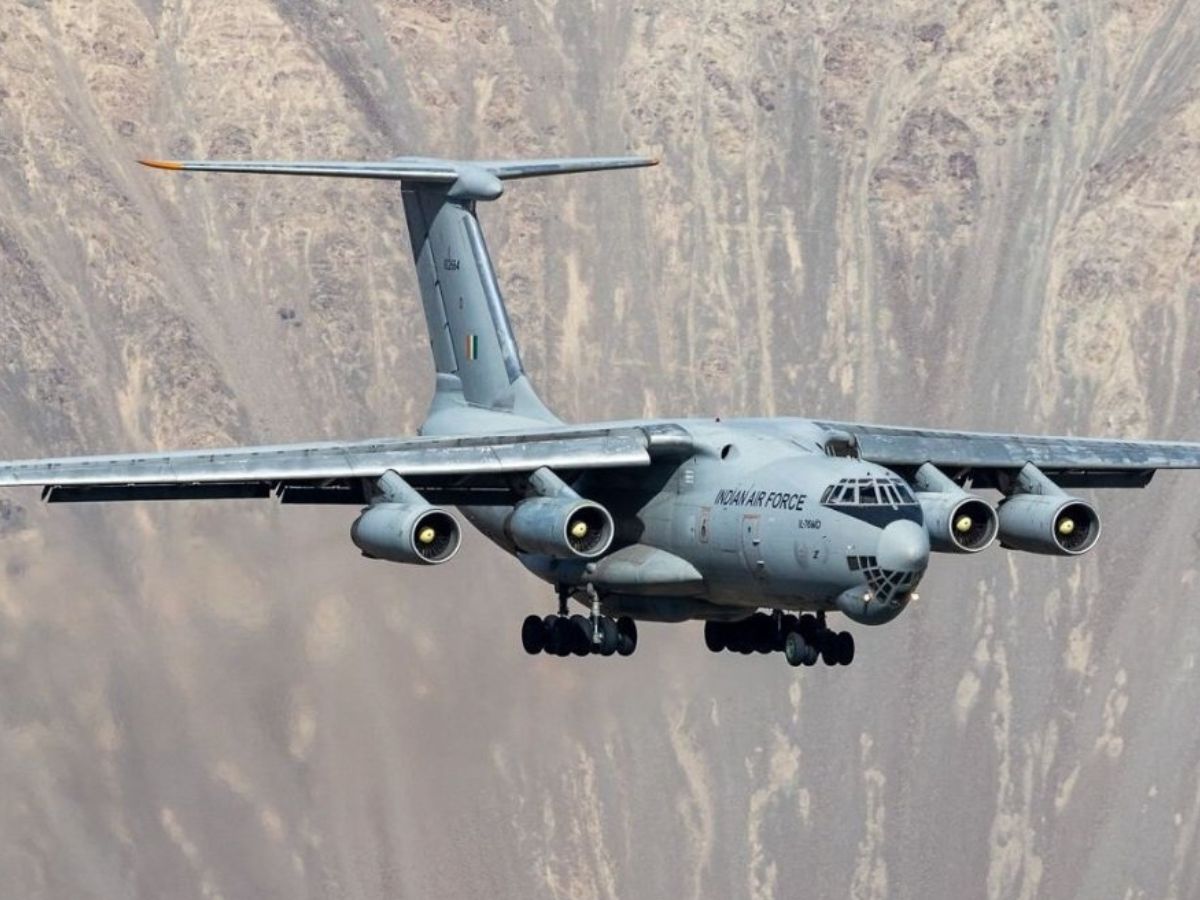
Stop Fighting Over Airspace—Start Winning It (Image: X/@IAF_MCC)
Debates over who “owns” the skies above the battlefield have resurfaced within India’s strategic community. Recent commentary on the control of the Air Littoral — the contested layer between land and higher airspace — has reignited old service rivalries under the guise of doctrinal prudence. What these arguments reveal, however, is not a defence of jointness but an unease with its implications: a reluctance to accept that modern warfare no longer fits neatly within single-service silos.
As militaries worldwide confront the convergence of air, land, cyber, and space domains, India’s doctrinal discourse risks being trapped in 20th-century paradigms. The challenge before us is not who commands the air, but how command is shared — dynamically, responsively, and technologically. True jointness demands intellectual agility, not institutional nostalgia.
A recent Centre for Airpower Studies (CAPS) article titled 'Control of Air Littoral by Land Forces: A Doctrinal Misstep in the Making—An Indian Perspective' has brought the tactical skies into the discourse with its dismissal of Air Littoral advocates as “land-warfare enthusiasts” relying on “ill-conceived, unprofessional arguments” trivialises a legitimate doctrinal debate. Such rhetoric undermines the intellectual seriousness of an issue now central to military thought across major armed forces. Institutions such as the U.S. Army War College and analysts like Lt Gen David Barno have long argued that future wars will unfold in contested, overlapping domains where no single service can claim uncontested dominance.
As noted in Challenging Air and Land Warfighting Precepts (p. 13): “Analysing Israel’s wars since 1967, analysts have argued that air superiority does not necessarily confer decisive advantage for ground combat… At the brigade level a tactical reconnaissance-strike complex—a ‘tactical internet of things’—is visualised.”
This encapsulates a global doctrinal shift: control of the battlespace demands multi-domain integration, not monopolistic command. To caricature these arguments as parochial betrays an intellectual discomfort with change, not a defence of professionalism.
The author’s reading of Operation Sindoor exposes the fragility of his own reasoning. He credits the operation’s success to air-power orchestration and “freedom of manoeuvre,” yet concedes that classical airspace management was limited and that drone saturation forced prioritisation of surface-based engagement systems.
Those admissions, rather than discrediting the Air Littoral concept, affirm it. When low-altitude engagements are dominated by ground-based systems while fighters operate beyond the surface-weapon envelope, the division of responsibilities mirrors precisely what Air Littoral proponents advocate—delegated control of the lower airspace to ground formations best placed to counter unmanned or loitering threats.
A 2024 study notes: “The drones have virtually segmented control of air into two parallel contests—Operational Air Control at higher levels and localised Tactical Air Control near the surface… C2 is progressively getting pushed to tactical levels.”
(Challenging Air and Land Warfighting Precepts, p. 12)
Likewise, Grieco & Bremer, writing in Æther Journal (Vol. 3 No. 3, 2024, p. 15), argue that persistent drone presence has rendered legacy air-control models obsolete. If Operation Sindoor required improvised procedures and post-conflict doctrinal reviews, the evidence points not to doctrinal sufficiency but to a gap the Air Littoral framework seeks to fill.
A deeper flaw lies in the article’s selective invocation of Western doctrine. While condemning Air Littoral thinking as an alien import, it simultaneously leans on USAF Doctrine 3-0, NATO Joint Air Power Strategy, and Western theorists to buttress its case. This double standard exposes an intellectual inconsistency: Western frameworks are valid when convenient but foreign when they challenge institutional prerogatives.
As analysed in Realignment and Indian Air Power Doctrine—Challenges in an Evolving Strategic Context (p. 33), Indian air-power thought has historically borrowed from Western precedents without fully integrating lessons suited to the subcontinent’s dual-front realities. Genuine professional scholarship demands synthesis, not selective citation.
The author also misconstrues the very metaphor on which the Air Littoral idea is built. He rejects the analogy to the maritime littoral on the grounds that airspace lacks fixed geography—overlooking that the maritime littoral’s relevance is functional, not geographic. It is the zone of interaction where sea, land, and air forces overlap.
Similarly, the Air Littoral is an operational stratum—typically from ground level to a few thousand feet—where ground-based air defence, tactical drones, artillery rockets, and manned aircraft all operate simultaneously. As Grieco & Bremer explain (Æther Journal, 2024, p. 18), control in this zone is negotiated through layered, overlapping defences ranging from long-range missiles to man-portable systems and cyber-electromagnetic effects. Denying this multi-layered reality in favour of rigid service boundaries risks doctrinal obsolescence.
The article’s portrayal of Air Littoral advocates as seeking “Army ownership” of airspace is a strawman argument. The proposition is not for command takeover but for tactical autonomy—allowing ground commanders to engage low-altitude threats within their immediate battlespace without paralysing delays.
As Æther Journal (2024, p. 18) notes: “Force components operating astride the air littoral require coordination no different from ground units crossing into each other’s areas of operation… Practical procedural solutions like coordination level and coordinating altitude define the edges of the littoral.”
This mirrors maritime practice, where naval and land forces coordinate coastal operations without demanding exclusive command. The insistence that “Unity of Command is sacrosanct” mistakes unity of purpose for monopoly of authority. In joint operations, decentralised execution with delegated control is the essence of responsiveness.
The author’s own narrative betrays confusion between adherence and adequacy. He insists that existing joint doctrine provides sufficient command-and-control structures, yet concedes that Operation Sindoor demanded entirely new procedures. If doctrine were adequate, ad-hoc improvisation would have been unnecessary.
A Friday Times analysis (India’s Air-Led Cold Start Doctrine, June 9 2025) bluntly observed: “The May 2025 conflict served as a devastating stress test for the Air-Led CSD… The assumption of guaranteed air dominance collapsed, exposing a fatal doctrinal flaw and forcing reckless escalation.”
Such assessments underscore the urgency of doctrinal renewal. Pretending that adherence alone will solve structural problems is institutional denial, not professionalism.
By redefining Air Littoral as merely an issue of “efficiency and safety,” the author sidesteps the crux of the debate—who exercises real-time decision-making authority in contested low-altitude airspace. Declaring the Army “primary user” of the Tactical Battlespace Area yet denying it corresponding control authority is operationally inconsistent.
Consider a brigade under drone swarm attack. Must the commander await clearance through Air Force liaison chains, or act instantly with organic assets? The current framework implies the former. In a battlespace where seconds matter, procedural latency can decide outcomes. Coordination without delegated authority is not integration—it is inertia.
The author’s warning against “reactionary doctrinal change” in response to new technologies reflects the kind of conservatism that has historically handicapped militaries confronting paradigm shifts. From the tank in World War I to cyber warfare today, innovation demands doctrinal elasticity.
Admitting that drone saturation requires “new tactical procedures” while rejecting structural reform is untenable. The Air Littoral debate is not reactionary—it is anticipatory, seeking to align doctrine with an emerging reality where unmanned systems, precision munitions, and electronic warfare converge in the same vertical battlespace.
Most revealing is what the article does not provide: data or examples showing how existing command arrangements neutralise current threats. The absence of operational analysis is telling. Field experience indicates that ground formations often face delays of several minutes before engaging hostile drones—an eternity in a dynamic battlespace. Without acknowledging this latency, claims of doctrinal sufficiency ring hollow.
Threaded through the entire critique is a familiar theme of institutional preservation. The author defends the Indian Air Force’s exclusive control through IACCS, portraying any deviation as a threat to efficiency. Yet true jointness requires reciprocal adaptation—each service yielding some autonomy for collective effectiveness. The refusal to recalibrate control arrangements exposes a preference for institutional primacy over operational reality.
The debate over Air Littoral control is not about inter-service rivalry—it is about survival in a new battlespace. The article under review exemplifies how entrenched institutional thinking can disguise itself as doctrinal orthodoxy, conflating critique with disloyalty and reform with heresy.
As Srivastava and Grieco & Bremer argue, contested low-altitude airspace has become the decisive frontier of modern warfare. India’s armed forces cannot afford to approach it with 20th-century assumptions about centralised command and rigid service domains.
The challenge ahead is not one of ownership but of cooperation—of crafting doctrine that is intellectually honest, operationally flexible, and technologically aware. Only through candid inter-service dialogue and shared adaptation can India’s military realise the full potential of jointness in the air littoral.
Professionalism today demands not protection of turf, but the courage to evolve.
(Aritra Banerjee is a Defence, Foreign Affairs & Aerospace Journalist and co-author of The Indian Navy @75: Reminiscing the Voyage. Having spent his formative years in the United States before returning to India, he combines a global outlook with on-the-ground insight in his reporting. He holds a Master’s in International Relations, Security & Strategy from O.P. Jindal Global University, a Bachelor’s in Mass Media from the University of Mumbai, and Professional Education in Strategic Communications from King’s College London. With experience across television, print, and digital media.)
