‘Cinnamon is the spice that makes memories taste better.’
The words returned to me somewhere over the Bay of Bengal as my flight banked gently towards the emerald outline of Sri Lanka. I had not set foot here in 21 years. Coming back felt like visiting a beloved relative after decades apart—recognizable, yet changed in ways you can only sense when you are close enough to breathe in the air.
That air, as soon as I stepped out of the airport, carried its unmistakable signature: a languid sea breeze scented with brine, cinnamon, and something else—an almost imperceptible freshness, as if the island itself were waiting to be rediscovered.
For centuries, Sri Lanka, Ceylon in colonial times, has been celebrated as the Pearl of the Indian Ocean, a coveted jewel for traders, conquerors, and travellers. But this trip was not about tracing the usual trail of ancient ruins and sleepy tea plantations. The island is now writing a bold new chapter: one that blends luxury, ambition, and reinvention.
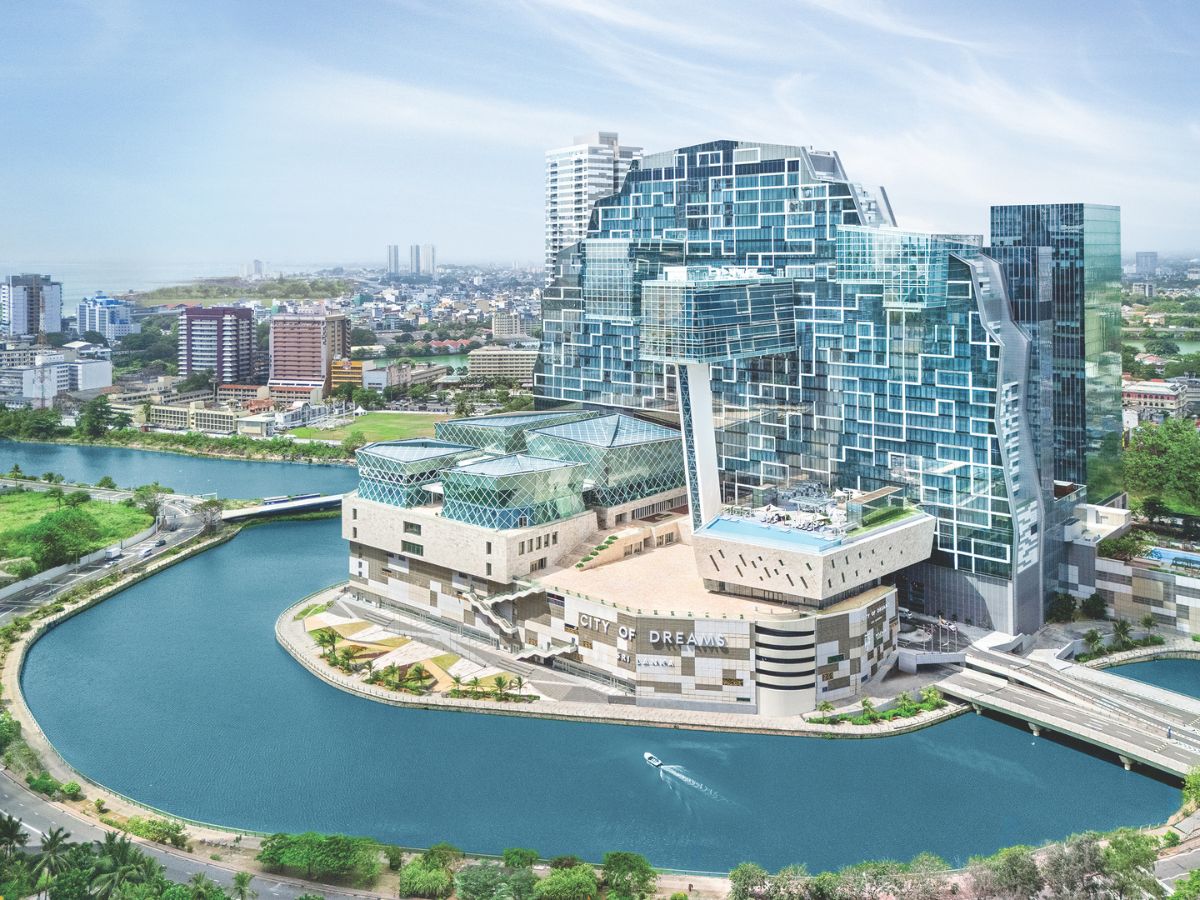
That new story rises from the heart of Colombo’s evolving skyline, where colonial-era facades and bustling markets now share the horizon with glass towers and daring architecture. From a distance, it shimmers like a mirage: City of Dreams, South Asia’s first integrated luxury resort and Sri Lanka’s largest-ever private sector investment in lifestyle infrastructure.
The resort’s glittering debut brought together Colombo’s swish set with Bollywood superstar Hrithik Roshan as guest of honour. Calling Colombo “a city of beauty, spirit, and strength,” Roshan helped unveil the $1.2-billion project.
“This is not just about buildings,” said Krishan Balendra, Chairperson of the John Keells Group, the force behind the development. “It’s about building confidence. About rewriting narratives—that Sri Lanka is a place of opportunity. A place where we can compete, lead, and dream big again.”
Walking into City of Dreams feels like entering a self-contained world, avant-garde in its lines, yet steeped in tradition. Sprawled across 4.5 million square feet, its curved façade is a modern interpretation of the sandakada pahana, or moonstone—an ancient carved motif found at the entrances of temples in Polonnaruwa.
The resort houses two distinct luxury hotels. Cinnamon Life, with 687 rooms, is vibrant and cosmopolitan, while the newly opened Nüwa, under Melco Resorts & Entertainment, epitomizes discreet indulgence. Its 113 rooms are wrapped in floor-to-ceiling glass, framing sweeping views of the Indian Ocean on one side and Beira Lake on the other. It’s the kind of place where you can sip a perfectly brewed Ceylon tea while watching cargo ships crawl towards the harbour, feeling cocooned from the city’s hum.
City of Dreams is also home to a state-of-the-art casino and entertainment district operated by Melco. “Macau is the biggest gaming market in the world,” said Lawrence Ho, Chairman of Melco Resorts. “Colombo is the closest destination to India, and an integrated resort like this gives the city enormous potential.”
The aim is to draw affluent travellers from India, the Middle East, Russia, and China, transforming Colombo from a mere gateway into a destination in its own right.
But it would be a mistake to think the resort is just for high-rollers. This is also a lifestyle playground, with 17 dining outlets ranging from Michelin-starred restaurants to authentic Sri Lankan kitchens.
Do try the crispy hopper—delicate, bowl-shaped edges holding a perfectly runny egg in the centre. Indulge in Sri Lankan yellow rice (kaha bath) with a side of comforting dhal curry, rich with coconut milk, curry leaves, and spices. When dinner rolls around, you could go for the tangy fish ambul thiyal or the deeply spiced black chicken curry (kukul mas). For something truly indulgent, unwrap the banana-leaf parcel of lamprais—a fragrant combination of rice, meat, and sambols baked to perfection. And for a sweet finish? A chilled bowl of cinnamon ice cream, sweet, spiced, and perfectly fitting for an island that continues to rule the world’s cinnamon trade.
The retail wing is a treasure chest of indulgence. Sri Lankan design boutiques and handloom stores sit alongside international fashion houses. Spa Ceylon’s jewel-toned bottles offer Ayurvedic oils, balms, and perfumes that seem to hold the essence of the island. While the global labels have their audience, it’s the local artistry—woven, carved, and bottled—that truly captivates.
What sets City of Dreams apart is its commitment to the arts. Over 1,000 museum-grade works, all commissioned from Sri Lankan artists, are displayed throughout the resort. From bold abstracts to intricate traditional motifs, as well as installations, the collection transforms the property into a living gallery, preserving heritage while giving it a contemporary stage.
“City of Dreams is not just for this generation,” says Balendra. “It’s for the next.” For a country that has endured economic volatility, political unrest, and the long shadows of civil conflict, this development is more than a resort. It is a symbol of resilience—a reminder that reinvention is not only possible but inevitable. It is also seen as an economic catalyst, creating jobs in construction, hospitality, retail, and services, while signalling Sri Lanka’s readiness for foreign investment.
“Sri Lanka is open, stable, and investable,” Balendra adds.
While City of Dreams can feel like a world within a world, Colombo beyond its glass façades remains endlessly inviting. A short stroll brings you to the sea-facing promenade, where locals gather for sunset snacks of isso wade (prawn fritters). A short drive takes you to the serene Gangaramaya Temple, the historic Kelaniya Raja Maha Viharaya, or the golden sweep of Mount Lavinia Beach.
For a touch of design inspiration, browse Paradise Road’s chic homeware and design studios, or head to Pettah’s spice markets. From the vantage point of City of Dreams, Colombo looks ready to stake its place on the global travel map—not as a stopover, but as a destination in its own right.
