Operation Pawan (1987–1990) wasn’t a military failure but a political one. The IPKF stabilised Jaffna and enabled Tamil elections, but India’s wavering leadership squandered its gains.
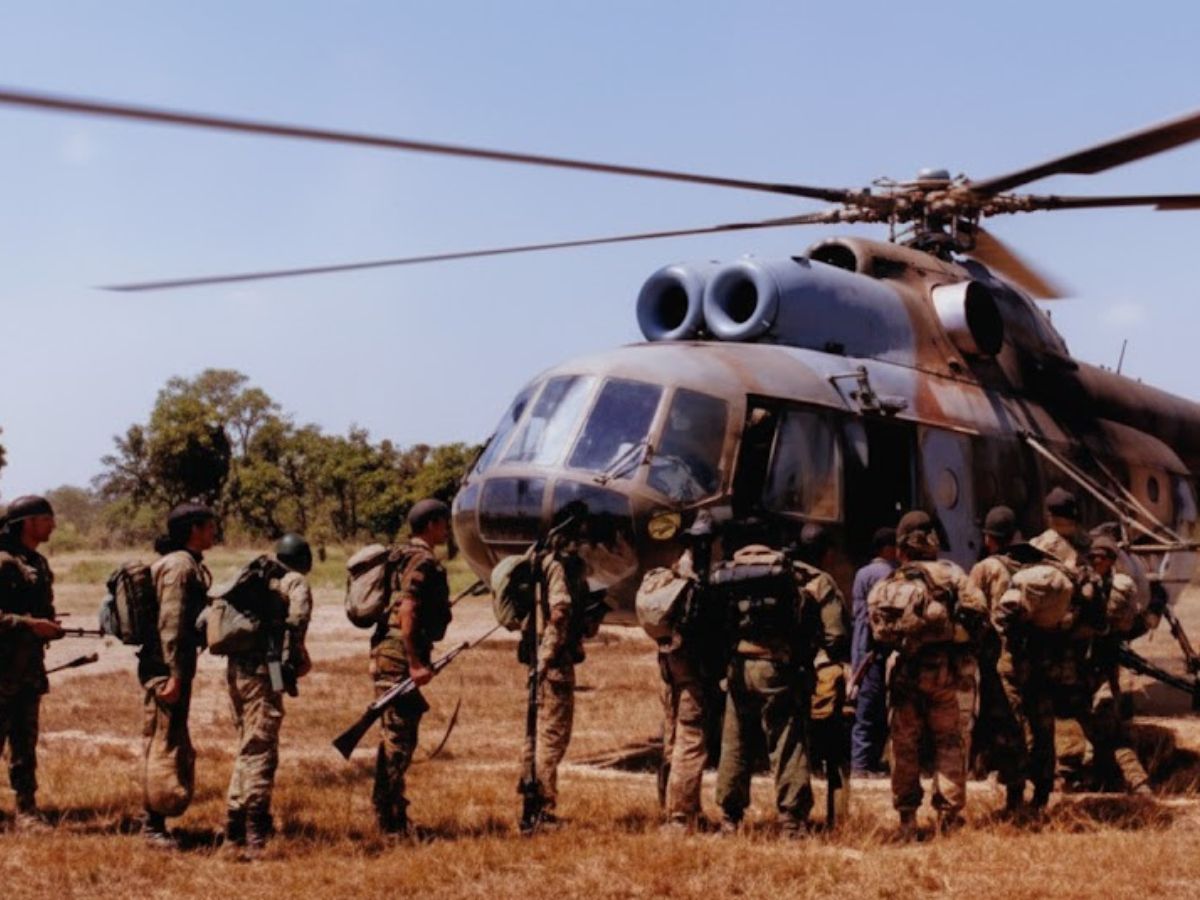
The IPKF in Sri Lanka: Unpacking the Myth of Military Failure and Exposing the Crisis of Political Will (Image: X/@History_Mil)
The 1987-1990 Indian intervention in Sri Lanka, code-named Operation Pawan, remains one of the most contested chapters in India’s foreign and military history. Recent remarks by former diplomat and Rajiv Gandhi aide Mani Shankar Aiyar blaming the “Army and Intelligence” have revived an old distortion. Evidence shows that the Indian Peace Keeping Force’s (IPKF) challenges stemmed not from military failure but from indecision and inconsistency at the political level.
The Flawed Foundation: The 29 July 1987 India–Sri Lanka Agreement (ISLA) carried structural flaws that doomed the mission even before the first Indian soldier landed in Jaffna. It lacked legitimacy among the Sri Lankan factions it sought to reconcile—most crucially the Liberation Tigers of Tamil Eelam (LTTE), whose leader Prabhakaran consented only under pressure.
Within India, the accord faced fierce opposition in Tamil Nadu, where parties viewed any action against Tamil militants as political suicide. This left New Delhi paralysed—unable either to pursue the mission vigorously or withdraw without appearing weak.
A fatal clause made deployment contingent on Colombo’s “request”, allowing Sri Lanka to dictate the IPKF’s continuance. That provision, exploited in 1989, handed Colombo a veto over India’s presence. No army can prevail when its host government holds the power to order its exit.
The “Triple Transformation” of Mandate: Between June and October 1987, the IPKF’s mandate changed three times—coercion, peacekeeping, then peace enforcement. Originally meant to pressure the LTTE into compliance, it shifted to ceasefire monitoring and, after the Tigers’ renewed hostilities, became a full-scale combat mission under Operation Pawan.
Such rapid shifts made coherent planning impossible. Commanders received conflicting instructions on objectives and use of force. The failure lay not in field execution but in political vacillation at the top.
The IPKF episode revealed India’s lack of formal national-security coordination. Decisions were taken through ad-hoc consultations and personal networks rather than structured civil-military planning. There was no National Security Council, no mechanism to translate political goals into military directives or define success criteria.
As veterans later noted, this absence of institutional clarity forced military leaders to improvise responses to fundamentally political problems—undermining effectiveness regardless of tactical skill.
Overcoming Early Setbacks: In October 1987 the IPKF encountered stiff resistance in Jaffna. The army, trained for conventional warfare, confronted an entrenched guerrilla force with local support and urban-combat experience. Initial operations exposed intelligence gaps and unsuitable equipment for counter-insurgency.
Yet critics ignore how swiftly the IPKF adapted. Commanders reorganised, established a counter-insurgency grid and severed LTTE supply lines. Lt Gen Hardev Singh Lidder, who commanded Special Forces in the operation, recalled that when the IPKF arrived, the LTTE controlled most population centres. By late 1988, civic amenities and transport links were restored, and the Tigers were confined to remote pockets.
From chaos in 1987 to stability a year later, the IPKF demonstrated flexibility and professionalism—qualities lost in narratives fixated on the opening phase.
Beyond combat, the IPKF achieved a political breakthrough. Under its protection, the November 1988 North-Eastern Provincial Council elections went ahead despite LTTE intimidation, producing a mandate for the Tamil Eelam People’s Revolutionary Liberation Front (EPRLF) alliance.
The peaceful transfer of power to elected Tamil leaders fulfilled a central ISLA goal—political representation within a unified Sri Lanka. The army created the security environment that made democracy possible. The subsequent collapse of this framework stemmed from political abandonment, not military failure.
By December 1988, the IPKF had contained the LTTE, overseen elections and restored normalcy. Its commander radioed New Delhi: “Mission accomplished, awaiting further orders.” It was the moment to begin a phased withdrawal from a position of strength—consolidating gains and preserving influence.
Instead, New Delhi remained inert. No plan followed, no directive came. When withdrawal occurred in 1990, it was hasty and politically driven, erasing battlefield achievements and projecting defeat where there had been success. The failure to capitalise on victory marked a deeper crisis of strategic direction.
Colombo’s Coup: The calculus shifted when Ranasinghe Premadasa became Sri Lankan President in January 1989. Dependent on Sinhalese nationalist support, he denounced the IPKF presence and invoked the ISLA clause allowing him to “request” its removal.
India, having defined its intervention as a friendly assistance mission rather than a strategic necessity, had no counter-argument. Premadasa’s manoeuvre turned the treaty against India itself—a diplomatic checkmate exposing the original design flaw.
Facing Tamil Nadu opposition and domestic criticism, the Rajiv Gandhi government yielded. In August 1989 it agreed to withdraw, despite the IPKF maintaining operational superiority. The decision reflected political expediency, not battlefield reality.
The pull-out dismantled India’s strategic gains. New Delhi left without securing safeguards for its Tamil allies or guarantees for continued political rights. More than 100,000 troops had been deployed, 1,171 killed and 3,500 wounded—yet the withdrawal yielded no leverage, only loss.
After India’s exit, Premadasa aligned with the LTTE against the EPRLF. The Tigers, freed from IPKF pressure, hunted down Tamil leaders who had cooperated with India. The political structure the IPKF had enabled was annihilated.
India’s allies paid with their lives for New Delhi’s retreat. The tragedy revealed that the real collapse was not military but political—the forfeiture of responsibility after the soldiers had delivered stability.
The “Self-Inflicted Injury”: Veterans call the failure narrative a “self-inflicted injury”. Politicians, seeking to escape accountability, shifted blame to the military. For the Congress Party it deflected criticism of an unpopular intervention; for Tamil Nadu parties it proved the futility of confronting Tamil militants. The military became the scapegoat for political indecision.
The scale of commitment—1,171 killed, over 3,500 wounded, 32 months of continuous operations—was comparable to a conventional war. Despite political discomfort, even Colombo acknowledged the sacrifice: a farewell parade was held and a war memorial built in the Sri Lankan capital to honour fallen Indian soldiers.
In India, however, recognition has been belated and muted. The National War Memorial inscription came decades later. As veterans note, the host nation commemorated their service while their own government preferred silence—an irony that speaks to political unease, not military failure.
The ISLA had envisaged a limited military presence to support political reconciliation. When diplomacy failed, the military became the entire instrument of policy—a symptom of political breakdown, not overreach by soldiers. The IPKF’s prominence reflected the void of strategic vision at home.
The IPKF’s experience reveals that India’s challenge lay not in military execution but in the absence of coherent political guidance and institutional coordination. Forces were deployed with vague mandates, shifting objectives and no defined exit plan. The cost—1,171 lives—was borne by soldiers asked to deliver clarity where none existed.
Future interventions must rest on institutionalised politico-military frameworks capable of aligning military operations with strategic aims and clear conditions for success. Without such structures, the errors of Sri Lanka could repeat elsewhere.
The IPKF deserves to be remembered not as a failure but as a campaign of courage and adaptation. The men who fought there did their duty; it was the state that faltered. In any democracy, the effectiveness of its armed forces depends ultimately on the steadiness of its political will.
(Maj Gen Deepak Mehra, Kirti Chakra, AVSM, VSM (Retd.) is an IPKF veteran, former Indian Military Attache to Moscow, & Founding Director and CEO of Thorsec Global Pvt Ltd)
