India marks Infantry Day on October 27, honouring the 1947 airlift that saved Kashmir from invasion—while Pakistan observes “Black Day,” repeating a false occupation claim.
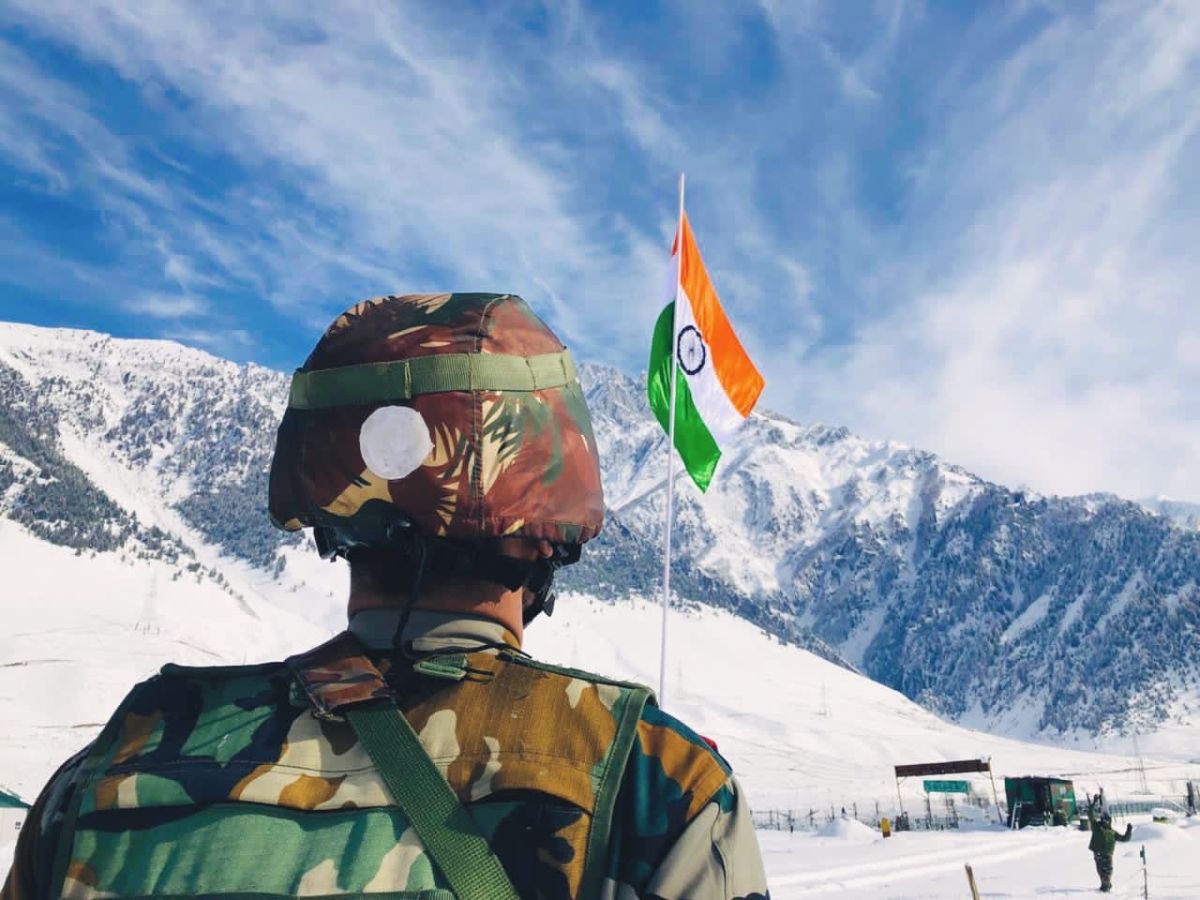
The Saviours of Kashmir (Image: X/@SoldierNationF1)
Every year on 27 October, two very different observances unfold across the subcontinent.
In Islamabad, Pakistan’s Ministry of Foreign Affairs issues its annual “Kashmir Black Day” statement, claiming that Indian troops “occupied” the Valley in 1947.
Across the Line of Control, India commemorates Infantry Day — honouring the moment when Indian soldiers were air-lifted into Srinagar to defend Jammu and Kashmir after its legal accession to the Union.
Seventy-seven years later, the facts remain unchanged: Pakistan launched the first aggression, and India’s infantry saved Kashmir.
At sunrise on 27 October 1947, a Dakota aircraft touched down on the dirt strip at Srinagar. On board were men of 1 Sikh Regiment, led by Lt Col Dewan Ranjit Rai. The Valley was on the brink: armed tribal lashkars from Pakistan had already ravaged Baramulla and were advancing towards the capital.
Within hours of landing, the Indian infantry secured the airfield and pushed back the invaders. Six days later, Major Somnath Sharma and his company of 4 Kumaon fought at Badgam, outnumbered seven to one. His final words — “The enemy are only 50 yards from us… we shall fight to the last man and the last round” — became a part of military legend. He was posthumously awarded India’s first Param Vir Chakra.
That stand at Badgam saved Srinagar — and, in truth, saved Kashmir itself.
Pakistan’s MoFA statements every October recycle the claim that 27 October marks India’s “occupation.”
Yet, the documented sequence is clear.
On 22 October 1947, armed tribal raiders backed by Pakistan’s military invaded Jammu and Kashmir through Muzaffarabad.
On 26 October, Maharaja Hari Singh signed the Instrument of Accession to India.
On 27 October, Governor-General Lord Mountbatten accepted it, and Indian troops were air-lifted to defend the legally acceded state.
India’s operation was a response to invasion, not an act of aggression. Pakistan, not India, violated sovereignty first — a fact acknowledged even in early UN documentation.
What began as an emergency deployment became a seventy-seven-year vigil. From Tangdhar to Tral and Gurez to Gulmarg, infantry battalions have held post after post, generation after generation.
During the 2014 floods, over 90,000 civilians were rescued within five days. In winter, soldiers deliver food and medicines to villages cut off by snow. In summer, they guard pilgrim routes and convoys.
For many Kashmiris, the sight of olive-green uniforms still means help has arrived — whether after an avalanche or during unrest.
Through Operation Sadbhavana, launched in 1998, the Army has built schools, clinics and bridges worth over ₹450 crore across the region. Thousands of Kashmiri children have studied in Army Goodwill Schools and gone on to universities nationwide.
The soldier here is both sentinel and neighbour — armed, yet accessible. Even in tense times, villagers call the nearest post first for medical emergencies or road clearance. This dual role defines the infantry’s silent service.
The battlefield has evolved. Drone surveillance, encrypted handlers, and cross-border information networks have replaced the tribal lashkars of 1947. Yet, the core task endures.
During Operation Sindoor (2025), India’s large-scale precision counter-terror response after the Pahalgam attack, infantry units once again formed the decisive ground element. Technology may guide the strike, but it is still the soldier who closes in, assesses intent, and makes the moral decision that machines cannot.
Across the Valley, posts have become small community hubs. Soldiers clear snow from roads, repair bridges, and share tea with families during festivals. These gestures cannot erase the past, but they soften the present. As one elderly resident of Bandipora once said, “They come with weapons, yes — but sometimes they also bring warmth.”
While Pakistan denounces India in international forums, its own record in Pakistan-Occupied Kashmir (PoK) tells another story.
In September–October 2025, widespread protests in Muzaffarabad, Dadyal and Dheerkot over electricity tariffs and resource exploitation were met with live-fire crackdowns. At least ten civilians were killed, over 150 injured, and communication networks shut down.
Those images from PoK — of bullets, curfews and censorship — undercut every line of Islamabad’s “Black Day” narrative.
Infantry Day is not a ritual of nostalgia. It commemorates India’s first act of sovereign defence — and exposes the falsity of Pakistan’s annual MoFA script.
The men who landed at Srinagar in 1947 fought for a lawful accession, not annexation. Their successors today guard a Valley that continues to heal and rebuild under constitutional governance.
In contrast, Pakistan’s side of the frontier lives under military suppression, its own citizens protesting for basic rights.
From Badgam to Baramulla, from the 1947 airlift to Operation Sindoor, the Indian infantry’s story is one of steadfast defence and human endurance. Each generation has renewed the promise first made on that October dawn: to stand watch so that others may live in peace.
So when Pakistan’s MoFA calls 27 October a “Black Day,” India answers — with wreaths, with silence, and with the quiet tread of soldiers who still keep their watch.
For seventy-seven years, they have been the Saviours of Kashmir — and the guardians of a truth that no statement can erase.
(Ashu Mann is an Associate Fellow at the Centre for Land Warfare Studies. He was awarded the Vice Chief of the Army Staff Commendation card on Army Day 2025. He is pursuing a PhD from Amity University, Noida, in Defence and Strategic Studies. His research focuses include the India-China territorial dispute, great power rivalry, and Chinese foreign policy.)
