No professional degree can ever fully equip you for real-world practice.
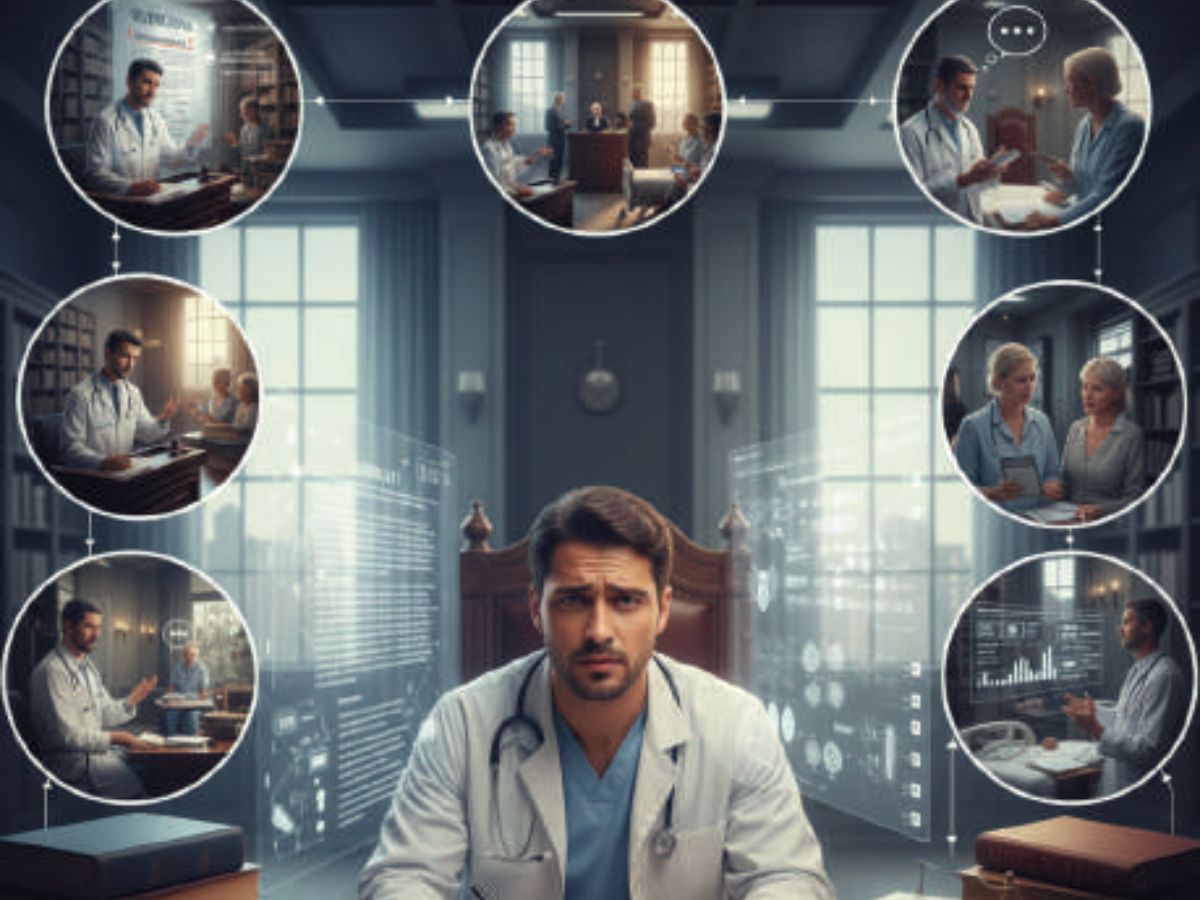
The skills medical schools don’t teach enough
It was a routine day when a colleague of mine received a court notice summoning him as a witness. He was asked to clarify the medical meaning and clinical relevance of a nuance to one side’s argument. The issue which would normally be understood within minutes in a ward discussion, had now been elevated into a contested legal point. A routine exam note stating “unremarkable” - which medically means normal - was read by the patient and his lawyers as meaning that the doctor had not remarked upon and hence had not examined the patient. A standard clinical term thus got converted into an alleged evidence of negligence. The challenge was not clinical expertise, but correcting a misunderstanding and rebuilding an accurate account of what had actually happened.
That day, watching him navigate the legal minefield, I could not help thinking about an uncomfortable reality - medical education prepares us thoroughly for disease and its treatment, but often poorly for society. The incident made me realize the inadequacy of our training in areas that modern practice increasingly demands. Medicine is no longer confined to clinics and wards; it lives in courtrooms, in public perception, and in patient expectations. Yet our syllabus remains heavily science-centric, structured around diagnosis and treatment alone, and far less tuned to the ecosystem in which healthcare now operates. We may pass out as competent clinicians, but are rarely trained as legally aware professionals, skilled communicators, or cost-conscious practitioners. These are not optional extras anymore, they are essential competencies.
The first major lacuna is the absence of structured medico-legal education. Medical students are rightfully taught to keep the best interests of the patient in mind, to act ethically, and to explain their actions in a language the patient can understand. Since patients can have vastly varying backgrounds, explanations must be adapted accordingly. Some patients want details, others want reassurance. Some want statistics, others want simple clarity. We learn this informally, often through uncomfortable experience.
What is rarely taught, however, is that documentation is not merely clinical—it is potentially legal. We do learn to write notes clearly and document appropriately, but almost never from the perspective of legal scrutiny or as a defence of professional actions. A case sheet is treated as a record for continuity of care, not as a document that may be dissected line by line in a courtroom. The reality is that a doctor’s legal vulnerability may arise many years after he has seen a patient. Memories fade, teams change, protocols evolve. When a doctor is called to explain himself years later, his documentation becomes his only reliable witness.
There is another practical problem. The language of medicine is not the language of law. Doctors routinely use abbreviations, short forms, and jargon that are understood in hospitals but incomprehensible to outsiders. Yet in a court where the audience includes lawyers, judicial officials, and laypersons, many of these writings may be interpreted as evasiveness or ambiguity. Documentation must therefore be accurate, detailed, and written in a language that all stakeholders can comprehend. That is easier said than done. It may be nearly impossible for any doctor to write perfectly legally defensible notes at all times, especially in busy emergency settings. Most clinical documents will always fall in a grey zone - clinically adequate but legally vulnerable.
There are a few practical ways to plug this gap. First, make medical students aware of the medico-legal issues they might encounter during their formative years. Not to scare them, but to prepare them. Second, provide institutional support in the form of structured templates developed with legal input, and access to trained documentation assistants who can help convert clinical events into legally coherent records. Third, carefully supervised use of artificial intelligence may help generate structured, standardised, legally comprehensible case sheets. Even though AI has limitations and must be deployed with accountability, it can be useful as a writer assistant. What cannot continue is the current situation where doctors are expected to defend themselves legally, without ever being trained for it.
This is the second major gap in medical education. Even the best medical colleges do not prepare students for the subtleties of breaking bad news, discussing life-altering diagnoses, counselling after complications, or supporting a mother grieving a lost precious pregnancy. And these are not intuitive skills. They are emotionally charged interactions that require method, structure, and practice. Yet doctors are left to learn them informally, often by observing seniors - some excellent, some deeply flawed - and absorbing habits that may not be humane or effective.
Communication is not mere politeness. It is the ability to convey truth without cruelty, to offer empathy without losing clarity, and to handle anger, denial, guilt, and fear without becoming defensive. It is also the ability to set expectations honestly so that families do not feel betrayed later. There is an art to sequencing information, reading non-verbal cues, giving space for emotion, and ensuring comprehension. One of my teachers used to say, “When a patient dies, don’t die with him.” Never let your rationalization and analysis desert you. These are the times that you need it the most. It is not a call to become detached; it is a reminder that even in tragedy the doctor must remain grounded and functional. Families may collapse emotionally, but the doctor must remain an anchor - empathetic, but rational and steady. These skills need to be taught formally using simulations, role-play, and feedback. A doctor’s words can heal or harm, long after the prescription ends.
The final gap is the lack of training about the cost of a treatment. Only after years of active practice does a doctor begin to understand the financial weight of illness. Different patients accept, delay, modify, or discontinue treatment not due to ignorance, but due to affordability. Yet many students emerge with no concept of what common treatments cost and what “standard care” means financially. Of course, it is impossible to know the cost of every medicine and every intervention. Prices vary and protocols change. But the basics can and should be taught. Students should have a working sense of the financial burden of some commonly encountered clinical situations such as the cost of a week of antibiotics or monthly costs of treatment of chronic diseases such as diabetes or hypertension. They should learn to discuss alternatives, prioritise interventions, and tailor treatment plans that patients can realistically sustain. Cost-awareness does not cheapen medicine; it makes it deliverable.
In conclusion, while medicine is a refined science, its practice is certainly a social art. Medical schools produce technically capable doctors, but society increasingly needs doctors who can withstand legal scrutiny, communicate with skill and empathy, and recommend treatments that patients can afford and sustain. Only when medical education includes these social obligations as core competencies can we hope to bridge the gap between caregivers and care receivers.
Prof Hemant Madan is an Interventional Cardiologist and Programme Head, Cardiac Sciences for Narayana Health.
