
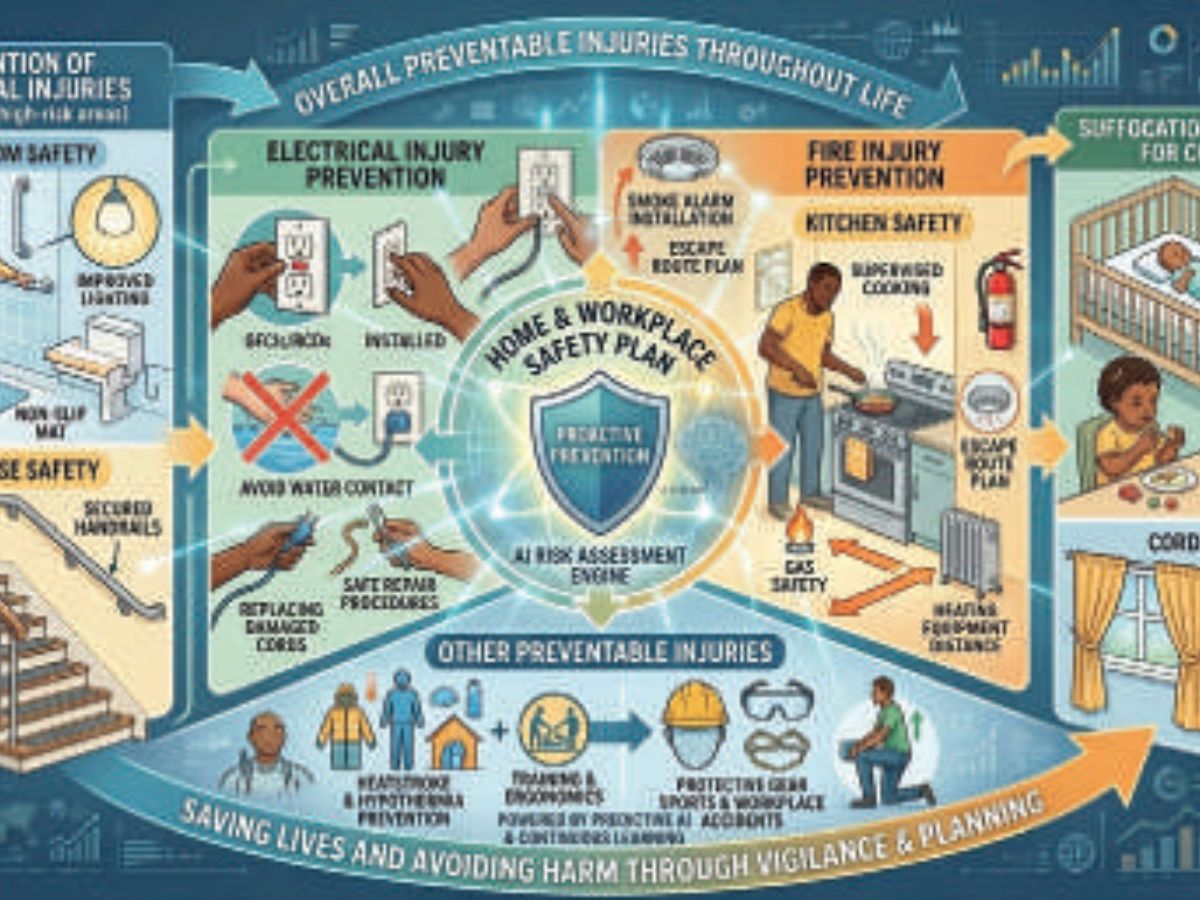
Slipping in the bathroom, on stairs, or on wet floors is a leading cause of accidental, preventable death globally. Among elders, minor slips can lead to fatal head injuries or hip fractures, with a 50% mortality rate within six months. Up to 80% of home-based falls occur in the bathroom and account for 235,000 emergency room visits annually in the U.S., with 4 out of 5 of these being due to falls. Getting in/out of the bathtub or shower and using the toilet in the absence of grab bars and non-slip mats are the most common scenarios for fatal slips. Roughly 12,000 people die annually in the U.S. from falling down stairs, with many of these incidents occurring at home. Improper railings, poor lighting, and uneven steps are major contributing factors to fatal stair falls. Water, or soapy residue on smooth floor surfaces, creates extremely slippery conditions. Nearly all slip falls, unlike trip falls, are backwards and often result in immediate death or long-term paralysis due to head, neck, and spine injuries. Injury and death during travel are mostly due to motor vehicle crashes, and were discussed last Sunday. Homicide, suicide, water-related (e.g., drowning, boating-related) deaths, air or train accidents, drug and terrorist related incidents are other causes and are not discussed here. Poisoning by accidental ingestion of cleaning agents or medicines, natural disaster injuries, and occupational injuries are also not discussed here.
ANTI-SLIP PREVENTIVE MEASURES
- Install grab bars inside and outside the shower/tub and near the toilet.
- Utilize non-slip mats or rubber treads inside the tub and on the bathroom floor.
- Maintain dry floors by immediately cleaning up water spills. Cleaning in progress barriers are a must in public spaces. Avoid cables, tubes, and loose mats that can trip.
- Ensure hallways and stairways are well-lit with night lights to improve visibility.
- Keep staircases clear of clutter and free of dust, debris, or moisture, well-lit with light switches at both the top and bottom, with colour contrast between the flat and vertical surfaces of each step, or use high-contrast tape or paint on the edges.
- Install sturdy handrails on both sides of staircases.
- Ensure proper traction on staircases by any of these measures: Adhesive-backed tape provides a sandpaperlike texture that increases traction. It is best applied about an inch from the edge of the stair nosing. Clear, textured, or grit-infused paint can be applied directly to the steps to increase friction while maintaining the appearance of the wood, marble, or granite. Adhesive-backed carpet stair treads offer superior grip, comfort, and noise reduction.
- For outdoor steps, fiberglass stair tread covers provide a durable, moulded, non-slip surface that works well in rain, snow, and ice. Aluminium stair treads often feature raised “buttons” that provide excellent traction and can be used on wood, concrete, or metal. Glass reinforced plastic (GRP) nosings fit over the edge of steps to provide high slip resistance and better visibility.
- As a temporary measure, spread sand over icy, wet, or slippery outdoor steps for instant traction.
- Peeling up non-slip adhesive tapes and unsecured mats become a trip hazard themselves.
- Wear footwear with nonslip soles rather than smooth soles.
PREVENTION OF ELECTRICAL INJURIES
Common electric hazards are faulty appliances, frayed cords, exposed wiring, wet conditions, contact with overhead power lines, and overloaded electrical outlets. Children may chew on electrical cords or insert objects into electrical outlets.
- Install Ground Fault Circuit Interrupters (GFCIs /GFIs), or Residual Current Devices (RCDs), in the main supply, or at least in kitchens and bathrooms, to automatically shut off power. They monitor electrical current and instantly break the circuit if electricity is leaking to ground, preventing severe electric shock or electrocution.
- Replace frayed power cords and damaged appliances immediately.
- Never use electrical devices in the shower, bath, near pools, or while wet.
- Pull the plug, not the cord, to disconnect devices.
- Install safety covers on all electrical outlets and keep cords out of reach of children.
- Turn off circuit breakers and use a tester to verify no power before doing electrical repairs. Use insulated tools, rubber gloves, and rubber boots.
- Avoid overloading by not plugging too many devices into a single outlet.
- Conduct regular inspections of electrical systems to identify potential hazards.
- Maintain a safe distance from downed or overhead power lines.
- If someone is experiencing a shock, do not touch them directly. Immediately turn off the circuit breaker or pull the plug. Use a nonconductive object (wooden broom handle, leather belt) to move the person away from the source.
- To avoid lightning strikes, go indoors or into a hardtopped metal vehicle when thunder roars. Lightning can strike up to 16 km away from the rain. Avoid open areas, elevated spots, isolated trees, and water bodies. Indoors, avoid corded phones, electrical appliances, and plumbing.
PREVENTION OF FIRE, BURNS, AND INHALATION DEATHS
Common causes of fire include unattended cooking, faulty wiring, overloaded outlets, candles/open Flames or heating equipment too close to furniture or flammable materials, faulty chimneys, malfunctioning HVAC (Heating, Ventilation, and Air Conditioning) systems, smoking materials (cigarettes), fireworks, and arson.
- Never leave cooking unattended, keep cooking surfaces clean, and use lids to smother pan fires.
- Use deep, sturdy ashtrays, never smoke in bed, and ensure cigarettes are completely extinguished.
- Keep candles/open Flames away from flammable materials and extinguish them before leaving a room.
- Maintain a 3-foot “safety zone” around heaters, and clean chimneys regularly.
- Avoid electrical faults and sparks as mentioned above.
- Prevent cooking gas leaks by regularly checking hoses and regulators for damage, using only certified equipment, and replacing rubber tubes every 2-5 years. Always turn off the regulator when not in use, keep the cylinder upright in a ventilated area, and never leave cooking unattended.
- If a gas leak occurs, close the cylinder regulator knob, do not light matches, lighters, or operate electrical switches/appliances. Open all windows and doors, move out of the premises, and seek help from the gas supplier.
- Store only essential flammable gases, liquids, cleaners, and chemicals in properly ventilated areas away from ignition sources.
- Install smoke alarms in every bedroom and on every level of the home, testing them monthly.
- Keep working, up-to-date fire extinguishers readily available.
- Fire escapes must be constructed outside the building, from non-combustible materials, with treads not less than 25 cm and risers not more than 19 cm, and kept clear of obstacles.
- A large water tank on the top of multistorey buildings with a hydrant at every level is desirable.
- Ensure fire escape doors are never locked and are easily accessible. Develop and practice a fire escape plan.
- Do not use lifts during a fire; use stairs instead. If trapped, close doors, seal gaps with tape or towels, stay low, and signal from a window.
- Use security cameras, lighting, and keep the premises secured from arsonists.
PREVENTION OF SUFFOCATION
Preventing suffocation, especially in children, involves creating a safe sleep environment, supervising eating, cutting food into small pieces, keeping plastic bags, balloons, and small items (coins, magnets, batteries) out of reach, and removing strings or cords from clothing and blinds, and other hazards.
- Ensure children sit down while eating and do not run, walk, or play with food in their mouths. Avoid hard, round foods like nuts, hard candy, and popcorn.
- Do not provide small toys or those with toxic coatings.
- Place babies on their backs in empty cribs, avoiding soft bedding/co-sleeping. Immediately discard plastic wrappers, bags, and dry cleaner bags.
- Use cordless window coverings or tie up blind cords high to prevent strangulation. Remove drawstrings from hooded jackets and avoid necklaces for young children.
- Ensure highchairs, strollers, and playpens are secure.
- Remove doors from old fridges, freezers, and toy boxes so children cannot become trapped.
- Closed spaces with a fire, a gas burner, a gas geyser, a generator set, or a vehicle with its engine on use up the oxygen, causing suffocation and death.
PREVENTION OF OTHER INJURIES
Hyperthermia (Heatstroke), frostbite, and hypothermia due to exposure to extreme weather, back injury by lifting heavy objects improperly, Musculoskeletal Disorders (MSDs) due to heavy lifting, awkward postures, and repetitive tasks, back & neck pain due to poor posture, or inadequate seating, Repetitive Strain Injuries (RSI) due to poor ergonomics, eye strain due to prolonged screen exposure, cuts & crush Injuries from machinery accidents and sharp tools, sprains and strains in ankles, knees, shoulders, and wrists in sports and gym, overuse injuries (e.g., tennis elbow), muscle tears following sudden exertion without warm-up, concussion injuries in contact sports, are all preventable with awareness, safety measures, protective equipment (Helmets, gloves, goggles, ear protection, respirators), stress management, proper training and ergonomics. Better safe than sorry. Prevention of injury is essential as injuries cause pain, stiffness, disability, and leave behind physical and mental scars.
Dr. P.S.Venkatesh Rao is a Consultant Surgeon, Former Faculty CMC (Vellore), AIIMS (New Delhi), and a polymath in Bengaluru, drpsvrao.com




