Emerging designers showcased innovation, heritage, and sustainability at FDCI Lakme Fashion Week 2025.
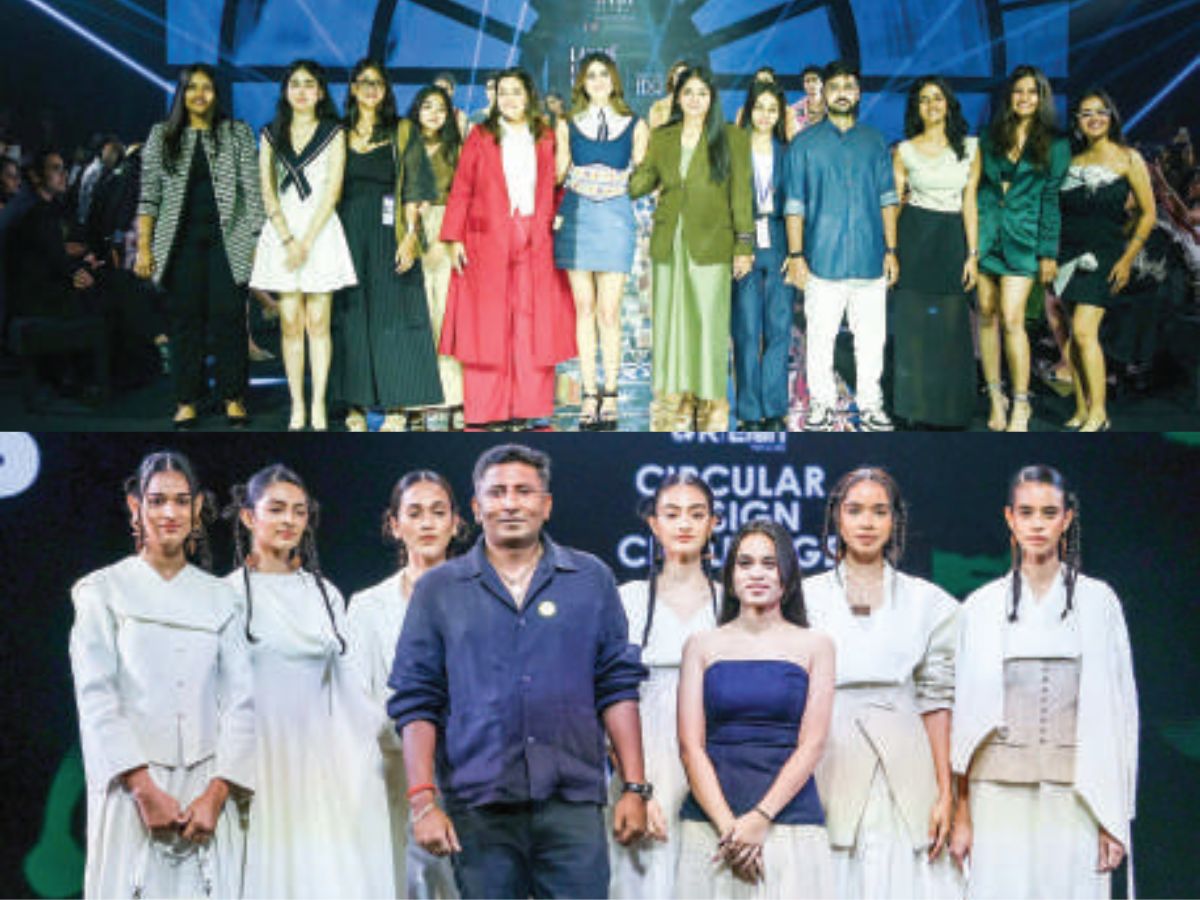
The latest edition of Fashion Design Council of India (FDCI) Lakme Fashion Week 2025, which just concluded in New Delhi’s The Grand hotel, Vasant Kunj, showcased plenty of young talent. (Image: File)
The change of weather brings with it a slew of fashion weeks around the world. While this is arguably the best time to take note of fashion trends for the upcoming sartorial season, it’s also a way to scout for new and promising talent in fashion. The latest edition of Fashion Design Council of India (FDCI) Lakme Fashion Week 2025, which just concluded in New Delhi’s The Grand hotel, Vasant Kunj, showcased plenty of young talent. We pick our favourites.
MOHAMMED ANAS SHEI KH: 23°N 69°E
Based in Indore, Mohammed Anas Sheikh’s label 23°N 69°E, brought alive the craft of Ajrakh, which he embellished with hand painting and natural dyes. Designs with mirror work added to the appeal, making it a complete representation of the region of Kachch. He used pure kala cotton to make minimalist silhouettes. The Ajrakh blocks used were worn out, as a commentary on the timelessness of this beautiful craft.
ANAM HUSAIN: CUT-PUTLY
Taking inspiration from Rajasthan’s Kathpuli dolls, Anam Husain translated the folklore attached with these handcrafted dolls into her apparel. For this she used sculpted denim, repurposed from 1,000 kgs of post-consumer waste, and made linings from discarded hotel furnishing by combining it with boning, hardware patchwork and experimental draping. Geometric forms mirroring the strings of puppets were evident in her garments, as were silhouettes layered with grainy textures.
PRANITA CHOUDHURY: RECALLING
Pranita Choudhury’s label Gaach, took inspiration from Rabindranath Tagore’s poem ‘Purono Sei Diner Kotha’, which translates to ‘Memories of the Old Days’, for her collection titled ‘Recalling’. She used block prints of Gaach in Bengali script along with the Kantha stitch and crewel embroidery on natural fabrics like Eri Silk, Chanderi, Pashmina silk, linen silk and corduroy. She showcased flowing skirts, basic shirts and comfy gilets in vibrant hues.
ANURUPA SAHA AND BARNALI GARAI
This designer duo hails from Bengal, and their collection ‘Sutoye Adda’ where ‘Suto’ means thread and ‘Adda’ refers to intimate conversations, was directly inspired by their heritage. Focusing on the tradition of women coming together for leisure as they stitched, the outfits included refined cotton and linen blends and were embellished with Kantha embroidery. On display were boxy jackets, asymmetric skirts and tailored trousers that fused heritage, craftsmanship and contemporary shapes in muted tones.
HENCY PATEL
Paying tribute to the glory of Gujarat was Hency Patel’s collection, ‘The Souk Stories’. She focused on Moti Bharat, a three-motif technique of bead weaving and patchwork to create an urban, street style inspired collection. Using handloom cotton, denim and baby denim, she made jackets and separates that offered many stylish combinations.
JENIKA NAHAR AND DWITI JAIN
Titled ‘Riwaz Recoded’, this collection reimagined Rajasthan’s rajais and quilts. At one time, these rajais were used as the hiding place for silver coins to attract prosperity and hence hold special meaning. The collection included oversized jackets, coats, pants and skirts in rainbow hues of lehriya, while the silver coins were used as buttons and tassels.
MAHEK JARIWALA
The ‘Dharohar’ collection was inspired by Mahek Jariwala’s grandmother’s favourite Kutchi embroidery. Ajrakh fabric prints and embroidery came together on Gaji silk, organza and modal silk. On display were flowing skirts, knife-pleated pants, corset tops and layered dresses in shades of blue and maroon, with ornate detailing.
DIYA AMBWANI
‘Kitab’ was Diya Ambwani’s line crafted in linen, satin modal, satin and cotton linen. On offer were layered creations that promise to be flattering on all sizes. It was versatile fashion that also offered a glimpse of the designer’s personal heritage and culture, inspired by the book her family has passed down generations.
VARSHNE B: CRCLE
Varshne B’s collection ‘Symbiosis’ was envisioned as unisex fashion, which is timeless and therefore sustainable. The clothes are made with 100 percent biodegradable Wegawool from Calotropis plant fibres, along with banana leather, handmade Korai grass bags, naturally dyed textiles, handwoven khadi denim in kala cotton and repurposed cotton textiles. The collection’s clean-cut silhouettes in earthy colours and stainless-steel scrap accessories with post-consumer fabrics, champion the use of waste. Even her tags and trims were reused or recycled.
RISHABH KUMAR: FARAK
Jaipur-based streetwear designer, Rishabh Kumar’s work emphasises crafts and handspun, handwoven organic cotton fabric and natural dyes. He works on the basis of a minimal carbon footprint for the apparel, where the natural dyes and mud-based techniques are used to make the garments. Even the packaging is 100 percent biodegradable made with wood pulp and kraft paper. His collection ‘The Alchemies of Earth’ was inspired by the ancient technique of matka making, adorned in colours like deep red and warm browns with motifs including petals and flames. He used bagru, mud, natural dyes, recycled fabric waste and handloom cotton, as well as wooden blocks with a low-energy, non-mercerized system.
RADHESH AGRAHARI AND MUSKAN SAINIK: GOLDEN FEATHERS
By upcycling Butchery Chicken Waste, this talented designer duo have created the world’s sixth natural woollen fibre. It is ten times warmer, softer and more durable than conventional and synthetic variations and is made with a patented 27-step zero-waste process. The brand has so far upcycled 57,000 kgs of chicken feathers annually. In the process, it has reduced the carbon footprint by over 7.7 billion kgs and recycled 500 tons of Butchery Chicken Waste (BCW). Its ‘Kora’ collection presented at LFW 2025, focused on the artistry of surface design and consisted of stoles, shawls, quilts, jackets, mufflers and handmade paper. The brand also works with tribals to encourage livelihoods.
PEARL ACADEMY’S ‘RE–’ SHOWCASE
A special mention is due to the talented students from Pearl Academy, who presented a collection on the finale day of Lakmé Fashion Week 2025. Titled ‘Re–’, the collection took a creative spin on jute and khadi – two textiles that are nearly synonymous with India’s cultural and social fabric. Once referred to as the ‘golden thread of Bengal’, jute has always been considered a coarse and utilitarian fibre. Pearl’s students, however, reworked its weave and refined it to a luxurious softness. Similarly, Khadi’s fragile yarns were unexpectedly transformed into sneakers, in collaboration with designer Jeetinder Sandhu.
Noor Anand Chawla pens lifestyle articles for various publications and her blog www.nooranandchawla.com
