
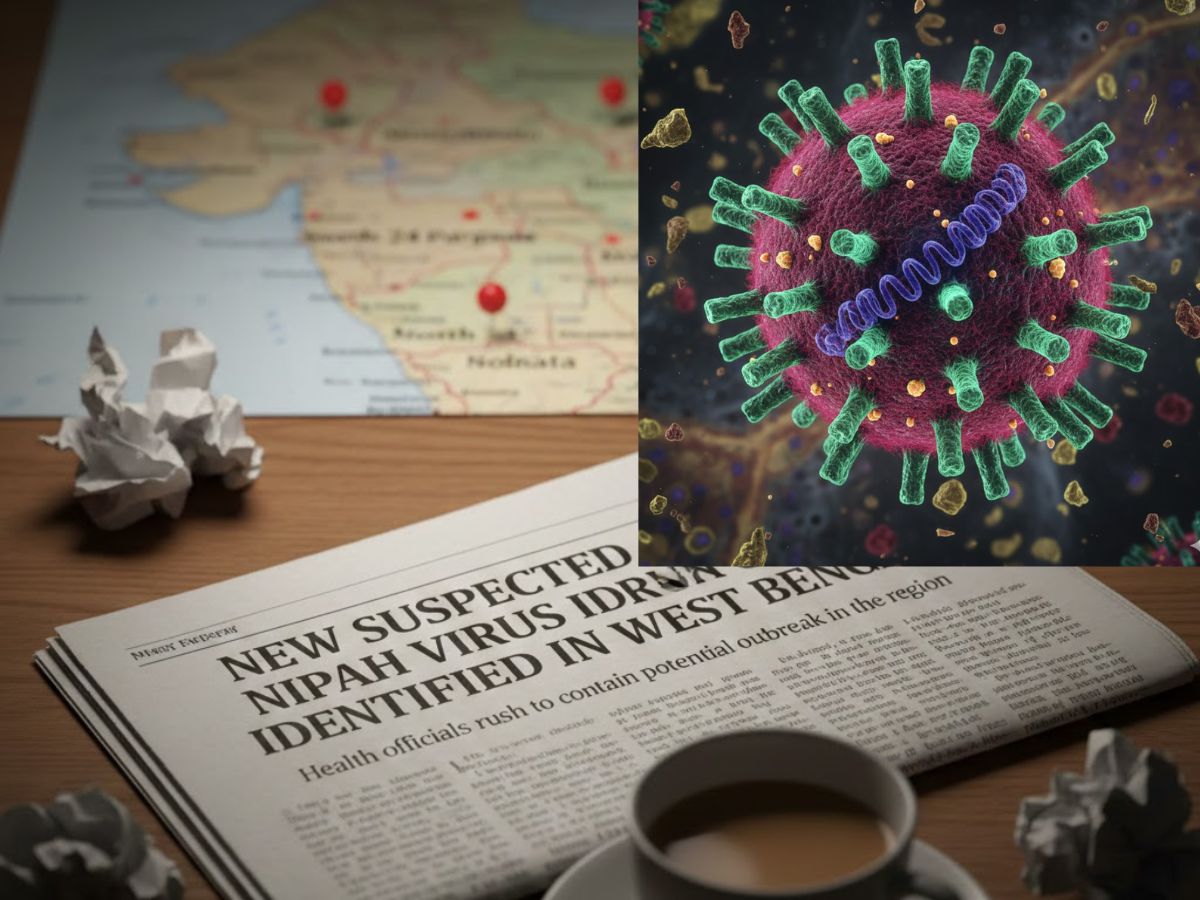
NEW DELHI, January 13 — A National Joint Outbreak Response Team was deployed to West Bengal on Sunday after two suspected cases of the deadly Nipah virus were identified. The central government is coordinating urgently with state authorities to contain a potential outbreak of the high-fatality pathogen.
What is Nipah Virus?
Nipah virus (NiV) is a highly lethal zoonotic pathogen from the Henipavirus genus. It causes severe respiratory illness and fatal brain inflammation (encephalitis), with a mortality rate between 40% and 75%. As a Biosafety Level 4 (BSL-4) pathogen, it is classified as a top-risk agent due to the absence of a licensed vaccine or specific treatment.
Current Nipah Virus Situation in India
India is actively managing suspected cases in West Bengal in January 2026. A multi-institutional National Joint Outbreak Response Team is on-site, and the national Public Health Emergency Operations Centre (PHEOC) in Delhi is leading coordination. Enhanced surveillance and contact tracing are underway along with monitoring Kerala due to its outbreak history.
The two suspected cases are critical-care healthcare workers from Barasat, now on ventilator support at AIIMS Kalyani. Kerala has no active cases as of now but remains on high alert.
Symptoms of Nipah Virus
The virus has an incubation period of 4–14 days.
Early Phase: High fever, intense headache, body aches, vomiting, and throat pain.
Advanced Phase: Dizziness, sleepiness, and confusion.
Severe Complications: Sudden brain swelling that may cause seizures and coma within 24–48 hours, or serious breathing problems.
UPSC Key Facts (Nipah Virus)
Family: Paramyxoviridae; Genus: Henipavirus.
Biosafety Level: BSL-4 (highest risk) [Previous Knowledge].
WHO Status: Listed as a “Priority Pathogen” for research.
Mortality Rate: Extremely high, ranging from 40% to 75%.
History in India: First appeared in Siliguri (2001) and Nadia (2007) before the major 2018 outbreak in Kozhikode, Kerala.
Prevention & Treatment for Nipah Virus
Prevention: Keep away from bats and infected pigs. Avoid raw date palm sap and wash and peel fruits carefully.
Treatment: There is no approved vaccine or targeted antiviral drug. Treatment is limited to supportive medical care.
Research: Several experimental treatments, including monoclonal antibodies like m102.4 and antivirals such as Remdesivir, are under study.
How does Nipah Virus Transmit?
Nipah is a zoonotic virus spread mainly by fruit bats (Pteropus genus).
Contaminated Food: Raw date palm sap or fruits partially eaten by infected bats.
Animal Contact: Handling infected pigs or other animals.
Human-to-Human: Spread via close contact with bodily fluids like saliva, urine, or respiratory droplets.
Is there a Nipah Virus movie?
Yes. Aashiq Abu’s 2019 Malayalam film Virus dramatizes the actual 2018 Nipah outbreak in Kozhikode, Kerala. It documents the real-life medical investigation and the heroic efforts of healthcare workers.




