
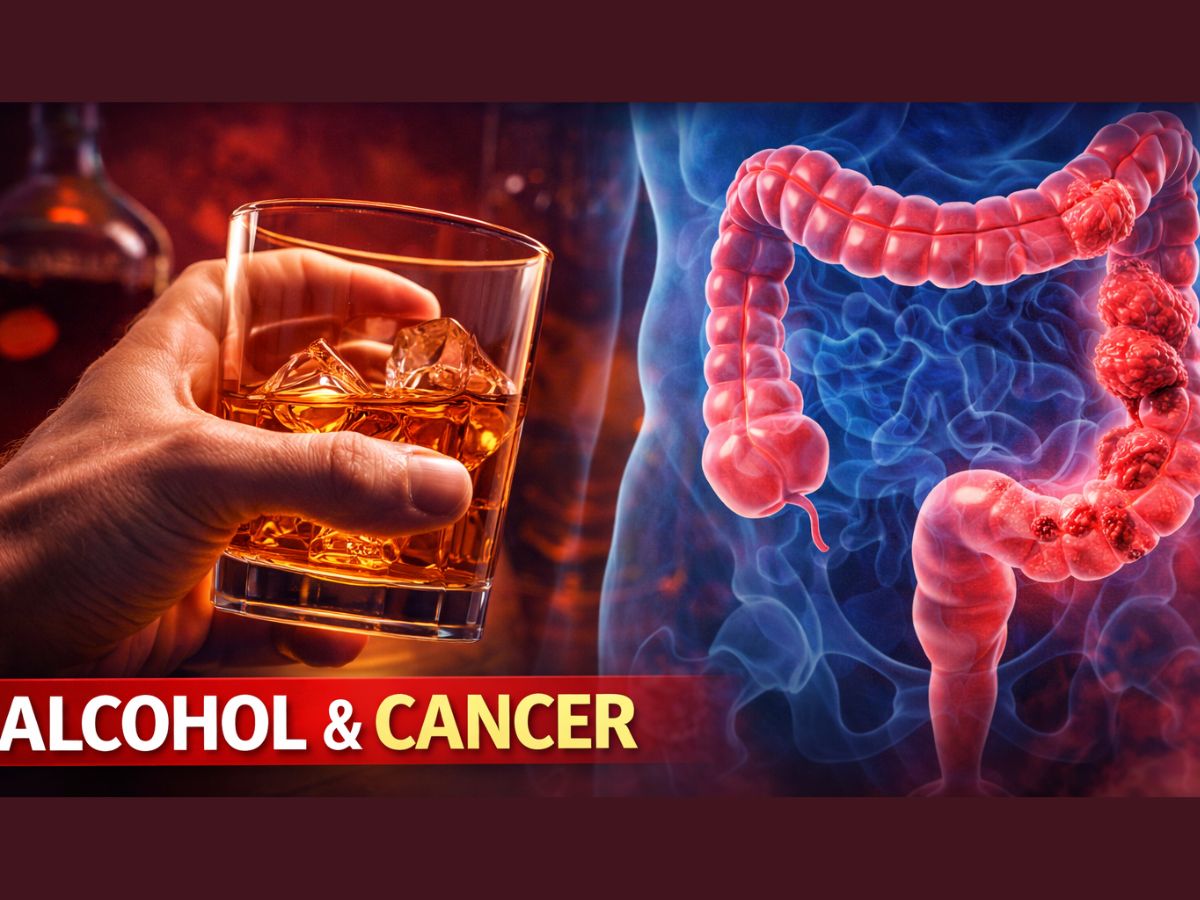
A new study finds a sobering connection between the drinks you have over a lifetime and your future health. Published in the journal Cancer, the research shows long-term alcohol use is linked to a higher risk of colorectal cancer.
The study followed over 88,000 adults for nearly a decade. It tracked their drinking habits from early adulthood and their later health. The message from doctors is clear: the choices we make over time matter for our gut health.
What Did the Study Find?
The research compared different levels of drinking. People who averaged over 14 drinks a week had a 25% higher risk of colorectal cancer than very light drinkers. The risk for rectal cancer was nearly double.
The most striking finding was for consistent heavy drinkers. Those who drank heavily at every stage of adult life had a 91% higher risk than lifelong light drinkers. “These numbers are not guarantees, but signals to do something before it’s too late,” said Dr. Fola May, a GI specialist at UCLA.
Why Does Alcohol Affect the Colon?
Think of it as long-term exposure. “The longer someone drinks, the longer their colon and rectum are exposed to damage,” explained Dr. Lynn O’Connor, a colorectal surgeon. Alcohol can harm cells and impair the body’s natural repair processes. This damage, over many years, is a major mechanism for cancer development.
The study noted something hopeful for those who cut back. People who quit drinking had lower odds of developing certain precancerous growths called adenomas. This suggests the body can respond positively when risks are reduced.
Why Is This Important Now?
This research comes at a critical time. Colorectal cancer rates are rising, especially among younger people. “We’re seeing an uptick in rectal cancers,” said Dr. May. “If alcohol affects the lower part of the colon differently —we need to understand why.”
Doctors stress that this is a modifiable risk factor. Unlike family history, alcohol use is something we can control. “These are modifiable risks. The choices people make over time matter,” said Dr. Jeffrey Farma, a colorectal cancer specialist at Fox Chase Center.
What Should You Do?
The first step is awareness. Knowing this link exists allows for informed choices about alcohol consumption.
The most powerful action is getting screened. “Everyone should be screened. It saves lives,” urged Dr. May. Screening is recommended for all adults starting at age 45. Tools include stool tests, CT scans, or colonoscopies.
For those with a history of heavy drinking, doctors advise extra vigilance. “If you’ve had prolonged heavy drinking and you develop symptoms like bleeding or persistent changes in bowel habits, you need to be evaluated — even in your 30s,” said Dr. Farma. Early detection is key to successful treatment.




