Baramati airport lacked basic ATC, navigation, weather services and fire tender when Ajit Pawar’s plane crashed, prompting urgent IAF deployment and safety concerns.
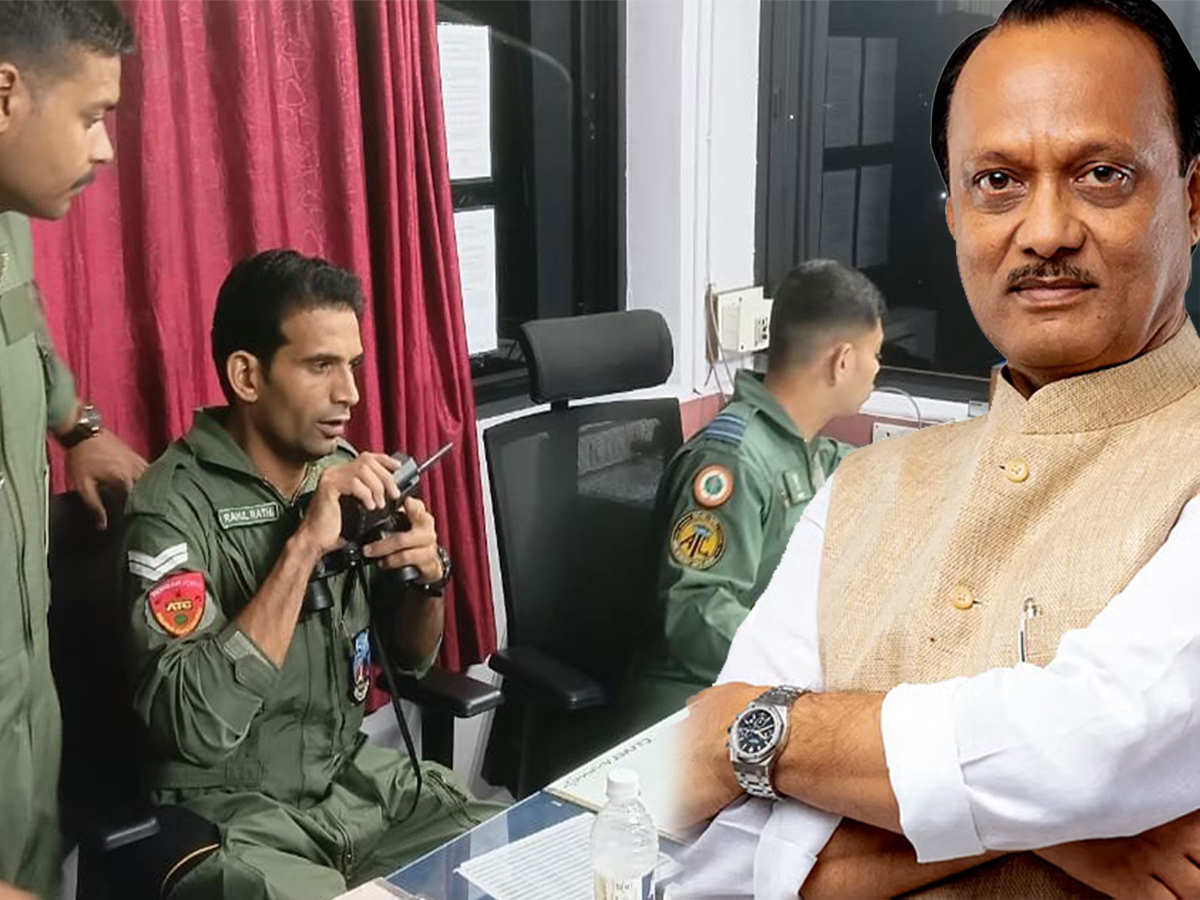
In response to the crash, the Indian Air Force (IAF) quickly deployed a dedicated team to provide basic air traffic control and meteorological services at Baramati Airport. (File Photo)
On the morning of January 28, 2026, a private jet carrying Maharashtra Deputy Chief Minister Ajit Pawar and four others crashed during its landing attempt at Baramati airport, spotlighting serious safety and infrastructure shortcomings at the small airstrip. The airport’s limited facilities have become a central part of the investigation and discussions about aviation safety in smaller Indian airports.
The Learjet 45 flight, operating from Mumbai to Baramati, attempted to land at around 8:44 AM. After an initial missed approach due to poor visibility, the aircraft attempted a second approach but crashed near the runway and burst into flames, killing all on board.
Poor weather conditions and a lack of advanced landing systems likely added to the difficulty. Experts later noted that visibility was below ideal norms and the airport lacked essential India Meteorological Department (IMD) weather services, though investigators are still analyzing all factors.
Baramati airport is categorised as an “uncontrolled” airfield, meaning it does not have a full-fledged air traffic control tower or professional controllers. Instead, pilot trainees and instructors from nearby flying schools handle traffic coordination, switching duties on alternate days.
During the fatal landing, the ATC was manned by a flight instructor from one such school. “It was the turn of Carver Aviation to manage the ATC,” said Pramesh Parikh, accountable manager at the flying school.
Infrastructure gaps include:
In response to the crash, the Indian Air Force (IAF) quickly deployed a dedicated team to provide basic air traffic control and meteorological services at Baramati while authorities work on longer-term safety measures. “This rapid assistance underscores IAF’s commitment to national service in times of need,” the Air Force said in a tweet.
This emergency setup aims to support both civilian flights and any ongoing investigation activity at the site.
Aviation specialists point out that India has about 150 uncontrolled airports with similar limitations. Without radar-based ATC, advanced navigation, or dedicated weather support, these airstrips rely heavily on visual flight rules and pilot communication, increasing risk during poor weather or complex operations.
Experts also note that the absence of strong landing systems like an Instrument Landing System (ILS) at Baramati could have made it harder for the crew to safely judge their approach in foggy conditions.
Locals and officials confirmed that Ajit Pawar had repeatedly proposed upgrades for the airport before the crash, urging installation of basic aids like PAPI lights, night landing capabilities, and a regular ATC service. Airport officials said Pawar had held several meetings to push the improvements.
Airport in-charge Shivaji Taware said that until recently, the strip was managed by a private firm, but the Maharashtra Airport Development Company (MADC) took over in August 2025 after identifying management gaps.
The devastating crash has prompted urgent discussions on upgrading safety at smaller airstrips that handle private and VIP flights. Authorities are likely to re-evaluate:
The Baramati crash has sparked widespread debate on aviation safety in less-serviced regions of India, with citizens and policymakers urging faster infrastructure modernization to support growing air traffic and ensure public safety.
