Banks across India may remain closed on 27 January 2026 as unions call a nationwide strike for a five-day work week, impacting public sector bank operations.
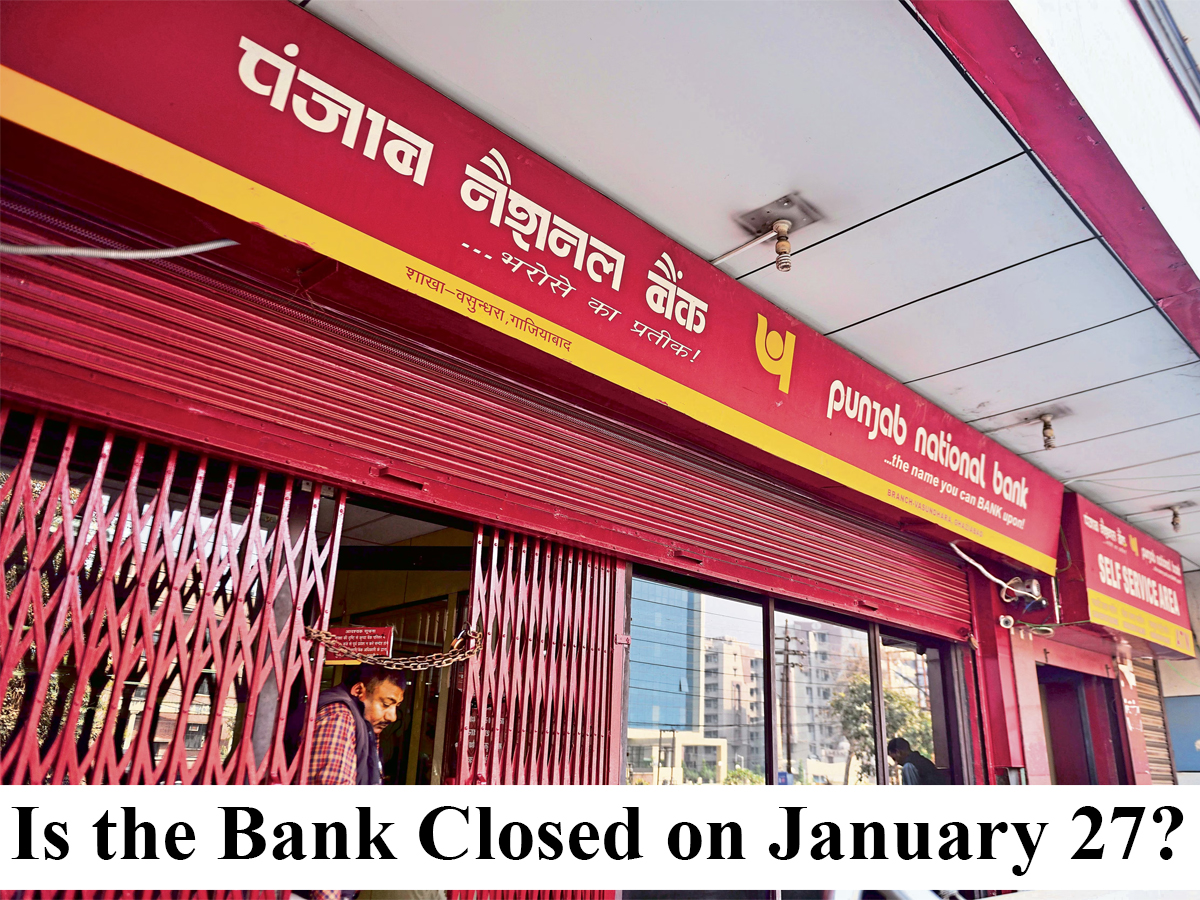
The central demand behind the strike is the implementation of a five-day work week, where banks would remain open only from Monday to Friday. (File Photo)
Several banks across India are likely to shut branches on 27 January 2026 after staff unions announced a nationwide strike to demand a five-day work week. The call to strike comes from the United Forum of Bank Unions (UFBU), an umbrella body representing nine major unions of bank officers and employees. This action follows months of negotiations that failed to produce a breakthrough on the long-pending demand.
If the strike takes place as planned, it will extend the holidays for many bank branches to four days in a row, starting from 24 January (fourth Saturday), 25 January (Sunday), and 26 January (Republic Day). This could leave customers facing a multi-day closure of banking services unless they plan.
The central demand behind the strike is the implementation of a five-day work week, where banks would remain open only from Monday to Friday. Under the current system, bank employees receive holidays on the second and fourth Saturdays of each month, along with Sundays. This still results in a six-day work week for most weeks.
UFBU and the Indian Banks’ Association (IBA) had agreed in principle during the wage revision settlement in March 2024 to declare all Saturdays as holidays, effectively shifting to a five-day schedule. However, the decision never received formal approval from the government or relevant authorities, prompting unions to escalate the issue to a strike.
Before finalising the strike call, unions served a formal notice, and the Chief Labour Commissioner held conciliation meetings with representatives from UFBU, IBA, and the government. Despite detailed discussions over two days, the talks did not yield a positive outcome. In its statement, UFBU said the strike will go ahead due to the lack of progress in negotiations.
The nationwide strike is expected to affect public sector banks and some old-generation private banks where union members are active. Institutions likely to be impacted include major lenders such as:
These banks have already informed customers about possible disruptions to branch services if the strike happens.
However, large private sector banks such as HDFC Bank, ICICI Bank, Axis Bank, and Kotak Mahindra Bank are not expected to be significantly affected since their employees are not part of the UFBU unions calling the strike.
If the strike goes ahead, in-person banking services at affected branches — including cash transactions, cheque clearances, demand drafts, and administrative support — will likely be unavailable on 27 January.
To help customers cope, banks and analysts have highlighted alternatives that should remain operational:
These digital and self-service platforms can help users manage most routine transactions even if branches remain closed.
The strike comes at a time when branches are already closed for Republic Day on 26 January and a regular Sunday, meaning many customers may find banking services unavailable for an extended stretch unless alternative arrangements are made. This is why many banks have advised customers to plan essential transactions well in advance to avoid inconvenience.
UFBU argues that shifting to a five-day work week would not cost man-hours because employees have already agreed to work an additional 40 minutes a day from Monday to Friday. They also point out that other major institutions like the Reserve Bank of India (RBI), LIC, GIC, stock exchanges, and many government offices already follow a five-day work week, underlining the justification for similar norms in banks.
With the strike looming, customers should:
