BJP’s Amit Malviya criticises West Bengal budget, alleging vote-bank politics and neglect of North Bengal, while TMC defends welfare and youth-focused schemes.
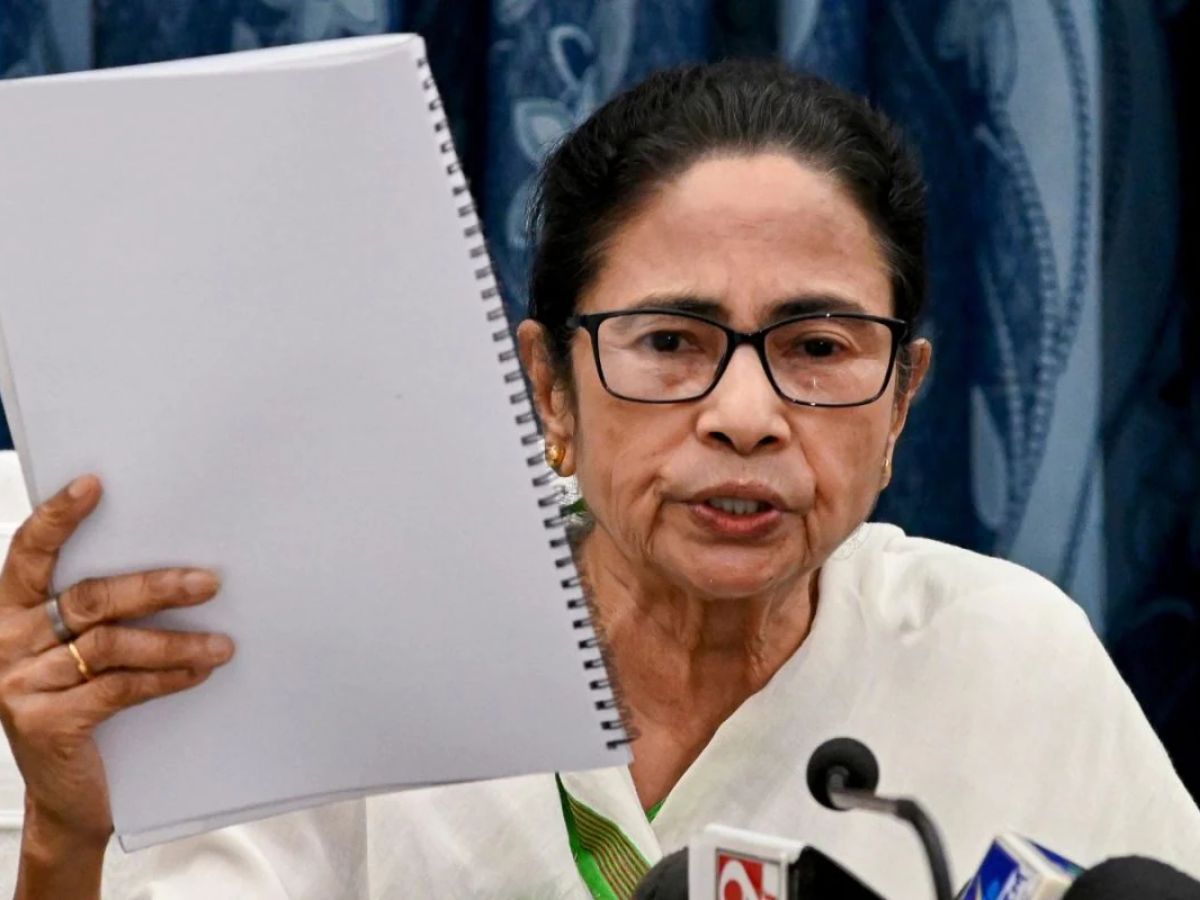
BJP’s Amit Malviya criticises West Bengal budget, alleging vote-bank politics [Photo: X]
NEW DELHI: Senior BJP leader and the party’s IT cell in-charge Amit Malviya has strongly criticised the Trinamool Congress (TMC) government in West Bengal, alleging that the latest state budget prioritises appeasement politics at the cost of development. He claimed that the allocations reflect the ruling party’s “true priorities” and amount to stepmotherly treatment of North Bengal.
In a series of posts on social media platform X (formerly Twitter), Malviya said the budget figures indicate that electoral considerations have been placed above economic growth and employment generation. “The Bengal budget once again lays bare the Trinamool Congress government’s real focus—appeasement over development and vote-bank politics over growth,” he stated.
Highlighting specific allocations, Malviya noted that the Industry, Commerce and Enterprises department, which he described as central to job creation and economic recovery, has been allotted ₹1,483.97 crore. In comparison, the Minority Affairs and Madrasah Education Department has received ₹5,713.61 crore. He alleged that such disparities do not reflect inclusive governance but rather deliberate vote-bank politics funded by public money.
The BJP leader also drew attention to what he described as the continued neglect of North Bengal, a region that has long sought improved infrastructure, healthcare facilities, employment opportunities and better connectivity. According to Malviya, the region has been allocated only ₹920.13 crore, which he said is far lower than allocations for what he termed “appeasement-oriented schemes.” “North Bengal finds mention during elections but is overlooked when budgets are framed,” he remarked.
Malviya further accused the Mamata Banerjee-led government of failing to present a clear vision for industrial growth and balanced regional development. “There is no serious push for industrialisation, no concrete roadmap for job creation, and no genuine commitment to equitable development. Instead, the focus remains on appeasement to secure a particular vote bank,” he alleged.
Reiterating his criticism, Malviya cited additional budgetary figures to underline what he called skewed priorities. As per the data shared by him, the Minority Affairs and Madrasah Education department has been allotted ₹5,602.29 crore, while the Micro, Small and Medium Enterprises (MSME) and Textiles sector received ₹1,228.78 crore. Non-conventional and Renewable Energy was allocated ₹82.65 crore, and North Bengal Development ₹866.26 crore.
“At a time when Bengal is grappling with unemployment, inadequate infrastructure and struggling industries, the TMC government continues with what can only be described as blatant appeasement politics,” Malviya said, questioning the relatively lower allocations for small businesses and employment-generating sectors.
Responding to the criticism, the Trinamool Congress has maintained that its budget is aimed at inclusive and welfare-oriented development across all sections of society and regions of the state. In the budget Finance Minister Chandrima Bhattacharya announced an enhancement of ₹500 in financial assistance under the Lakshmir Bhandar scheme.
She also unveiled a new initiative, ‘Banglar Yuba-Sathi’, aimed at supporting educated unemployed youth across West Bengal. Under the scheme, starting from August 15, 2026, unemployed individuals aged between 21 and 40 years who have passed the Madhyamik examination and are not covered under any social security scheme—excluding education-related benefits—will receive ₹1,500 per month. The assistance will continue until the beneficiary secures employment or for a maximum period of five years.
An allocation of ₹5,000 crore has been proposed for the scheme, underscoring the state government’s stated commitment to empowering the youth through financial support and employment assistance. In addition, the Finance Minister announced a ₹1,000 increase in the monthly honorarium for ASHA workers, Anganwadi workers, para-teachers and civic volunteers, reiterating the government’s focus on strengthening frontline workers who play a crucial role in public service.
