
India’s booming quick-commerce industry is taking a visible step back from ultra-fast delivery promises. Leading platforms such as Blinkit and Zepto have decided to pause their “10-minute delivery” claims after growing concerns over rider safety, work pressure, and stressful conditions faced by gig workers. The move follows government intervention and sustained public pressure, with Aam Aadmi Party MP Raghav Chadha emerging as one of the strongest political voices pushing the issue into the national spotlight.
The decision marks a turning point in how speed-driven delivery models balance convenience with worker welfare.
Why Quick-Commerce Firms Are Dropping 10-Minute Delivery Claims
Quick-commerce companies built their brands around speed, promising groceries and essentials in just 10 minutes. However, concerns mounted that such timelines forced delivery partners to rush, increasing accident risks and mental stress.
After discussions between government officials and major platforms—including Blinkit, Zepto, Zomato, and Swiggy—companies voluntarily agreed to rethink how they market delivery timelines. The goal is to reduce unsafe expectations and improve working conditions for gig workers.
Blinkit has already updated its branding, removing the 10-minute claim and shifting focus to product range rather than speed.
How Raghav Chadha Highlighted the Gig Workers’ Struggle?
AAP Rajya Sabha MP Raghav Chadha played a central role in amplifying gig workers’ concerns. He consistently raised the issue in Parliament, demanding social security, dignity, fair wages, and legal protection for app-based workers.
Chadha did more than speak inside the House. He invited delivery partners to his residence to understand their problems directly. He also sat with delivery workers, listened to their experiences, and discussed daily challenges related to income pressure, health risks, and job insecurity.
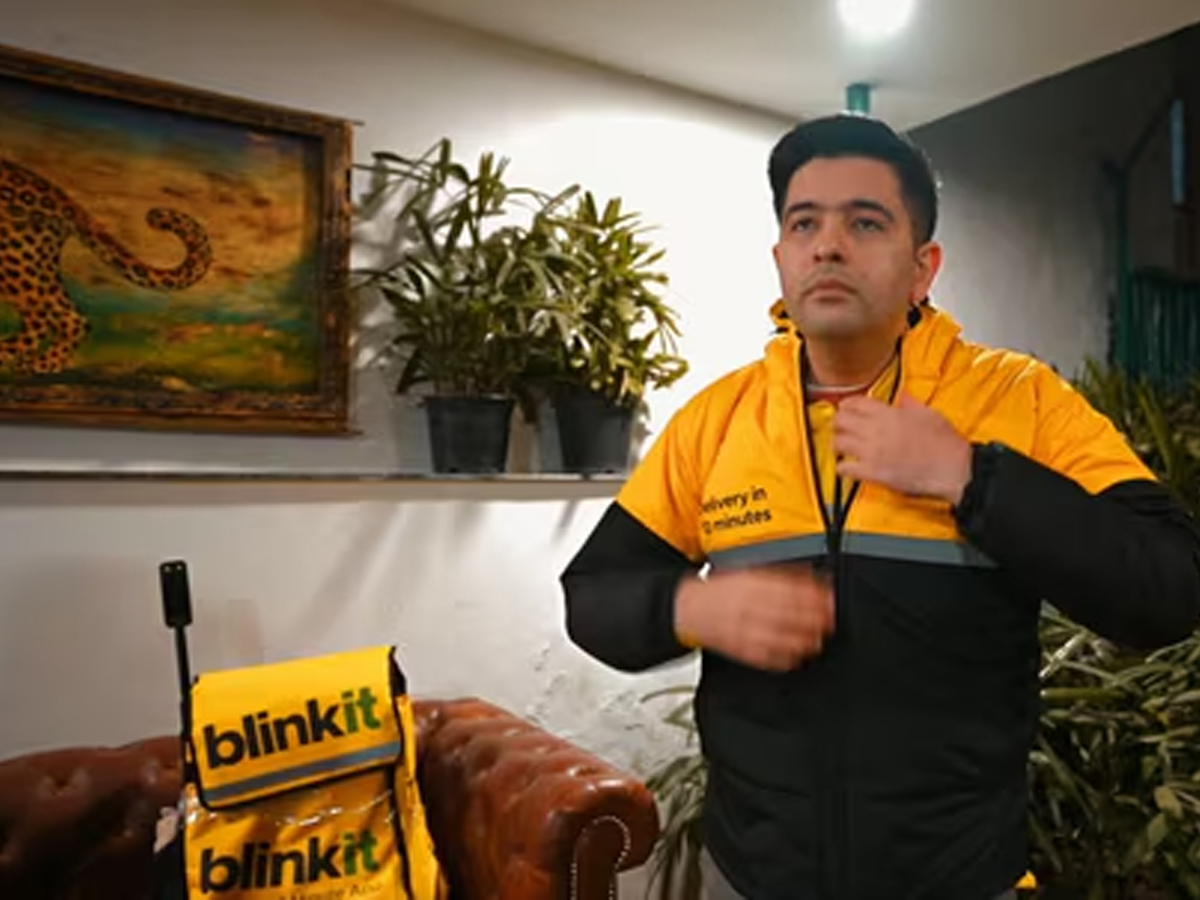
In a widely shared video, Chadha wore a delivery uniform and completed deliveries alongside a delivery partner, navigating apartment complexes and elevators to experience their routine firsthand. “Away from boardrooms, at the grassroots. I lived their day,” he wrote while sharing the video.
Away from boardrooms, at the grassroots. I lived their day.
Stay tuned! pic.twitter.com/exGBNFGD3T
— Raghav Chadha (@raghav_chadha) January 12, 2026
Raghav Chadha Calls It a Victory for Human Safety
Welcoming the decision to pause 10-minute delivery claims, Chadha described it as a win for delivery partners and concerned citizens. He thanked people who supported the campaign, saying they stood “on the side of human life, safety and dignity.”
Addressing gig workers directly, he said: “You’re not alone, we’re all with you.”
Satyamev Jayate. Together, we have won..
I am deeply grateful to the Central Government for its timely, decisive and compassionate intervention in enforcing the removal of the “10-minute delivery” branding from quick-commerce platforms. This is a much needed step because when…
— Raghav Chadha (@raghav_chadha) January 13, 2026
His sustained advocacy helped shift public debate from consumer convenience to worker welfare.
What This Means for Customers and the Industry
Customers will continue to receive deliveries quickly, but without the pressure of unrealistic timelines. Digital platforms now face growing expectations to balance innovation with responsibility.
The move also sets the stage for deeper policy discussions on regulating gig work, including insurance coverage, minimum pay standards, and work-hour protections.
The pause on 10-minute delivery claims reflects a broader recognition that speed cannot come at the cost of safety. With political pressure, worker protests, and public support aligning, India’s gig economy may finally be heading toward more humane and sustainable practices.




