Budget 2026 LIVE: In her Union Budget 2026 speech, FM Nirmala Sitharaman announced new 'rare earth corridors' to boost mining and research in states like Odisha, Kerala, and Andhra Pradesh.
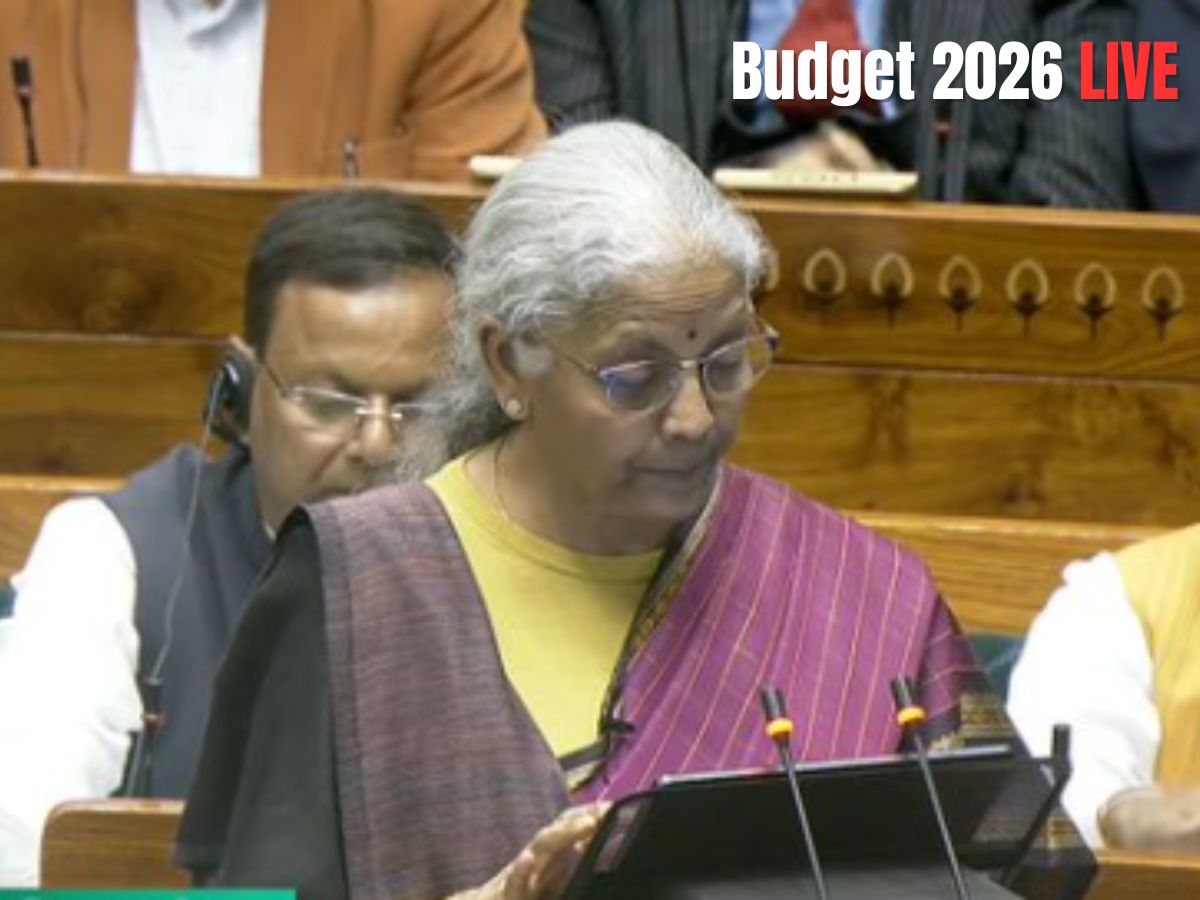
FM's Budget Push for Rare Earths: New Corridors to Cut Import Reliance (Image: ANI)
Budget 2026 LIVE: Finance Minister Nirmala Sitharaman announced a major push to develop India’s rare earths sector as part of the Union Budget for 2026 on Sunday, February 1. The centerpiece of the initiative is the creation of dedicated ‘rare earth corridors’ to promote mining, processing, and research.
The newly announced ‘rare earth corridors’ are planned developmental zones aimed at building an integrated ecosystem for rare earth elements. Sitharaman stated the corridors would specifically support mineral-rich states such as Odisha, Kerala, and Andhra Pradesh. The focus will include the production of rare earth permanent magnets, critical components for modern electronics, defense systems, and renewable energy technologies.
Finance Minister Nirmala Sitharaman specifically named Odisha, Kerala, Andhra Pradesh, and Tamil Nadu as the states to be supported in establishing dedicated rare earth corridors. These states were selected due to their identified mineral wealth and existing geological potential for rare earth elements (REEs), which are critical for modern technology. The policy aims to concentrate infrastructure, research, and processing facilities in these resource-rich regions to create efficient, integrated production hubs. This geographic focus is intended to leverage local mineral endowments, reduce logistical costs, and accelerate the development of a complete domestic supply chain from mining to finished magnets.
The policy is framed within the government’s broader ‘Aatmanirbharta’ or self-reliance agenda. In her speech, Sitharaman said, “Keeping Aatmanirbharta as a lodestar, we have built domestic manufacturing capacity, energy security and reduced critical import dependencies.” By establishing specialized lanes, the government hopes to centralize infrastructure, logistics, and research facilities, making the sector more competitive and scalable. This effort is directly related to the national goals of energy security and advanced manufacturing.
The corridors will support the objectives of the ‘Scheme to Promote Manufacturing of Sintered Rare Earth Permanent Magnet’, approved with a ₹7,280 crore outlay. That scheme targets establishing 6,000 metric tonnes per annum of integrated manufacturing capacity, covering the full production chain from rare-earth oxides to finished magnets—a critical component for electric vehicles, wind turbines, and defense equipment.
To build supporting infrastructure, Sitharaman proposed establishing high-tech tool rooms by central public sector enterprises at two locations. These will function as digitally enabled automation service bureaus to locally design, test, and manufacture high-precision components at scale. A separate scheme for enhancing construction and infrastructure equipment was also announced to strengthen domestic manufacturing of advanced machinery.
The Budget contained two other significant pledges for advanced manufacturing. Sitharaman proposed a ₹40,000 crore outlay for electronics components manufacturing. She also announced ‘Semiconductor Mission 2.0’, building on the first mission, to focus on producing equipment and materials, developing full-stack Indian intellectual property (IP), and strengthening supply chains.
The Budget follows the Economic Survey, tabled on Thursday, which projected India’s real GDP growth for 2026-27 in the range of 6.8-7.2%. The survey noted India recorded its lowest inflation rate since the beginning of the CPI series, with April-December 2025 average headline inflation at 1.7%.
This is a developing story.
