
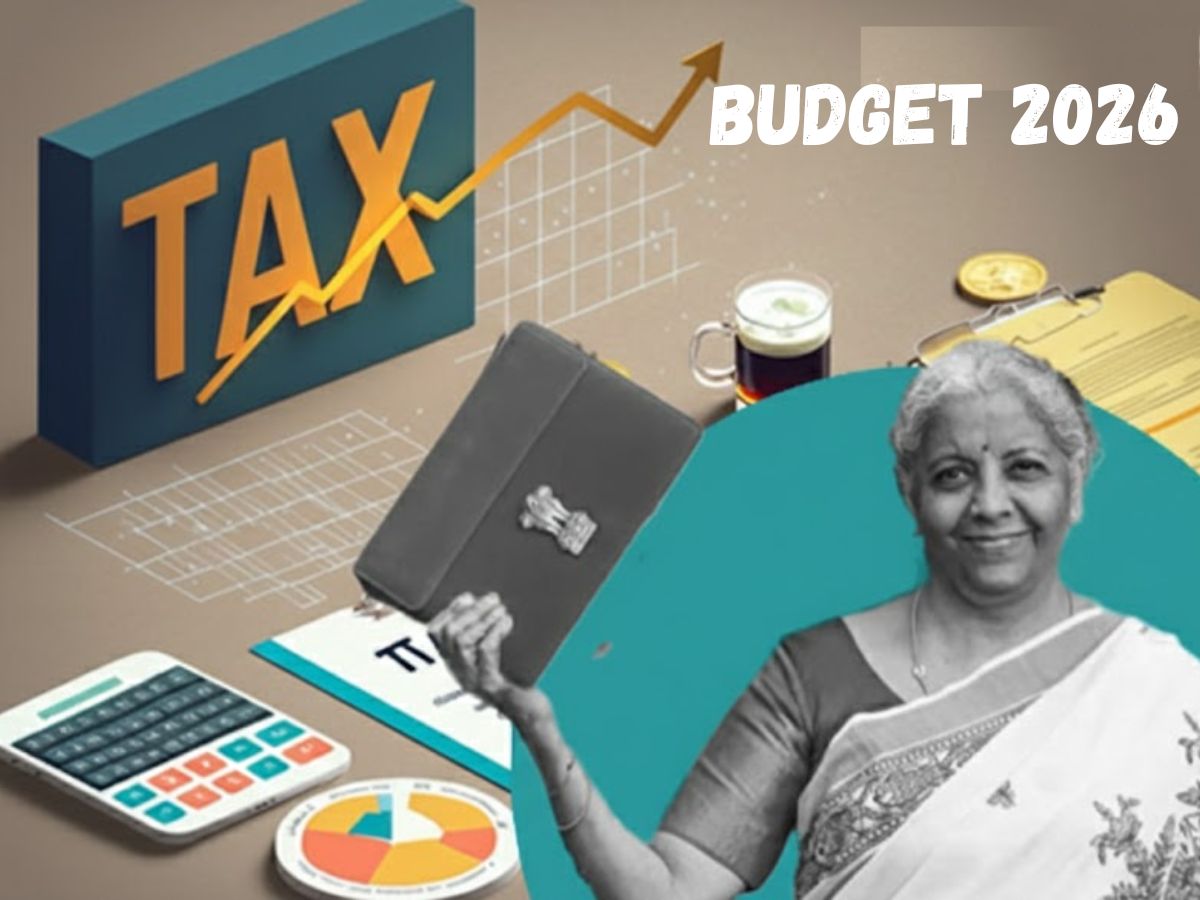
As Finance Minister Nirmala Sitharaman prepares to present the Union Budget on February 1, tax experts anticipate targeted relief for middle-income earners rather than sweeping structural reforms. Expectations are centered on inflation-linked adjustments to deductions and more steps to popularize the New Tax Regime following the substantial redesign of tax slabs in the previous budget.
What Are the Key Expectations for New Tax Slabs?
While a complete restructuring of income tax slabs is considered unlikely, specific adjustments are anticipated to address inflation and taxpayer concerns. The primary expectation is an increase in the threshold for the highest tax bracket. The New Regime currently applies a 30% rate to income above ₹24 lakh. Experts advise raising this level to ₹30 lakh or even ₹50 lakh to benefit high earners and prevent “aspiration drain.” Any modifications would build upon the current FY 2025-26 New Regime structure: 0% up to ₹4 lakh, 5% on ₹4-8 lakh, 10% on ₹8-12 lakh, 15% on ₹12-16 lakh, 20% on ₹16-20 lakh, 25% on ₹20-24 lakh, and 30% over ₹24 lakh.
What Deduction Changes Are Taxpayers Hoping For?
The most significant expectations center on enhancing deductions, particularly within the New Tax Regime, to improve its attractiveness and offset rising costs. There is a strong consensus among experts for an increase in the Standard Deduction from its current ₹75,000 to ₹1 lakh or ₹1.25 lakh. For the Old Regime, a long-standing demand is to raise the stagnant Section 80C limit from ₹1.5 lakh to ₹2.5 lakh or ₹3 lakh. To make the New Regime more competitive, the government may consider incorporating popular deductions for Home Loan Interest (Section 24b) up to ₹2 lakh and Medical Insurance (Section 80D) up to ₹50,000. The supplementary deduction for National Pension System (NPS) payments under Section 80CCD is expected to double from ₹50,000 to ₹1 lakh.
How Could Investment and Capital Gains Rules Change?
Investors and market participants are advocating for rationalization of capital gains tax to encourage long-term investment. A key proposal is to increase the tax-free exemption limit for Long-Term Capital Gains (LTCG) on equities from ₹1.25 lakh to ₹2 lakh. To simplify a complex structure, experts have suggested unifying the holding period for long-term status across all asset classes—including real estate and gold—to a uniform 12 months. Furthermore, there is an ongoing demand from market participants to reduce or eliminate the Securities Transaction Tax (STT) to lower the cost of trading.
How Does This Compare to the Last Budget?
The expectations for Budget 2026-27 represent a shift in focus from the foundational changes enacted in the previous budget.
Then (Budget 2025-26): The New Regime has six new tax brackets and a ₹75,000 Standard Deduction.
Now (2026-27 Expectation): The focus is on fine-tuning and enhancing that structure through higher deduction limits and marginal slab adjustments, not a fresh overhaul.
Then: By adding the Standard Deduction and updating slabs, the New Regime became more appealing.
Now: The goal is to incorporate key Old Regime deductions (such as 80C and 24b) into the New Regime to drive eventual adoption.
Then: Capital gains structures remained unchanged.
Now: There is pressure for investor relief, as evidenced by active requests to increase LTCG exemption levels and streamline holding durations.
Disclaimer: The article above reflects industry views and proposals. Final budgetary decisions and policy announcements will be confirmed during the Finance Minister’s presentation tomorrow.




