CBSE will use On-Screen Marking (OSM) for Class 12 board exams from 2026 to speed up digital evaluation, reduce errors and let teachers mark remotely.
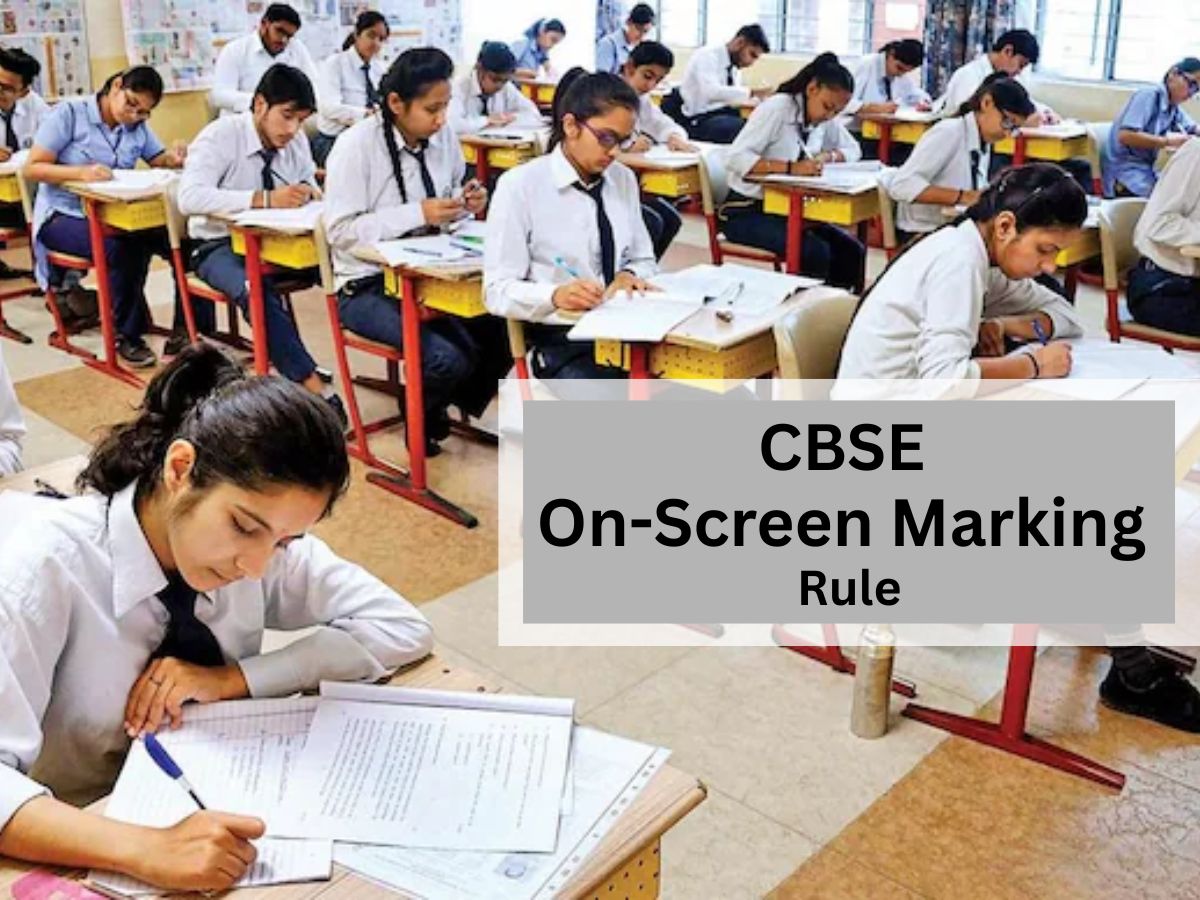
CBSE will use On-Screen Marking (OSM) for Class 12 board exams from 2026 [Photo: X]
The Central Board of Secondary Education (CBSE) has announced a major shift in how Class 12 board exams will be evaluated, starting with the 2026 session. Under the new On-Screen Marking (OSM) system, teachers will evaluate answer sheets digitally on computers instead of checking paper copies manually, a move aimed at improving speed, accuracy and transparency in assessment.
This change marks a significant milestone in modernising board exam evaluation, affecting millions of students and educators across India and overseas. Here’s a clear breakdown of what the OSM system means for schools, students and teachers.
CBSE’s On-Screen Marking (OSM) is a digital evaluation system in which scanned answer sheets are reviewed on a computer screen by teachers. Rather than transporting stacks of physical answer books to evaluation centres, the system uploads digital copies that examiners can mark from their own schools.
The board says this will reduce errors, speed up results processing, widen teacher participation and cut down logistical costs such as transportation time and expenses — while also making the process more eco-friendly through paperless evaluation.
Under the digital method, answer sheets are scanned and converted to digital files. Teachers then open these files on their computers, read student responses, and directly enter marks on the system.
The new OSM system will be implemented for Class 12 board examinations starting with the 2026 session, which begins on February 17, 2026. Although the evaluation method is changing for Class 12, Class 10 answer sheets will continue to be checked manually in physical form for the 2026 exams.
This phased rollout allows CBSE to focus its digital evaluation resources and support where they are most needed, ensuring a smoother transition for schools and evaluators.
To use OSM effectively, CBSE has asked schools to prepare the necessary digital infrastructure:
Teachers will use their OASIS IDs (CBSE’s official portal identity) to access and familiarise themselves with the OSM platform. Multiple dry runs, training sessions, instructional videos and a call centre will help educators prepare for the transition.
CBSE officials say OSM will help improve several aspects of the evaluation system:
The system also aims to make post-result verification unnecessary, reducing delays and workload for both students and staff.
Many educators have welcomed the shift as a step toward modernisation. Sudha Acharya, principal of Delhi’s ITL Public School, said, “This is an excellent initiative by CBSE. It will minimise human errors in the evaluation system. Teachers will be trained by CBSE before the commencement of OSM for Class 12.
It will enable faster evaluation, and teachers don’t have to leave their own schools, and it will save the time and efforts of teachers in commuting to the evaluation centre.”
However, some teachers have raised concerns about the potential strain of long hours in front of screens, which they worry could affect their well-being and comfort during the evaluation period.
Students and parents can expect quicker result announcements and more consistent grading standards because digital marking reduces human errors, such as incorrect totals or skipped answers.
Because answer sheets are scanned and stored digitally, future re-evaluation or review could become more transparent and efficient. Scanned records will be readily available if students request a verification or ask for a scanned copy.
Experts say the system’s success will depend on how well schools and teachers adapt to technology and whether CBSE provides sufficient technical support and training.
Shift to digital evaluation also presents challenges:
CBSE has announced that detailed instructions will be issued separately to guide schools through required preparations in time for the 2026 exams.
The introduction of OSM reflects a broader trend in education toward digital transformation. It aligns with global practices that emphasise accuracy, efficiency and transparency in high-stakes assessments.
By enabling remote marking and widening teacher participation, CBSE’s move could set a precedent for other boards and examination bodies in India. As implementation unfolds, stakeholders will be watching closely to see how the system performs and impacts results and evaluation times.
