Gurugram hits 0.6°C, its coldest January in nearly 50 years, colder than hill stations, as severe cold wave grips Delhi-NCR with IMD orange alert.
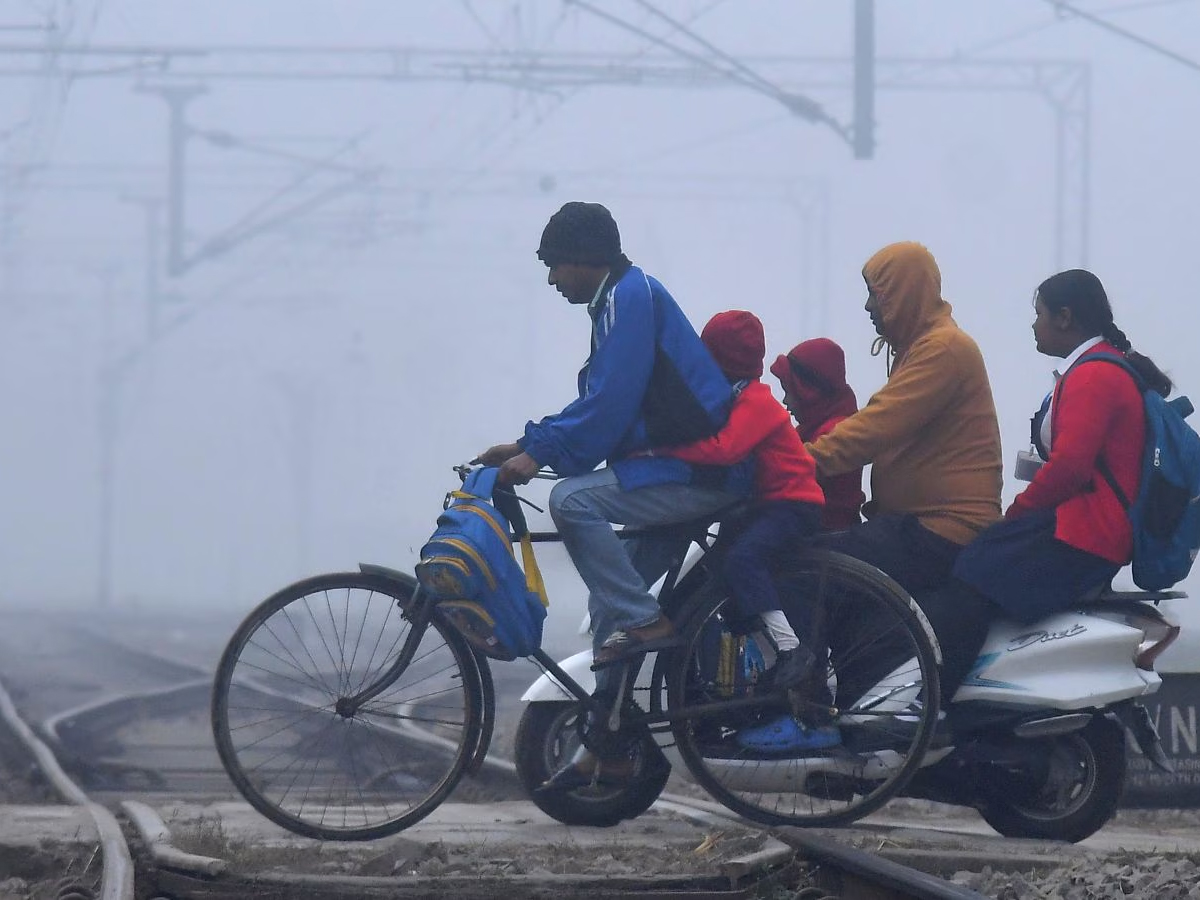
Delhi followed close behind, with the Safdarjung observatory recording a minimum temperature of 3 degrees Celsius, reinforcing how severe the cold wave has become across NCR. (Photo: Social Media)
North India continues to shiver under an intense cold wave, with Gurugram emerging as one of the coldest places in the region, even colder than several Himalayan hill stations. A day after recording a historic low, biting cold conditions persisted on Tuesday across Gurugram, Delhi, and large parts of the National Capital Region (NCR), keeping residents indoors and authorities on alert.
Gurugram stunned weather watchers on Monday morning when the mercury plunged to 0.6 degrees Celsius, marking the city’s coldest January temperature in almost five decades. The reading matched the low recorded on January 22, 1977, making it one of the rarest cold spells in the city’s weather history.
According to meteorological records, Gurugram has dipped below this level only three times before: minus 0.4°C on December 5, 1966; 0°C on January 11, 1970; and 0.3°C on January 22, 1979.
Delhi followed close behind, with the Safdarjung observatory recording a minimum temperature of 3 degrees Celsius, reinforcing how severe the cold wave has become across NCR.
What makes this cold spell remarkable is that the plains turned colder than popular hill destinations. On Monday, Kangra and Palampur in Himachal Pradesh recorded 3°C, Jammu stood at 3.4°C, while Mukteshwar, Jollygrant, and Tehri in Uttarakhand hovered around 4.1°C. In contrast, Mussoorie recorded 7.7°C and Shimla 8.8°C.
Explaining the unusual contrast, IMD Director General M Mohapatra said, “The night was cloudy over the higher reaches, which is why minimum temperatures remained higher there.” Cloud cover trapped heat over the hills, while clear skies over the plains allowed temperatures to drop sharply.
Meteorologists attribute the freezing conditions to a combination of clear skies, strong northwesterly winds, western disturbances, and dry winter conditions. These factors triggered intense radiative cooling across northwest India.
Other plains also saw near-freezing temperatures, including Hisar at 2.6°C, Amritsar at 1.1°C, Churu at 1.3°C, Karnal at 3.5°C, and Meerut at 4.5°C.
The cold wave left visible signs across Gurugram, with frost forming on crops, vehicles, and open fields. Dense fog reduced visibility, especially on elevated roads, making early-morning travel risky.
Jeeva Thavasiraj, a site engineer from Sector 66, described the chill as extreme. “I come from Tamil Nadu and have never experienced this kind of cold. Even with heavy safety shoes, our feet become numb,” he said.
Sunita Devi, a daily commuter from Sohna, said, “There was frost on our bus’s windshield and crops in the fields. The elevated roads had very poor visibility, and vehicles had to move slowly.”
The India Meteorological Department has extended an orange alert till January 13, warning of cold wave to severe cold wave conditions, dense fog, and ground frost across Haryana, Delhi, and neighbouring states.
Health experts caution that prolonged exposure could trigger frostbite, flu, and respiratory issues, especially among children and the elderly. Motorists have also been urged to remain cautious during early morning and late-night hours.
IMD officials said temperatures are likely to remain abnormally low for the next few days, with no major change expected over northwest India for at least three days. A gradual rise of 2 to 4 degrees Celsius may follow later.
A fresh western disturbance expected around January 15 could bring cloud cover and slight relief. Until then, the plains—rather than the mountains—will continue to bear the brunt of the cold.
