Delhi Police file FIR over alleged leak of Gen MM Naravane’s unpublished memoir ‘Four Stars of Destiny’ after online circulation and major Parliament controversy.
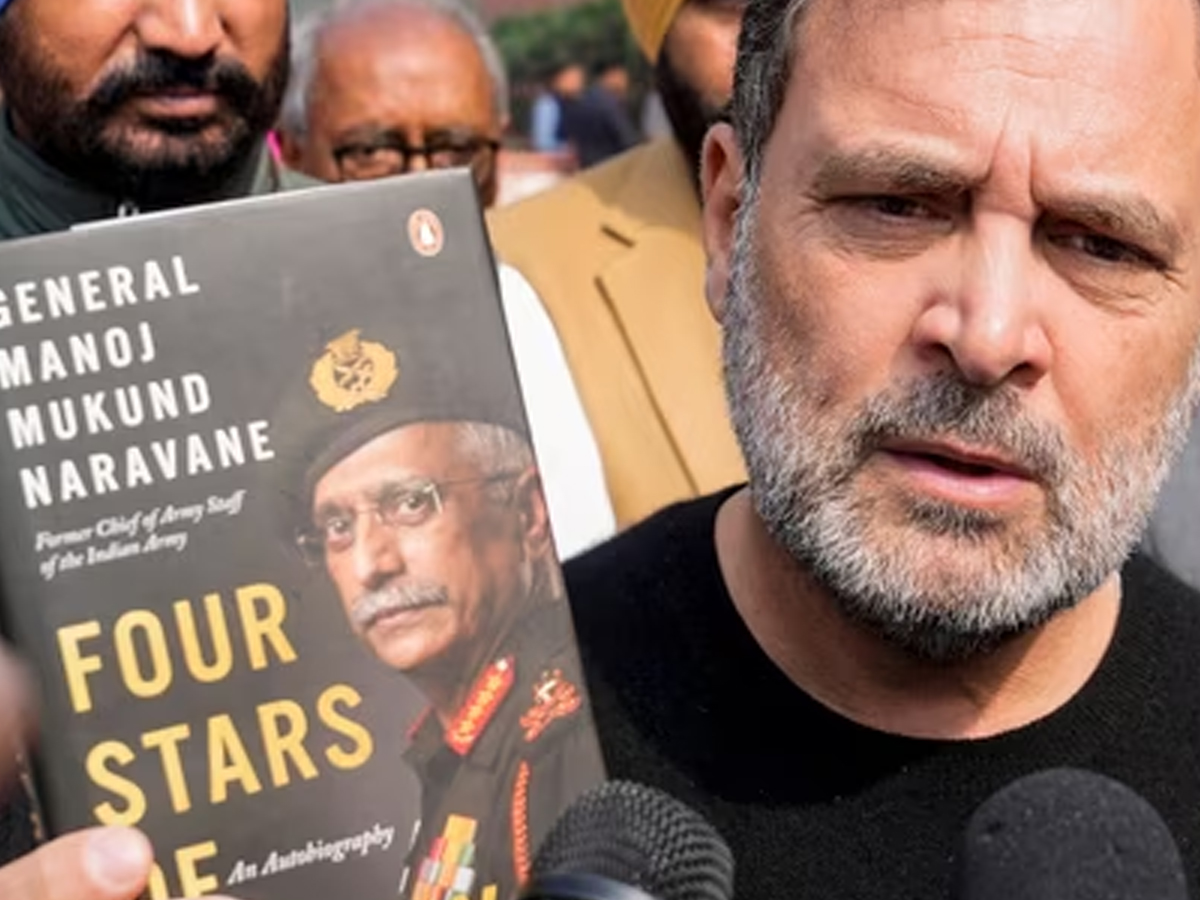
Gen MM Naravane served as India’s Chief of Army Staff from December 2019 to April 2022, a period that included the tense India-China border standoff in eastern Ladakh. (Photo: PTI)
A fresh controversy has erupted after Delhi Police registered a case over the alleged online circulation of an unpublished memoir by former Army Chief General Manoj Mukund Naravane. Authorities launched an investigation after reports surfaced that a pre-print version of the book, Four Stars of Destiny, appeared on websites and social media despite lacking official government approval for publication.
Officials said they acted after noticing online discussions claiming that a digital copy of the manuscript was available publicly, raising concerns over security, intellectual property, and unauthorised distribution.
The memoir remains under review because it requires clearance from relevant authorities, including the Ministry of Defence, before public release. The book reportedly contains references to sensitive military matters, making the approval process crucial.
Investigators found that a type-set PDF copy of a book with the same title, apparently linked to a publishing house, appeared on certain websites. Authorities also noticed online platforms displaying a finished book cover, which gave the impression that the memoir was already available for purchase.
A spokesperson said, “Delhi Police took cognizance of information found on various online social media platforms and news forums which claimed that a pre-print copy of the book 'Four Stars of Destiny' is being circulated.”
The necessary clearance for publication of this book is yet to be received from the relevant authorities, they added.
“Upon verification, it was found that a PDF copy of a type-set book with the same title, and apparently prepared by M/s Penguin Random House India Pvt. Limited, is available on certain websites and, also, some online marketing platforms have displayed the finished book cover as if it is available for purchase,” the spokesperson further said.
“To carryout a thorough investigation into this purported leak/breach of a yet to be approved publication, a case has been registered with the Special Cell, and investigation is being taken up,” they also said.
The controversy intensified after Congress leader Rahul Gandhi displayed a printed copy of the unpublished memoir in the Parliament complex. He attempted to reference its contents during debates but faced objections because the book had not been officially published.
His actions sparked heated exchanges between the government and the opposition. The dispute disrupted proceedings and led to the suspension of several MPs during the ongoing budget session after chaotic scenes in the Lok Sabha.
Defence Minister Rajnath Singh has asserted in the Lok Sabha, “I am confident, this book has never been published.”
Despite this, Rahul Gandhi created a dramatic moment by holding up a copy and saying, “See, it exists — the book the government says does not,” he said.
Gen MM Naravane served as India’s Chief of Army Staff from December 2019 to April 2022, a period that included the tense India-China border standoff in eastern Ladakh. Analysts say the memoir’s references to strategic and operational issues have made it politically sensitive and a subject of national debate.
Delhi Police’s Special Cell continues its probe to determine how the alleged leak occurred and whether any legal violations took place. Officials have not yet clarified which sections of law may apply.
As the investigation progresses, the memoir remains unpublished and under official review. The case highlights ongoing tensions between political debate, national security concerns, and the growing challenge of controlling sensitive digital content in the internet era.
