
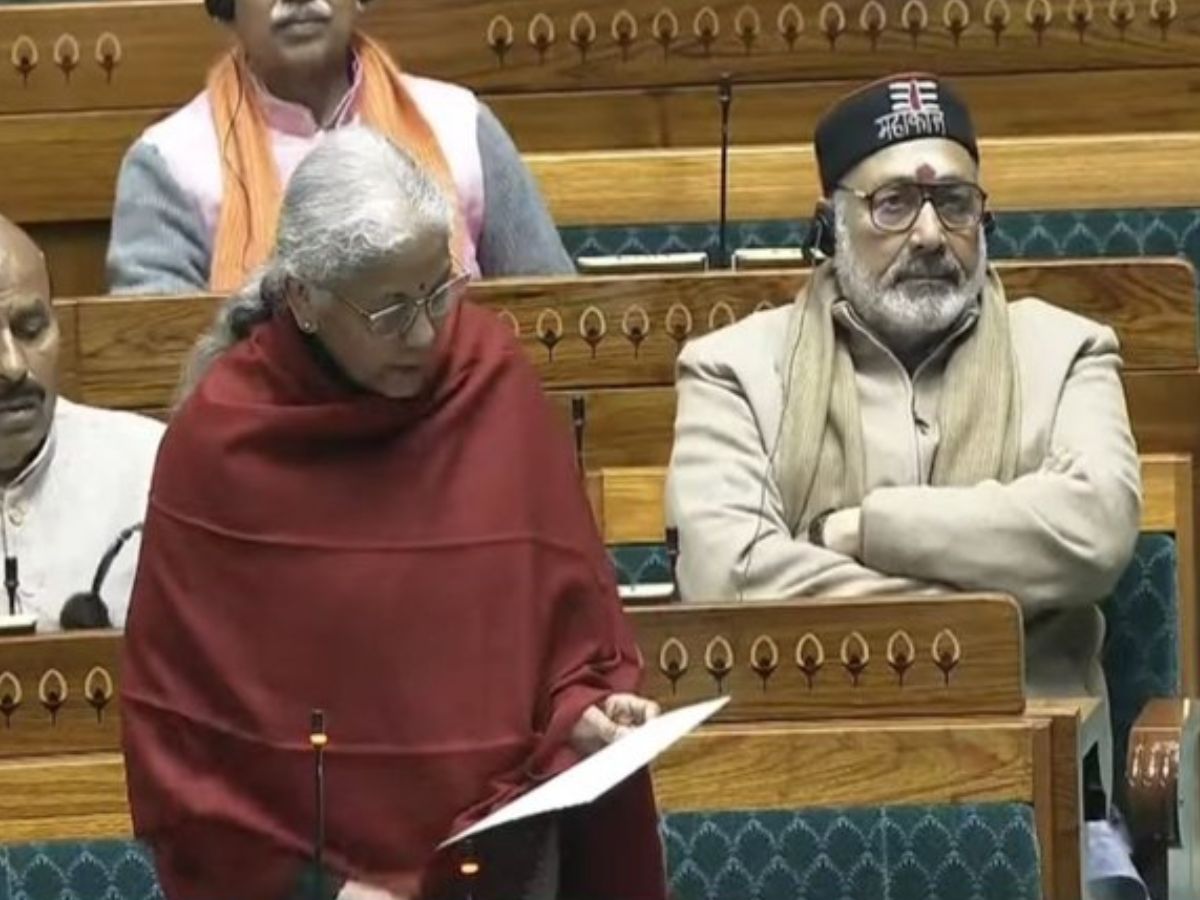
Economic Survey 2025-26: Union Finance Minister Nirmala Sitharaman tabled the Economic Survey 2025–26 in Parliament today, January 29, 2026. The Economic Survey is the government’s annual “health report” of the economy.
It looks back at how India performed over the past year and sets the stage for the Union Budget, which will be presented on February 1. The Economic Survey related document is tabled by Union Finance Minister Nirmala Sitharaman.
This year, all eyes are on whether India has managed to stay strong despite global high interest rates. Policymakers and investors want reassurance that the country has achieved what experts call a “Goldilocks” situation where growth is strong but inflation is cooling.
Early government estimates and recent IMF updates suggest India’s economy could grow between 7.3% and 7.5% in FY26, keeping it among the fastest-growing major economies in the world.
India Targets ‘Goldilocks’ Growth
India is working toward building a “Goldilocks” economy in FY27, not too hot, not too cold, but just right. The goal is to maintain solid growth of 6.5–7% while keeping inflation at manageable levels. Strong local demand, continued government spending on infrastructure, and reforms like GST are expected to drive this balance. Current projections show 7.4% growth in FY26 and around 6.9% in FY27, suggesting steady and healthy momentum.
What is ‘Goldilocks’ Growth?
A Goldilocks economy is the sweet spot every country hopes to reach. It means the economy is growing at a good pace, jobs are stable, and prices are not rising too fast. Right now, India seems to be in that phase, with GDP growth above 7–8% and inflation under control. This balance gives the central bank room to consider lowering interest rates. It also helps the country avoid two extremes, an overheated economy with high inflation, or a weak one with slow growth.
Economic Survey 2025-26: Balancing Growth and Fiscal Discipline Approach
This year’s Survey is expected to point to a “best of both worlds” situation inflation has cooled significantly, while consumer demand remains strong. Inflation reportedly dropped below the 4% target set by the central bank in late 2025. The report may also highlight India’s efforts to strengthen manufacturing through production-linked incentive (PLI) schemes, especially as global companies look beyond China for supply chains.
At the same time, the government is focusing on fiscal discipline, working to bring the fiscal deficit closer to the 4.4% goal. Another major area of attention could be how digital infrastructure and artificial intelligence often called the AI dividend can improve productivity, particularly in the services sector.
What Is the Model?
The Economic Survey of India is an annual flagship document prepared by the Economic Division of the Ministry of Finance, guided by the Chief Economic Adviser. It provides a detailed and data-based review of how the economy performed in the past year. You can think of it as the government’s official economic report card. It studies major indicators like GDP growth, inflation, and fiscal deficit, and helps shape the direction of policy before the Union Budget is announced.
Why Investors Care?
For investors, the Economic Survey is more than just a government document — it helps them understand where the economy is headed. They look at it to judge risks, identify growth opportunities, and plan their investments. Protecting capital during uncertain times is a big priority. Investors also focus on realistic profit projections, strong management teams, and the size of the market.
Sustainability has become equally important. Many global investors now consider ESG (Environmental, Social, and Governance) factors, including climate-related disclosures, to lower long-term risks. Strategic value, business scalability, and even tax benefits also play a role in investment decisions.
How Economic Survey Supports Sustainable Expansion?
The Survey also underlines that growth should not come at the cost of the environment. India’s long-term goal is to achieve net-zero emissions by 2070. To move in that direction, the country is investing in renewable energy like solar and wind power. It is also encouraging a circular economy, where resources are reused efficiently, and promoting mindful consumption through the LiFE initiative. The idea is simple grow the economy, but do it in a way that protects the planet for future generations.




