Rahul Gandhi’s attempt to cite General Naravane’s draft memoir in the Lok Sabha triggered protests, with the Speaker invoking Rule 349 to bar references from books
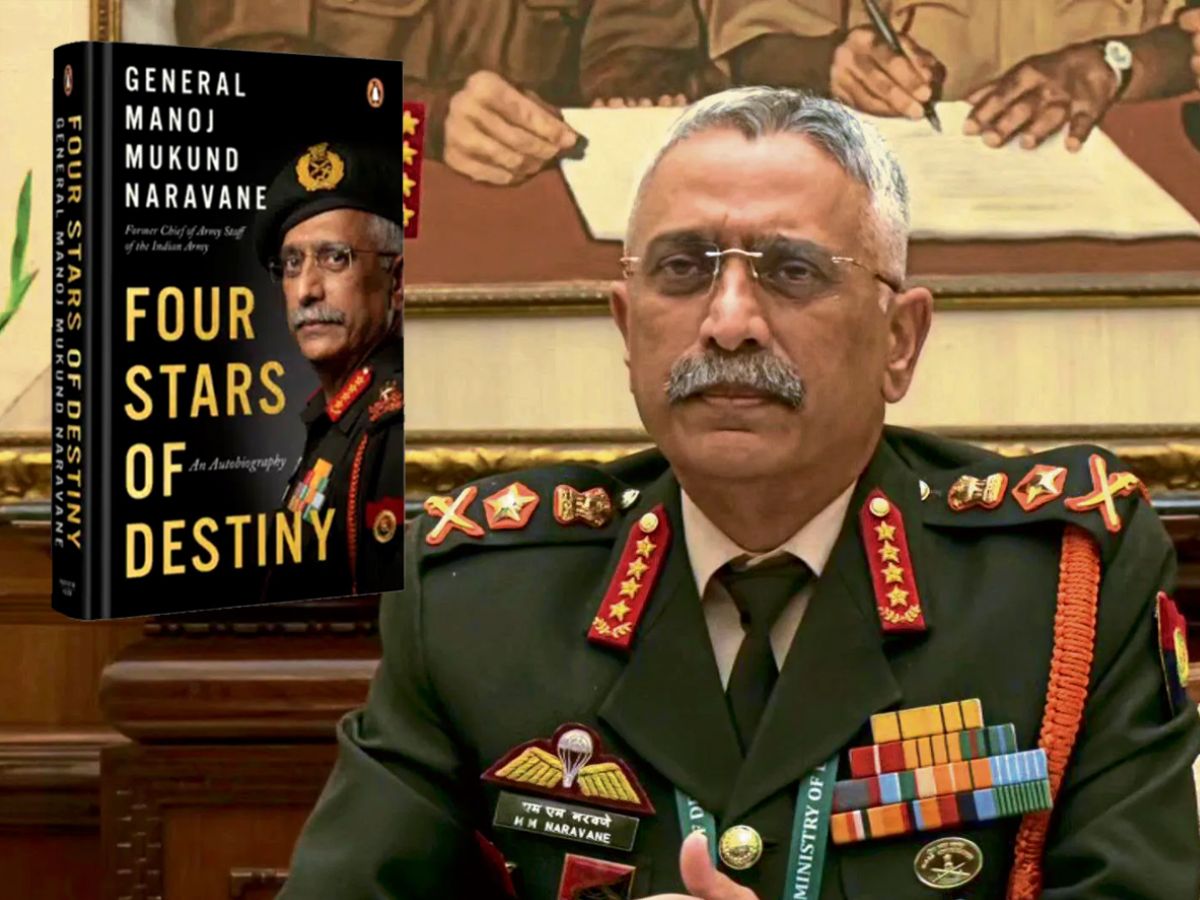
General Naravane Book Controversy Know About 349 Rule of Parliament (Source: File Photo)
General Naravane Book Controversy: During the Motion of Thanks debate on President Droupadi Murmu’s address on February 2, Leader of Opposition Rahul Gandhi referred to parts of a draft memoir by former Army Chief General Manoj Mukund Naravane. His mention immediately drew protests from ruling party MPs. Defence Minister Rajnath Singh and Home Minister Amit Shah objected strongly, leading to heated exchanges between the government and Congress members. As tensions rose, Speaker Om Birla adjourned the House at 2:09 pm until 3 pm.
When the proceedings resumed at 3 pm, Rahul Gandhi tried to raise the issue of Naravane’s statement again. This led to another round of protests, and Speaker Birla was forced to adjourn the House again until 4 pm. Even as the second sitting of the day began, there were disruptions, and the presiding officer adjourned the House for the day.
Amid the repeated interruptions, Speaker Om Birla cited Rule 349 of the Lok Sabha Rulebook several times. He told Rahul Gandhi that members are not allowed to quote from books, magazines, or articles in the House. Despite this, Gandhi tried to raise India’s military tensions with China and claimed the former Army Chief had written about Prime Minister Narendra Modi and Defence Minister Rajnath Singh. Rajnath Singh accused him of misleading the House, while Prime Minister Modi was present during the disorder.
Rule 349 is concerned with the behavior and discipline of MPs within the House. It regulates slogan shouting, protests, and any activity that may interrupt the proceedings. Notably, it forbids members from reading out quotes from newspapers, magazines, or books. It also forbids the display of placards, flags, symbols, or religious pictures. These rules are what led the Speaker to halt Gandhi’s speech.
Connected to Rule 349, parliamentary norms require MPs to follow the Speaker’s instructions at all times. Members should not interrupt others, speak loudly, or behave in ways that disturb proceedings. Raising issues without permission is also not allowed. Ignoring these directions is treated as disrespect toward the Chair, which the Speaker pointed out during the exchange.
At the beginning of his speech, Rahul Gandhi referred to earlier comments by BJP MP Tejasvi Surya, who had questioned the patriotism and character of the Congress. Gandhi said he wanted to read from a magazine excerpt of Naravane’s memoir in response. However, Rajnath Singh asked whether the book being cited had even been officially published, adding to the dispute.
Home Minister Amit Shah also insisted that books or magazine content cannot be cited in the House and urged Gandhi to stick to parliamentary rules. Speaker Birla repeatedly asked him to focus on the Motion of Thanks. When Gandhi persisted, Birla said, “You are continuously disregarding the Chair.” Gandhi replied that he was not challenging the Chair but wanted to speak on India–China relations, keeping the standoff alive.
After the adjournment, Rahul Gandhi told reporters, "Naravane has written about the Prime Minister and Rajnath Singh clearly in his book, which has appeared in an article and I am quoting from that article. They are scared because if it comes out, the reality of Narendra Modi and Rajnath Singh will be revealed. What happened to the 56-inch chest when China was before us and advancing?"
General M.M. Naravane, born on April 22, 1960, in Pune, is the son of an Indian Air Force officer. He studied at the National Defence Academy and the Indian Military Academy and holds an M.Phil in defence studies. Commissioned into the Sikh Light Infantry in 1980, he later led Rashtriya Rifles units, commanded the Assam Rifles, and handled counter-insurgency operations in Jammu and Kashmir and the Northeast.
Naravane took over as the Army Chief on December 16, 2019, and retired in April 2022. Quotes from his biography, which is set to be released in 2024, were published in the form of media reports in December 2023. The biography is based on his experiences, ranging from his first encounters with the Chinese military in Sikkim to dealing with the Galwan Valley crisis as the Army Chief.
