Ghaziabad suicide case: Diary of three sisters reveals obsession with Korean culture, online addiction, isolation and family stress before tragic deaths.
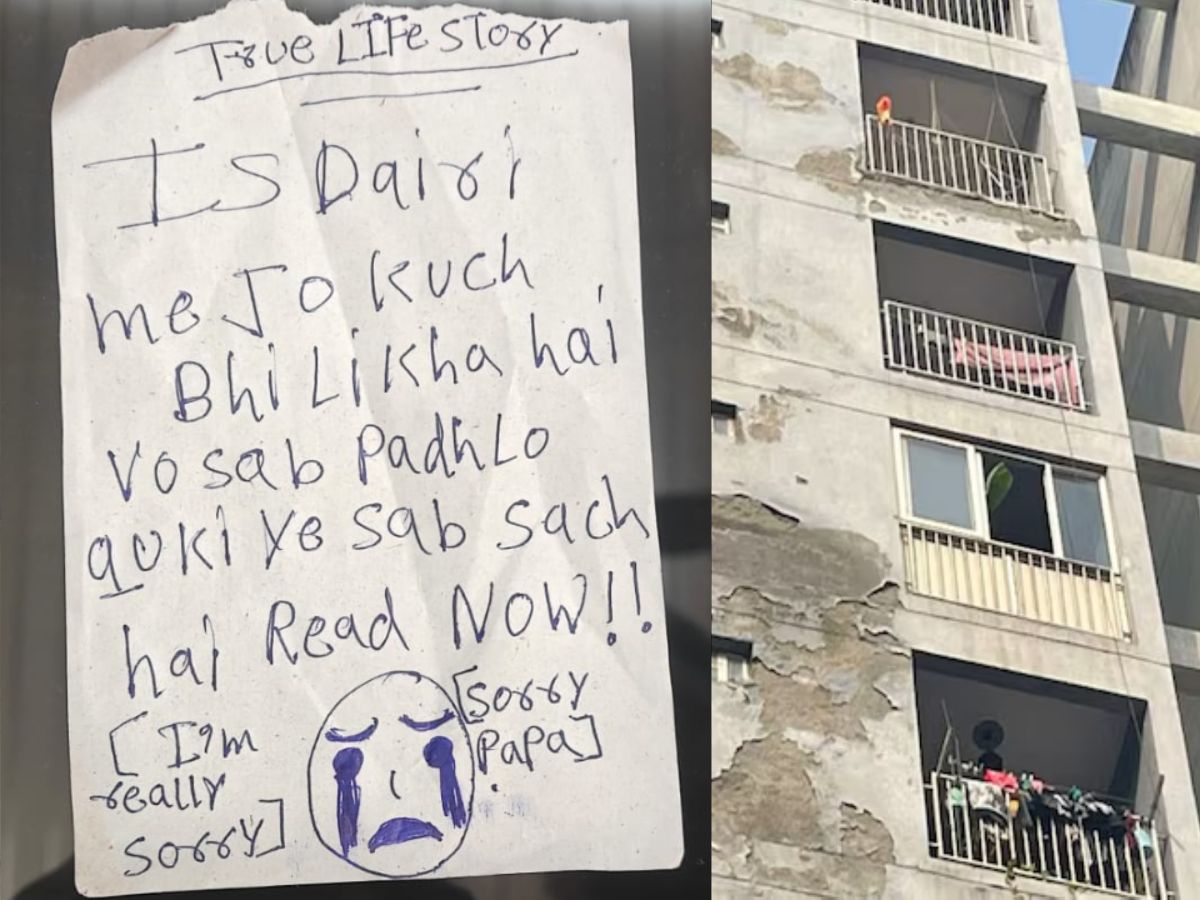
Ghaziabad suicide case: Diary of three sisters reveals obsession with Korean culture [Photo: X]
The deaths of three minor sisters in Ghaziabad have exposed a disturbing mix of online addiction, cultural obsession, and extreme social isolation that investigators say may have pushed the girls toward a tragic end. What initially appeared to be a mysterious suicide case has now turned into a deeper examination of how unchecked digital immersion and fractured family dynamics can affect vulnerable young minds.
Police recovered an eight-page handwritten diary from the family’s apartment that offered rare insight into the sisters’ inner world. The note revealed their emotional detachment from reality, a powerful fixation on Korean culture, and growing distress after losing access to their online life.
The incident occurred around 2 am when the three sisters, aged 16, 14 and 11, fell from the ninth floor of their apartment in Ghaziabad’s Bharat City area. All three died on the spot. Police said the girls were inside the flat at the time, and there were no signs of forced entry or external involvement.
Investigators believe the sisters jumped from the window one after another, though the exact sequence remains under verification through forensic and eyewitness evidence.
The diary found inside the home painted a picture of emotional turmoil and deep disconnection from their surroundings. Investigators said the girls expressed repeated frustration that no one in their family understood them.
One line from the note has particularly alarmed authorities: “Will you stop us from going to Korea?” Police believe this sentence reflects how deeply the sisters had internalised their fantasy of leaving India and living in a culture they idealised.
Police said the sisters were intensely attached to Korean pop culture, including K-dramas and K-pop. Within their private world, they reportedly adopted alternate names, Aliza, Cindy, and Maria, which they used consistently while interacting online and among themselves.
According to officers, this obsession went beyond entertainment. The girls reportedly began seeing themselves as part of a different cultural identity altogether. An officer involved in the probe said, “In the note, they repeatedly mention how no one – not their brother, not other family members – understood their love for Korea.”
The note also showed resentment toward family members, especially their half-brother, whom they referred to only as “bhai”.
Investigators are examining the role of an online task-based game that the girls allegedly followed closely. While the exact platform remains unidentified, police believe the game encouraged prolonged screen time, emotional attachment, and role-playing behaviour.
Officers said the sisters had a single mobile phone that they used to watch shows and access online platforms. They also watched Korean dramas on television.
“They wrote in the note that they liked Korea, China, Japan and Thailand, and that they liked people from those places. They were upset that they could not go and live there.”
Police confirmed that the sisters had not attended school since around 2020. The eldest studied till Class 7, the middle sister till Class 5, and the youngest till Class 3. Over time, they stopped interacting with people outside their home.
“They did not have a social life at all,” an officer said. Investigators believe prolonged isolation during and after the Covid-19 period worsened their dependence on the digital world.
In the days leading up to the incident, tensions reportedly escalated at home. Police said the father sold the mobile phone the girls used for ₹3,500, possibly due to financial pressure. He also forced them to delete a social media account that had nearly 2,000 followers.
“This angered them deeply,” an officer said. “Their online world was everything to them.”
Police are also investigating the family structure, which they described as complicated. Multiple marriages and children from different relationships lived together in a three-bedroom flat.
“The dynamics in the household were complex. All the family members lived together in a 3BHK flat,” said Alok Priyadarshi, additional commissioner of police. Officials said this aspect remains under verification as part of the broader investigation.
The Ghaziabad tragedy has sparked nationwide concern over adolescent mental health, online addiction, and the lack of safeguards for minors in immersive digital spaces.
Authorities believe the case serves as a warning about how fantasy worlds can slowly replace reality for children left without emotional support or supervision. Police said the investigation remains ongoing.
