
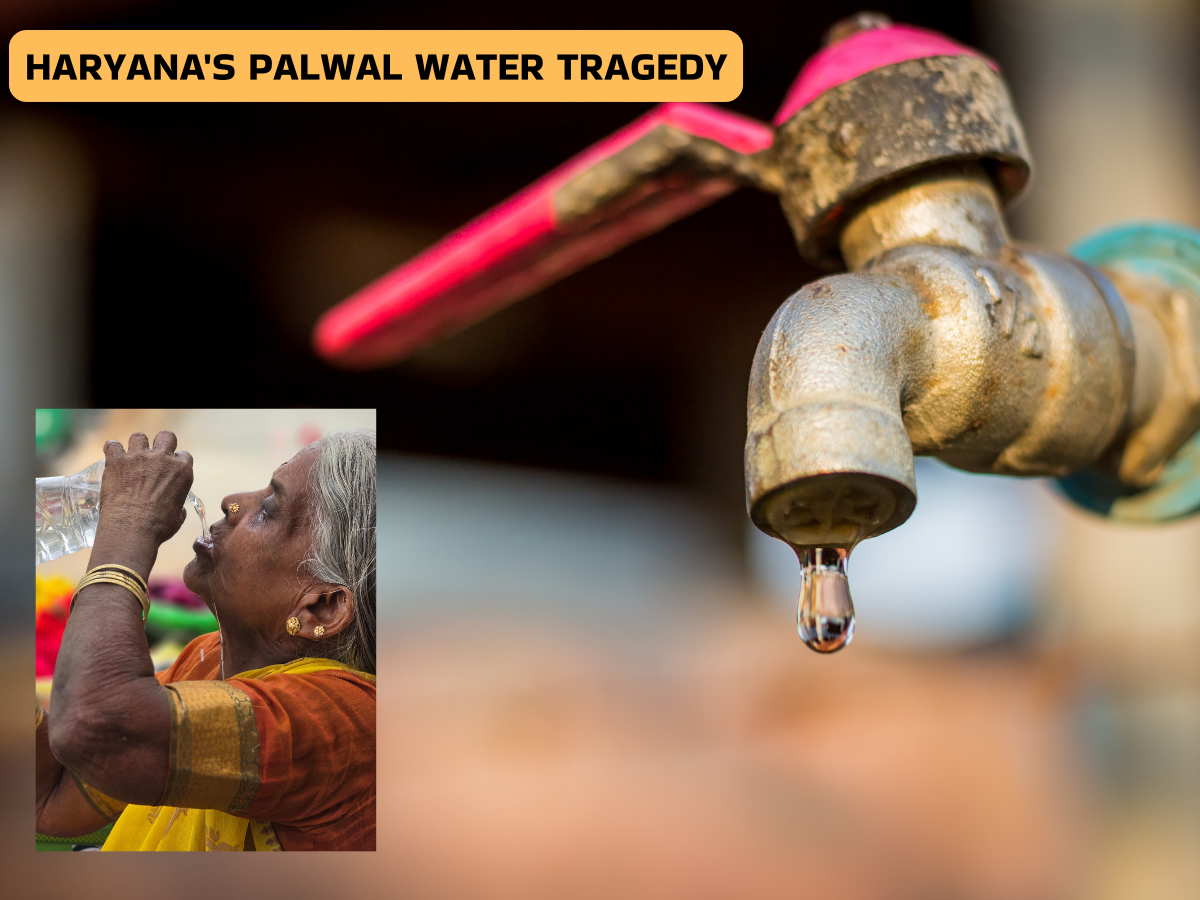
Haryana’s Palwal Water Tragedy: The residents of Palwal district discovered that their tap water has dangerous qualities, which make it unsafe for consumption. Health officials have started their water testing process through laboratory analysis while medical personnel are monitoring symptoms in households which experienced waterborne disease.
Haryana’s Palwal Water Tragedy: Waterborne Infection Signs Show Symptoms
The first report indicates that 12 Deaths in 15 days raise contamination fears. Multiple victims suffered from vomiting and diarrhea and high fever before they died. Authorities have started their pipeline and storage tank inspections to determine whether any leaks or sewage contamination exists. The ongoing investigation has caused people to feel fear and anxiety, which resulted in many residents choosing bottled water as a safety measure.
Haryana’s Palwal Water Tragedy: Water Contamination Cases Show Rising Trend
Palwal residents compare their current situation with a previous disaster that occurred in Indore earlier this year. Indore families who lived there in January 2026 experienced multiple deaths, which resulted from drinking contaminated tap water. The incident demonstrated how inadequate water supply systems require better monitoring and maintenance through a complete infrastructure assessment.
Haryana’s Palwal Water Tragedy: Contaminated Tap Water Poses Health Risks
Experts indicate that contaminated drinking water will produce severe health conditions, which include cholera, typhoid, hepatitis A, and acute gastroenteritis. Children, elderly people, and individuals with compromised immune systems face higher health risks. The testing process, together with chlorination and pipeline maintenance, needs immediate action because these steps will stop additional deaths.
Haryana’s Palwal Water Tragedy: Government Response and Public Safety Measures
Authorities in both regions have intensified water quality checks and required citizens to boil their drinking water. The affected localities received both tanker supplies and emergency medical camps.
The urgent requirement is for improved drinking water safety through enhanced water safety audits, together with permanent infrastructure improvements. This has been demonstrated by the sequence of events that occurred in Palwal and Indore.




