India-EU FTA promises lower tariffs, cheaper European imports, stronger exports, higher investment and reduced reliance on China, reshaping trade and markets for decades.
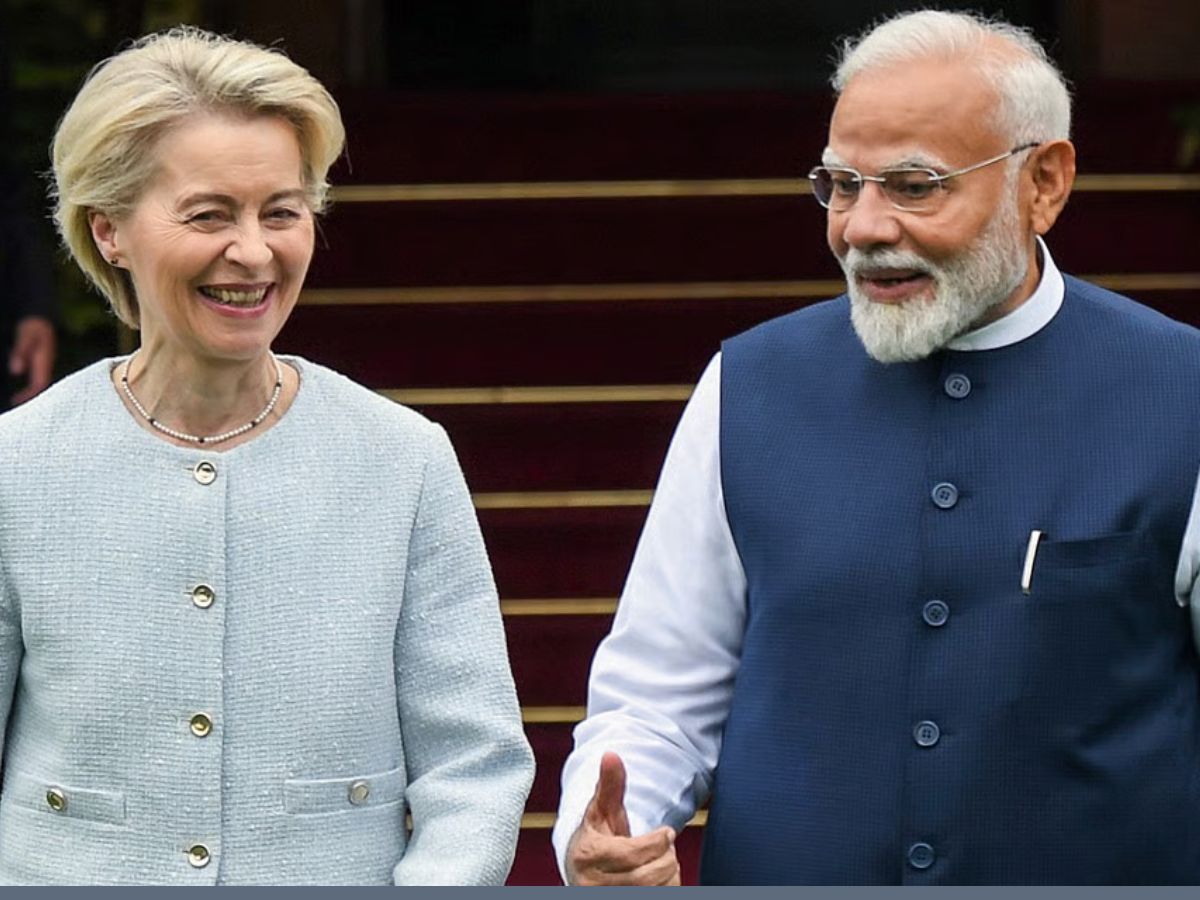
India-EU FTA promises lower tariffs, cheaper European imports [Photo: X]
India and the European Union have finally reached a historic trade agreement, marking a major milestone in global commerce. The India-EU Free Trade Agreement (FTA) promises to reshape trade relations, reduce tariffs, and open new opportunities for businesses and consumers on both sides.
Experts are calling it the “mother of all deals,” as it covers key sectors like automobiles, pharmaceuticals, food products, and defence, while also strengthening India’s position in the global market.
With potential benefits ranging from cheaper imported goods to expanded export opportunities, this deal could transform the way India trades with Europe for decades to come.
At the India‑EU Summit in New Delhi on January 27, 2026, Prime Minister Narendra Modi and European Commission President Ursula von der Leyen formally announced the conclusion of the India‑EU Free Trade Agreement (FTA) negotiations.
While the legal text will undergo final review before full implementation, the ceremonial signing marks a historic milestone in economic and diplomatic ties, opening the door to expanded trade, investment, and cooperation across sectors such as technology, sustainable development, and strategic industries, and signalling a new era in India‑Europe relations.
The India-European Union Free Trade Agreement (FTA), officially concluded on 27 January 2026, is a landmark pact designed to liberalise trade and investment between India and the 27-member European Union.
It aims to reduce or eliminate tariffs on the vast majority of goods, enhance market access in services, streamline rules, and boost bilateral economic cooperation. The agreement is being hailed as historic and one of the most comprehensive trade deals negotiated by both sides.
1. Trade in Goods
2. Automobile Market
3. Services, Investment, and Business
4. Customs and Procedures
For India:
For the EU:
Sensitive Areas and Exclusions
Although the deal was concluded in January 2026, it still needs legal vetting and formal ratification by the European Parliament, EU member states, and the Indian government before coming into force — expected within the next year.
The deal links India and the European Union — two of the largest economic entities in the world, together representing a market of nearly 2 billion people and roughly 25 % of global GDP. This scale makes it one of the largest trade agreements ever negotiated.
For context, the EU accounting alone for a huge share of global trade, combined with India’s fast-growing economy, creates a trade bloc bigger than most existing FTAs.
The pact is designed to cut or eliminate tariffs on the vast majority of goods traded between India and the EU. For instance, India will remove import duties on a large percentage of EU goods, and the EU will reciprocate for most Indian exports.
These reductions include complex, high-tariff areas like automobiles (where Indian tariffs historically exceeded 100 %) and wines & spirits — significant structural reforms that go well beyond typical trade agreements.
The deal isn’t just about tariff cuts — it includes services, movement of professionals, digital trade, customs cooperation, and regulatory alignment. That means easier market entry for Indian IT, services, and professionals, and better access for EU capital goods, tech and innovation sectors.
Experts describe it as not merely a trading agreement but a platform for long-term economic partnership that can anchor India deeper into global value chains and enhance competitiveness across sectors.
This FTA comes at a time of changing global trade dynamics, including rising protectionism and tariff tensions involving the U.S. and China. The agreement positions both India and the EU to diversify trade partnerships and reduce strategic dependencies.
Leaders from both sides, including Prime Minister Modi and EU Commission President Ursula von der Leyen, have highlighted its role as a symbol of cooperation between two major democratic economies and a sign of confidence in multilateral trade.
Talks on an India-EU FTA spanned almost two decades, with earlier rounds stalling and later resumed. Completing such a comprehensive FTA — especially across goods, services, mobility, and regulatory issues — is rare. The duration and complexity of negotiations contribute to the “mother of all deals” label.
The agreement is expected to reshape key industries:
The FTA negotiations took nearly 20 years, with talks accelerating in recent years and concluding in early 2026. After the procedural conclusion in January, the agreement will undergo legal vetting for several months. It is expected to come into force in late 2026 or early 2027 after ratification by India and EU member states.
The India-EU FTA calls for the elimination or sharp reduction of import duties on the vast majority of traded goods on both sides, a central feature that will significantly reshape trade costs:
European food and drink items, long considered premium imports due to steep duties, are set to become more affordable:
The FTA is expected to significantly reduce tariffs on high-value healthcare and precision equipment imported from the EU:
A major, though less visible, impact will be felt in India’s manufacturing sector:
While some sensitive sectors (like automobiles) have phased or quota-based tariff cuts, reduced costs of machinery and components could indirectly lower production costs for:
While many tariffs fall, sensitive agricultural products and some local industries may face slower liberalisation to protect domestic producers. Phased reductions and quota systems for certain high‑value items mean price shifts may be gradual.
As cheaper and higher-quality European imports enter the Indian market, some domestic industries may struggle to compete:
Although sensitive agricultural sectors such as dairy and staple crops are largely protected or excluded, indirect effects may still emerge:
The FTA pushes closer alignment with European technical, environmental, and product standards, which are among the strictest globally:
To compete with EU firms, Indian companies may need to upgrade:
As companies adjust sourcing patterns to integrate with EU supply chains:
The agreement could benefit a wide range of sectors:
The India-EU Free Trade Agreement will lead to the phased reduction or elimination of import duties on a wide range of European goods, replacing India’s traditionally high tariff barriers with a more liberal trade framework.
Rather than immediate cuts, most duties will be lowered gradually, with longer timelines or quotas for sensitive sectors such as automobiles, while non-sensitive industrial and intermediate goods see faster relief.
Lower import duties will reduce cost pressures on Indian industries that rely on European machinery, chemicals, medical equipment and high-tech inputs, making production cheaper and more efficient over time.
As input costs fall, Indian manufacturers are expected to become more competitive both at home and in export markets, supporting deeper integration into global supply chains and potentially leading to better-quality products and stable prices for consumers.
Under the India-EU Free Trade Agreement, import duties on European passenger vehicles will be sharply reduced over a phased period, marking one of the most significant shifts in India’s auto import policy in decades. Currently, fully built imported cars attract duties of over 100%, making European luxury vehicles prohibitively expensive.
The FTA introduces quota-linked, staged tariff cuts, ensuring that duty reductions are gradual and capped, allowing domestic automakers time to adjust while opening the market to premium global brands.
As a result, fully imported models from European carmakers are expected to benefit the most. Brands such as Mercedes-Benz, BMW, Audi, Porsche, Lamborghini, Ferrari, Bentley, Rolls-Royce, Land Rover, Volvo, Volkswagen and Skoda stand to see meaningful price corrections.
This includes flagship luxury SUVs, high-performance sedans and sports cars, as well as lower-volume enthusiast models like the Volkswagen Golf GTI and Skoda Octavia vRS, which have so far remained niche due to steep pricing.
The India-EU Free Trade Agreement is expected to deliver broad-based gains for Indian markets, beginning with a boost in foreign direct investment (FDI). Improved market access, lower tariffs, and clearer trade rules make India a more attractive destination for European companies looking to diversify supply chains away from China.
This could accelerate investment in manufacturing, clean energy, automobiles, pharmaceuticals, and high-end technology, supporting India’s long-term industrial growth. For consumers and businesses, the deal promises greater competition and better-quality products at more competitive prices, particularly in sectors such as machinery, medical equipment, processed foods and premium consumer goods.
At the same time, Indian exporters gain preferential access to the EU’s vast market, strengthening export growth in textiles, chemicals, engineering goods and services. Strategically, the pact helps rebalance India’s trade dependencies, reduce vulnerability to global disruptions, and enhance economic resilience by anchoring India more firmly into diversified global value chains.
