
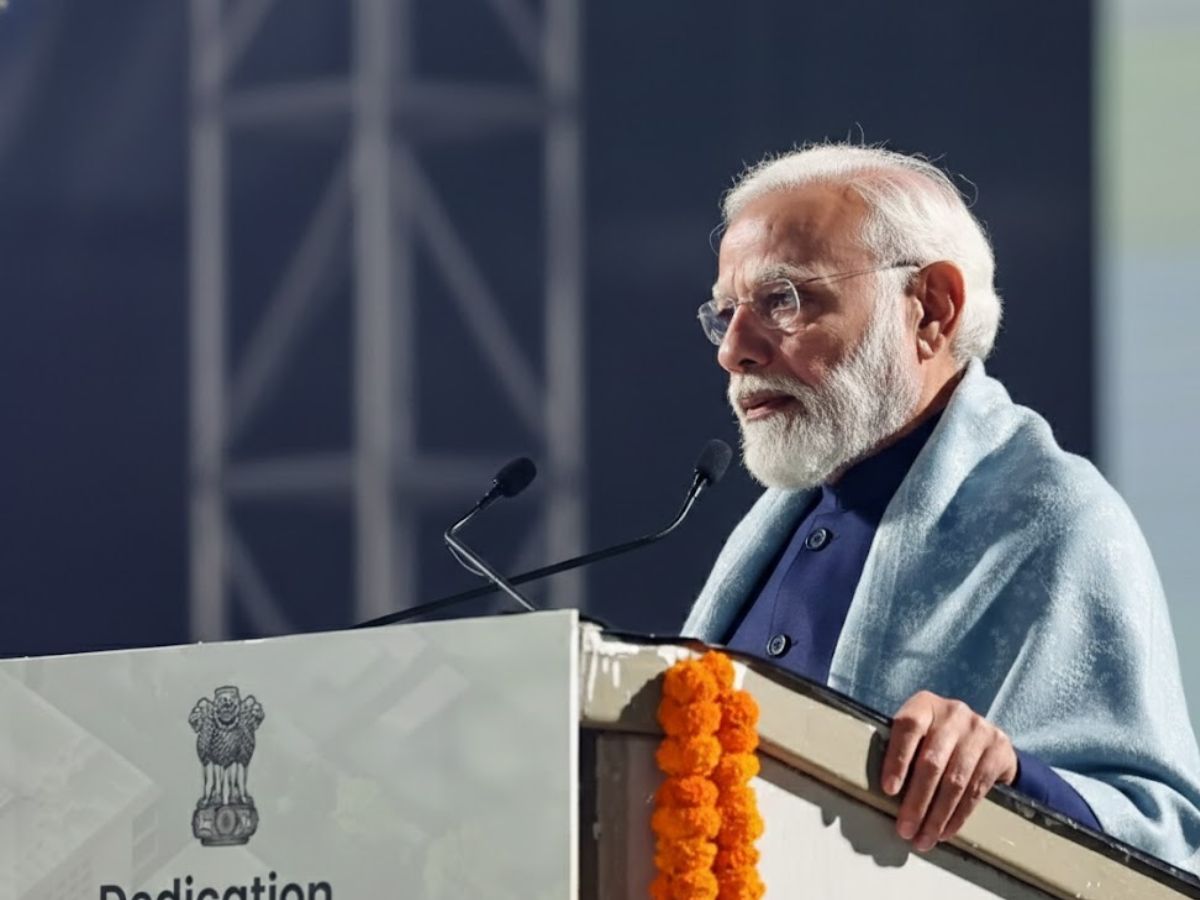
Prime Minister Narendra Modi on Sunday asserted that political stability and policy predictability have restored investor confidence, enabling India to negotiate free trade agreements (FTAs) from a “position of strength.” In a wide-ranging interview, the Prime Minister also characterized the recent Union Budget 2026 as a “we are ready moment” reflecting the nation’s resolve to become a developed economy, while issuing a call to the private sector to aggressively increase spending on research and development
Who is Responsible for India’s Success in Trade Negotiations?
Prime Minister Modi credited his government’s decade-long reforms for creating conditions to finalise trade deals that had previously stalled. He asserted that stronger manufacturing, services and MSMEs now enable India to negotiate from a position of confidence. “During UPA rule, talks would begin and then break down. A little real substance was achieved despite long negotiations,” Modi said, adding that economic mismanagement left India unable to negotiate from a position of strength. He emphasized that political stability and political predictability restored investor confidence in India, creating the foundation for recent trade pacts.
What Does the Recent Wave of Trade Agreements Mean for Indian Industry?
The Prime Minister explained that FTAs signed with 38 partner nations are strategically designed to benefit Indian MSMEs. “Our FTAs are designed to expand market access for MSMEs in textile, leather, chemicals, handicrafts, gems and other sectors,” Modi stated. He highlighted that these agreements anchor domestic reform to external commitments while widening export opportunities. By reducing tariff disadvantages relative to competitors, Indian firms can integrate more deeply into global value chains. This approach represents a structural shift from the previous era’s inability to conclude meaningful trade negotiations despite prolonged efforts.
What is the Government’s Stance on Defence Modernisation?
Addressing national security concerns, Prime Minister Modi acknowledged the government’s duty to modernise the defence sector in line with current realities. He confirmed that the government would do whatever it takes to support and strengthen the country’s armed forces. His comments follow the Defence Acquisition Council’s recent approval of proposals worth approximately $40 billion, including the acquisition of 114 Rafale jets from France to boost Indian Air Force capabilities. Despite the government’s long push for self-reliance in defence manufacturing, Modi emphasized that supporting armed forces remains the priority.
How Does the Private Sector Fit Into Viksit Bharat Vision?
The private sector is essential to the next stage of economic reform, according to the prime minister. He called for a decisive response from industry, urging businesses to focus less on protecting margins and invest aggressively in R&D and supply chains. “The next leap of Viksit Bharat will depend on bold investment by the private sector, innovation, long-term capacity, and global competitiveness,” Modi said. He stressed that durable competitiveness must rest on innovation, efficiency and scale rather than tariff preferences. The government has displayed commitment to reforms in letter and spirit, he added.
Disclaimer: This information is based on inputs from news agency reports. TSG does not independently confirm the information provided by the relevant sources.




