
Trump announced that he and Modi agreed on a US–India trade deal, reduced tariffs, increased US product purchases, and steps to curb Russian oil imports.
The India–US trade deal cutting tariffs from 50% to 18% is set to boost Indian exports, improve competitiveness, and benefit key sectors
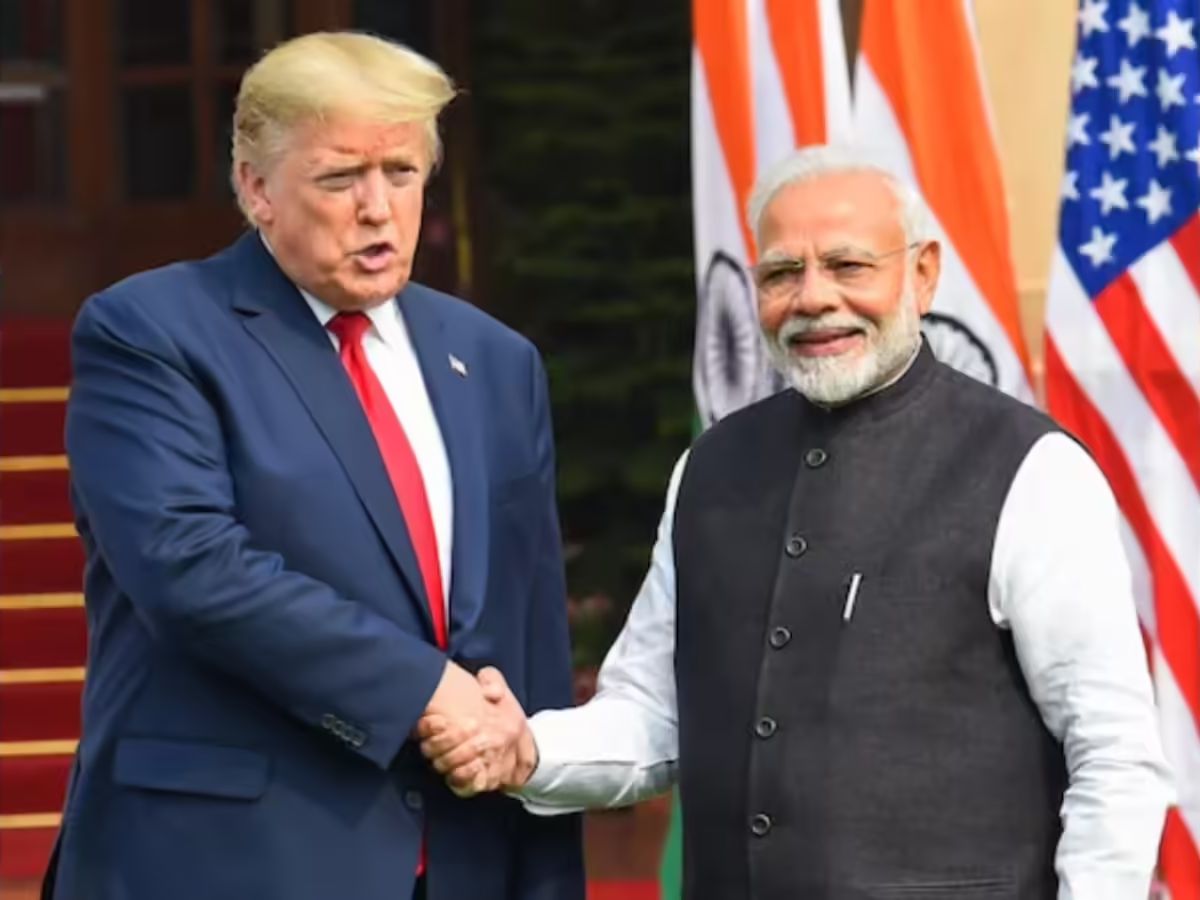
India–US Trade Deal Boosts Export Competitiveness (Source: X/ Narendra Modi)
India–US Trade Deal: The India–US trade deal, recently announced by US President Donald Trump, has cut the US’s reciprocal tariffs on Indian goods from 50% to 18%, marking a significant boost for India’s export sector. This reduction is expected to provide meaningful relief to several Indian export categories and improve their competitiveness in the US market.
US President Donald Trump posts on Truth Social, "It was an honour to speak with Prime Minister Modi. He is one of my greatest friends and, a Powerful and Respected Leader of his Country. We spoke about many things, including Trade, and ending the War with Russia and Ukraine. He… pic.twitter.com/Yl7qcLONHC
— ANI (@ANI) February 2, 2026
Prime Minister Narendra Modi expressed his gratitude to US President Donald Trump, saying he was delighted that Made in India products would now face a reduced tariff of 18%. He thanked Trump on behalf of the 1.4 billion people of India for the announcement and noted that cooperation between two large economies and the world’s largest democracies benefits their citizens while creating significant opportunities for mutually beneficial partnership. Modi also emphasized that Trump’s leadership is crucial for global peace, stability, and prosperity, and stated that India fully supports his efforts for peace. He added that he looked forward to working closely with Trump to take the India–US partnership to unprecedented heights.
Wonderful to speak with my dear friend President Trump today. Delighted that Made in India products will now have a reduced tariff of 18%. Big thanks to President Trump on behalf of the 1.4 billion people of India for this wonderful announcement.
— Narendra Modi (@narendramodi) February 2, 2026
When two large economies and the…
US Ambassador Sergio Gor described the deal as a “new era of India–US relations” and praised the leadership of both Trump and Prime Minister Narendra Modi, saying, “Both US President Donald Trump and Prime Minister Narendra Modi are great leaders.”
U.S. Ambassador to India, Sergio Gor tweets, "As I have said many times, President Trump genuinely considers Prime Minister Modi a great friend. Thrilled by the news of the trade deal this evening. The relationship between the United States and India has LIMITLESS POTENTIAL!" pic.twitter.com/UcK3i3a83h
— ANI (@ANI) February 2, 2026
The lower tariffs reduce the cost of Indian goods for US importers. For example, a shipment with a free-on-board (FOB) value of $100 that previously faced a 25% tariff would cost $125 in the US. With the new 18% tariff, the same shipment will cost $118, a $7 difference per $100 of goods.
This reduction is especially important for sectors with low operating margins, allowing exporters to either retain the benefit to improve profitability or pass on part of the savings to US buyers. There are some Indian sectors which would have a great impact due to reduced tariff on India's export.
The textiles and apparel sector, including cotton garments, home textiles, and made-ups, is highly price-sensitive and competes directly with Bangladesh, Vietnam, and other low-cost producers. The tariff cut narrows the price gap for Indian exporters and benefits large suppliers serving US retailers in mid-value categories.
Engineering goods, which make up the largest share of India’s merchandise exports to the US, include auto components, industrial machinery, electrical equipment, and capital goods. These products usually operate on single-digit margins, making tariff changes critical.
The reduced tariffs improve India’s competitiveness against East Asian suppliers, giving exporters better pricing flexibility and negotiating power for long-term contracts, even if volumes do not rise immediately.
In speciality chemicals and intermediates, exports are driven by long-term contracts and compliance requirements. Although demand is less sensitive to short-term price changes, tariffs directly affect net earnings. The tariff cut strengthens India’s position in US supply chains, particularly as companies diversify under China-plus-one strategies.
India’s gems and jewellery exports, including cut and polished diamonds and gold jewellery, are highly competitive and sensitive to tariffs, which affect retail pricing and inventory costs. The reduction from 25% to 18% lowers landed costs, easing pressure on margins for US wholesalers and retailers.
While the IT sector is largely a services exporter and not directly affected by goods tariffs, the trade deal improves market sentiment and India-US relations, indirectly benefiting the industry’s business environment in the US.
In July 2025, Trump had imposed 25% tariffs on Indian goods, along with an additional 25% penalty, sharply increasing the cost of Indian exports to the US. This move was linked to India’s imports of Russian crude oil, which the new trade deal effectively addresses by reducing tariffs and easing trade tensions.