The India–US trade deal announced by US President Donald Trump has triggered sharp political responses in India
India–US trade deal
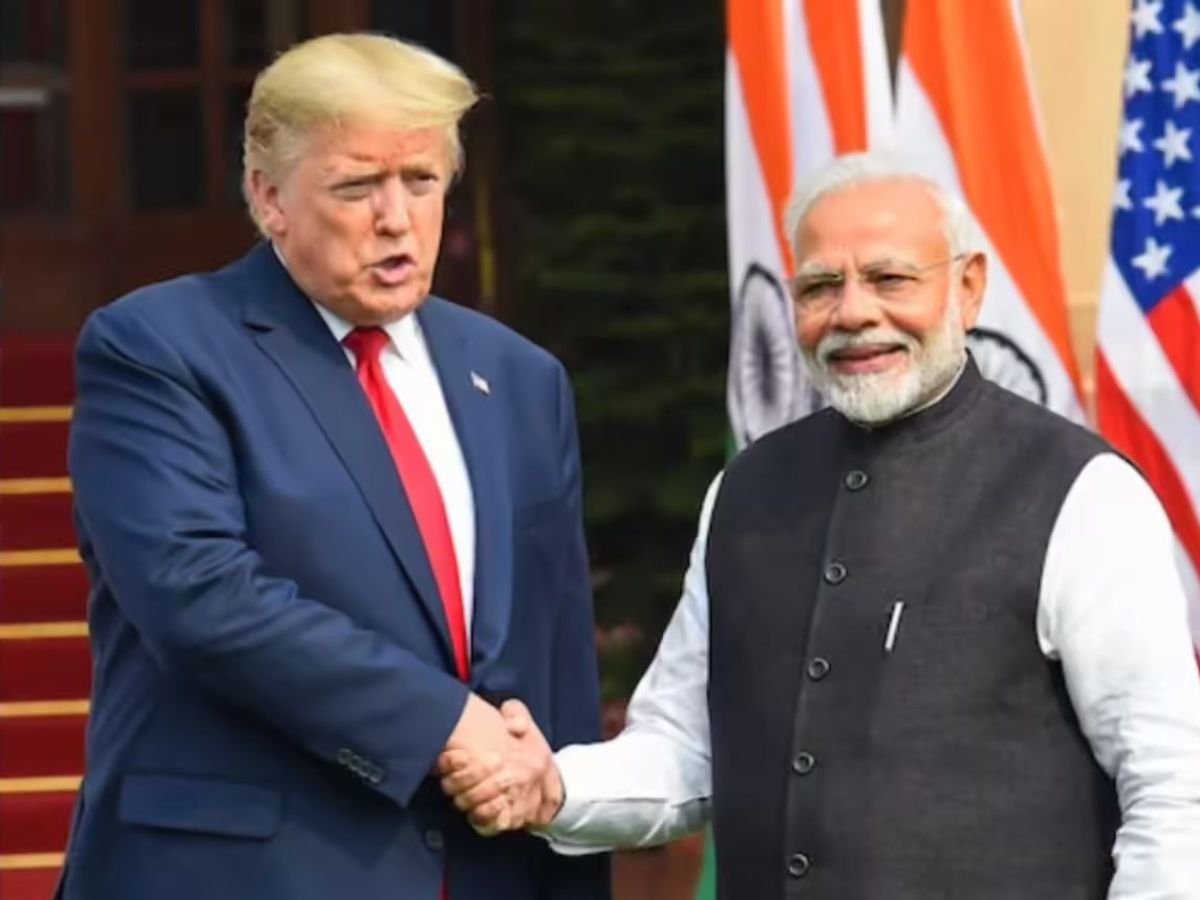
Tikam SharmaThe India–US trade deal announced by US President Donald Trump has triggered sharp political responses in India, with Samajwadi Party (SP) chief Akhilesh Yadav mounting a strong attack on the BJP-led Centre, even as senior Union ministers have hailed the agreement as a landmark step toward economic growth and global cooperation. While the government has pitched the pact as a major boost to trade, innovation and strategic ties, the opposition’s criticism underscores an intensifying political and economic debate over its long-term impact on Indian farmers and consumers.
Yadav alleged that the agreement, which proposes greater access for American agricultural products in Indian markets, represented a “betrayal” of nearly 70 per cent of the country’s population that relies on agriculture for its livelihood. In a post on X, the SP leader accused the BJP of succumbing to external pressure and abandoning the ideals of self-reliance and swadeshi.
“Opening India’s markets to American agricultural products and food grains is a betrayal of the 70% of our population dependent on farming and agriculture,” Yadav wrote, claiming the deal would damage farmers’ interests, promote profiteering, and eventually compel cultivators to sell their land to large corporations.
He further argued that the agreement would adversely affect the lower middle class and middle class by driving up food prices and creating a new network of intermediaries. Alleging that land acquisition was the BJP’s ultimate objective, Yadav said the government must clarify the pressures under which such decisions were taken.
In contrast, Union Minister for Communications and Development of the North Eastern Region Jyotiraditya Scindia welcomed the agreement, describing it as a reflection of growing cooperation between the world’s two largest democracies. Writing on X, Scindia said the pact would help scale up innovation, strengthen supply chains, and contribute to a more stable and peaceful global order.
“Under the leadership of Prime Minister Narendra Modi and President Trump, this historic trade agreement brings together the world’s largest democracies,” Scindia said, adding that tariff reductions on Indian products would play a key role in driving economic growth and shared prosperity.
Similarly, Union Minister for Consumer Affairs Prahlad Joshi also lauded the deal, congratulating Prime Minister Modi and President Droupadi Murmu for deepening India–US strategic relations. Joshi said the agreement would create fresh opportunities for MSMEs, entrepreneurs and skilled professionals, while enabling access to advanced American technology to enhance India’s global competitiveness.
Notably, Earlier President Trump announced the agreement on his social media platform Truth Social, months after the US imposed 50 per cent tariffs on Indian goods in August 2025. According to Trump, the US will cut reciprocal tariffs on Indian products from 25 per cent to 18 per cent, while India will move to eliminate tariffs and non-tariff barriers on American goods.
Trump also claimed that India had agreed to significantly increase imports of US energy, technology, agricultural commodities, coal and other products, worth over $500 billion, and suggested that New Delhi would halt purchases of Russian oil—an issue that had earlier prompted Washington to impose additional duties on Indian exports.
Following the announcement, Prime Minister Narendra Modi confirmed the development, describing his conversation with the US President as “wonderful” and expressing satisfaction that “Made in India” products would now face a reduced tariff of 18 per cent in the US market.
