JNU protests escalate against VC Santishree Dhulipudi Pandit over alleged casteist remarks, Equality March clashes, and growing demands for resignation.
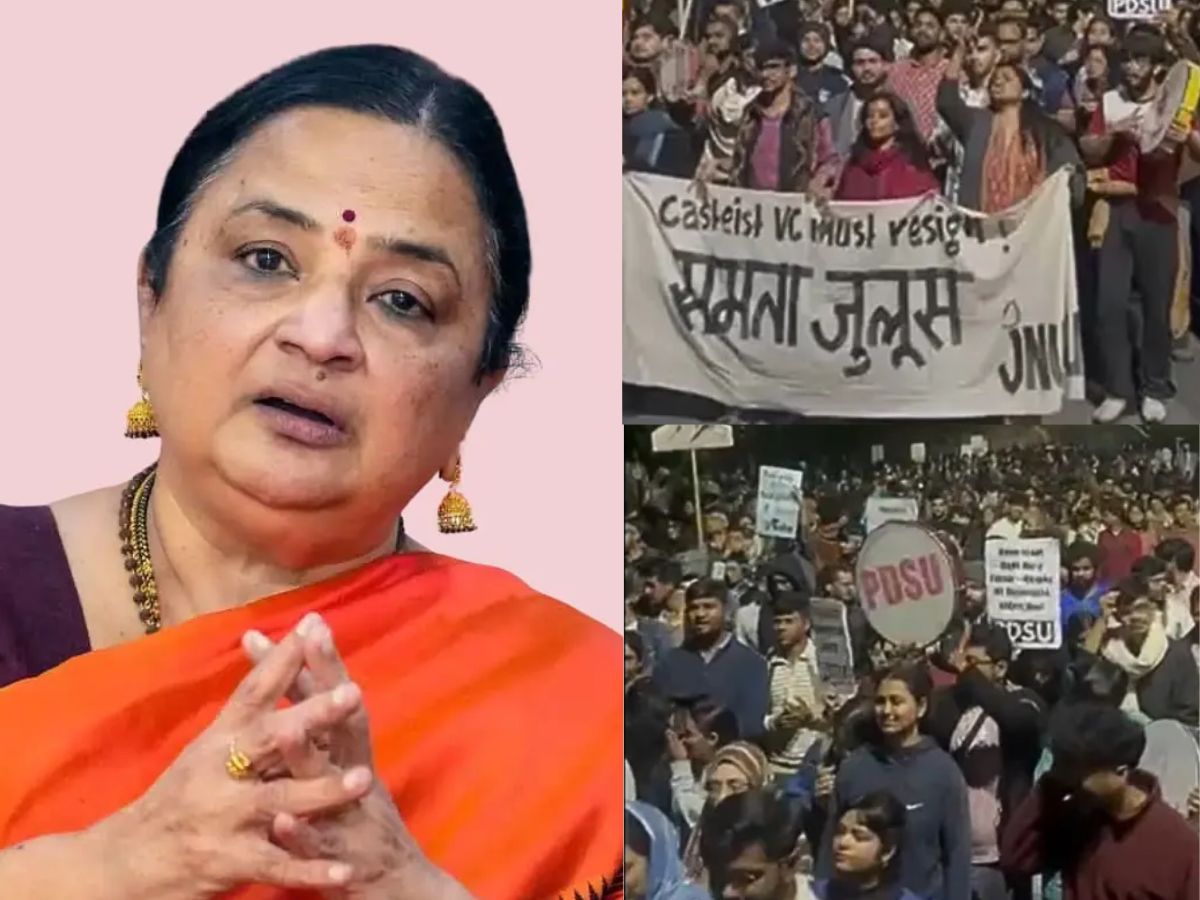
JNU protests escalate against VC Santishree Dhulipudi Pandit over alleged casteist remarks [Photo: X]
Tensions have erupted on the campus of Jawaharlal Nehru University as students stage widespread protests against Vice-Chancellor Santishree Dhulipudi Pandit over her recent comments perceived as casteist.
What began as peaceful demonstrations escalated into clashes between rival student groups, with protesters demanding the VC’s resignation and her statement withdrawn. The unrest has brought academic activities to a standstill in parts of the campus and ignited a broader debate on caste, equity regulations, and campus governance.
Hundreds of students gathered for late-night marches after the JNU Students' Union (JNUSU) called for an “Equality March” towards the East Gate near the VC’s residence to protest Pandit’s remarks and prior disciplinary actions against student union office-bearers.
The demonstrations intensified into stone-pelting and clashes, with both Left-aligned groups and the right-wing Akhil Bharatiya Vidyarthi Parishad (ABVP) accusing each other of violence after the protest spread across multiple academic zones.
The protests at Jawaharlal Nehru University began after Vice-Chancellor Santishree Dhulipudi Pandit’s comments on a podcast were widely seen as insensitive and casteist, especially towards Dalits and equity efforts. In the interview, she criticised the University Grants Commission’s equity regulations and said people “cannot progress by being permanently a victim,” which many students and faculty interpreted as dismissive of systemic caste discrimination.
Students demanded her resignation and the withdrawal or clarification of the remarks, viewing the issue as part of a larger struggle for social justice and equality on campus. The protests also grew out of longstanding concerns over disciplinary actions taken against student leaders and perceived erosion of democratic space at the university. Demonstrators say they are fighting for respect, inclusivity, and accountability from the institution’s leadership, which has drawn wide participation and support across student bodies.
Santishree Dhulipudi Pandit has served as JNU’s Vice-Chancellor since February 2022, becoming the first woman to hold the position. She has been a controversial figure due to her outspoken views on campus politics and prior clashes with student bodies.
Pandit defended her recent remarks, saying they were taken out of context and denied making any offensive casteist statements, emphasising her own identity as “Bahujan” and from an OBC background.
In the podcast, Pandit criticised components of the UGC’s equity regulations and commented, “You cannot progress by being permanently a victim or playing the victim card. This was done for the Blacks; the same thing was brought for Dalits here.” Students saw this as dismissive of caste discrimination and equating affirmative policies with “victimhood.”
She later clarified that her statements were misunderstood and not directed against Dalits, but the perception of caste bias triggered widespread dissent.
The protests, originally peaceful, hardened into intense standoffs between student factions. Videos and reports showed confusion and fear as rival groups engaged in stone-throwing during the late-night protests. Some injured students had to seek shelter or medical help amid the chaos.
The JNUSU has announced continued action, including a “Long March to the Ministry of Education” on February 26 to escalate demands for Pandit’s resignation and broader reforms.
The controversial comments by Vice-Chancellor Santishree Dhulipudi Pandit emerged during a podcast interview released on February 16, 2026, when she discussed the University Grants Commission’s proposed equity regulations and campus issues. The podcast — about 52 minutes long — covered several topics, including student protests, disciplinary actions, and the UGC’s new anti-discrimination rules, before the line that sparked backlash.
In the interview, she criticised parts of the UGC regulations and said, “You cannot progress by being permanently a victim or playing the victim card,” while comparing historical policies for Black communities with those aimed at Dalits — a remark many student groups found casteist and insensitive.
The JNU Students’ Union (JNUSU) and allied organisations highlighted this podcast clip as the trigger for widespread protests and calls for her resignation.
Pandit later responded that her words were taken out of context and explained she was critiquing certain ideological trends rather than attacking any community, emphasising her own Bahujan identity and support for equality.
The Equality March, also called “Samta Juloos,” was a major student protest organised by the JNU Students’ Union (JNUSU) at Jawaharlal Nehru University in response to the Vice-Chancellor’s alleged casteist remarks and other campus issues. It saw hundreds of students marching from a central point on campus toward the East Gate near the VC’s residence to show collective dissent and demand accountability from the university leadership.
The march was intended as a peaceful demonstration for equality and justice, focusing on reversing disciplinary actions against student leaders and advocating fair policies. However, as the night progressed, tensions escalated, and clashes broke out between different student groups, turning the event into a flashpoint for larger unrest on campus.
Protesters said they represented a broad section of the student body and viewed the Equality March as a symbolic stand against perceived discrimination and a call for greater inclusiveness at JNU.
Protesters are seeking:
Student organisations argue that leadership should champion inclusivity and not dismiss concerns of marginalised communities.
The Jawaharlal Nehru University administration responded to the unrest by condemning what it described as “unruly behaviour” that threatened campus safety and property, after clashes erupted between student groups during late-night protests. The university said it has taken the incidents “very seriously” and is initiating strict disciplinary action under its rules and the Bharatiya Nyaya Sanhita (BNS) against those involved in violent acts.
Officials claimed that some protesters locked academic buildings and intimidated unwilling students, contributing to scuffles that disrupted the campus environment. They emphasised that classes and academic activities are continuing as scheduled, and appealed to all stakeholders to maintain peace, cooperate, and avoid unwarranted actions that could harm the university’s inclusive ethos.
The administration also made clear that it is committed to safeguarding the interests and well-being of all students, protecting public property, and ensuring a proper academic atmosphere as tensions remain high on campus.
The controversy at Jawaharlal Nehru University began after Vice-Chancellor Santishree Dhulipudi Pandit made remarks during a podcast interview published on February 16 that many students and faculty found offensive and insensitive towards caste issues. In the interview, she criticised the University Grants Commission’s proposed equity regulations and said communities “cannot progress by being permanently a victim or playing the victim card,” a comment that triggered sharp backlash from student leaders who labelled it casteist and dismissive of systemic discrimination.
Following the podcast, the JNU Students’ Union (JNUSU) demanded her resignation and called for nationwide protests, citing not only the remarks but also grievances over disciplinary actions against elected student representatives. The tension escalated when the union organised an “Equality March” towards the VC’s residence, which led to mobilisation across campus and subsequent clashes between student groups.
Both the Vice-Chancellor and the university administration have responded to the protests. Pandit has denied the accusations and said her words were taken out of context, while the institution condemned violence and warned of strict action under university rules and law as the debate broadened into issues of campus governance and free speech.
Protests gained momentum after Vice-Chancellor Santishree Dhulipudi Pandit criticised the University Grants Commission’s equity regulations aimed at combating caste discrimination in higher education, calling them “unnecessary” and “irrational.” During a podcast interview, she said, “You cannot progress by being permanently a victim or playing the victim card … this was done for the Blacks; the same thing was brought for Dalits here,” a remark many students and critics viewed as dismissing systemic caste issues.
Students and legal experts argued that her comments not only misunderstood the purpose of the regulations, which were designed to address deep-rooted caste bias — but also trivialised the lived realities of marginalised groups. Pandit later clarified that her remarks were taken out of context and said she was critiquing concepts of “permanent victimhood” rather than targeting Dalits specifically, while asserting she herself comes from a Bahujan background.
These exchanges over UGC rules and caste have become central to the dispute, fuelling broader demands for accountability and inclusive dialogue on campus.
The controversy also intensified after discussions around alleged ideological links and leadership style surfaced during the protests. Some student leaders claimed that the Vice-Chancellor’s views reflect a broader ideological leaning, including references to the RSS, which they argue influences administrative decisions.
Protesters said the university leadership must remain politically neutral and uphold academic independence. They raised concerns that any perceived affiliation could affect institutional autonomy and diversity on campus. However, supporters of the administration dismissed these allegations as politically motivated.
Members of the JNU Teachers’ Association (JNUTA) have demanded the immediate dismissal of the Vice-Chancellor following the controversy. They said the alleged remarks were unacceptable and went against the core values of inclusivity and equality that the university stands for.
Teachers argued that the leadership must uphold constitutional principles and protect the dignity of all communities on campus. Some faculty members have also called for an independent inquiry into the matter. They stated that accountability at the highest level is necessary to restore trust and normalcy in the university.
The protests are being led primarily by the JNU Students’ Union (JNUSU) at Jawaharlal Nehru University. The JNUSU, along with allied Left student groups such as the All India Students’ Association (AISA), have taken lead roles in organising marches, sit-ins, and nationwide demonstrations, drawing students from multiple schools and departments.
Several other student collectives have also joined the movement, strengthening participation across campus. In addition, members of the JNU Teachers’ Association (JNUTA) have extended support, with some faculty participating in protest gatherings and issuing public statements.
The ongoing protests have disrupted regular academic activities at Jawaharlal Nehru University. Several classes have seen low attendance as students participate in marches, sit-ins, and public meetings. Some departments have postponed lectures and internal assessments due to demonstrations on campus.
Faculty members supporting the protests have also held gatherings, which have affected routine administrative work. Security presence on campus has increased, creating a tense atmosphere among students.
Hostel discussions and student group meetings have intensified, turning the campus into a politically active space. While academic activities continue in many areas, the overall environment remains charged, with uncertainty affecting daily campus life.
