Five Rajya Sabha seats from Bihar fall vacant as NDA’s majority in the 243-member Assembly gives it edge for four seats, with fifth hinging on cross-voting.
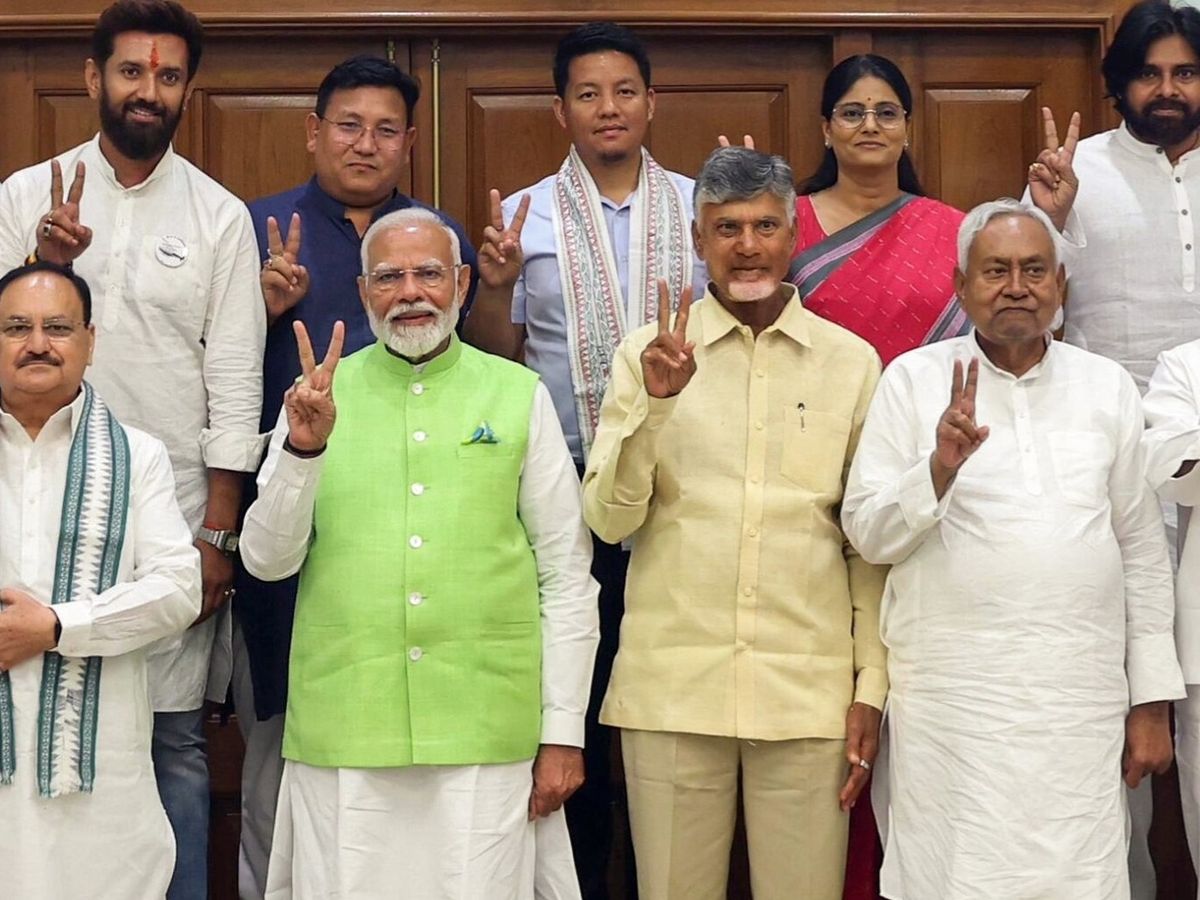
Five Rajya Sabha seats from Bihar fall vacant as NDA’s majority [Photo: File Photo/X]
New Delhi: Five Rajya Sabha seats from Bihar are falling vacant with the retirement of sitting members whose terms end on 9 April. The outgoing MPs are Harivansh Narayan Singh and Ram Nath Thakur of JD(U), Prem Chand Gupta and Amarendra Dhari Singh of the RJD, and Upendra Kushwaha of the Rashtriya Lok Morcha. The elections to fill these five seats will be decided by the current composition of the 243-member Bihar Legislative Assembly.
The ruling National Democratic Alliance enters the contest with a commanding numerical advantage. The NDA has 202 MLAs in the House, drawn from the BJP’s 89 members, JD(U)’s 85, the Lok Janshakti Party’s 19, the Hindustani Awam Morcha five and the Rashtriya Lok Morcha four. The opposition Grand Alliance accounts for 35 MLAs, including 25 from the RJD, six from the Congress, two from the CPI, and one each from the CPI(ML) and the Indian People’s Party.
Outside both blocs are six MLAs, five from the AIMIM and one from the BSP.
With 243 MLAs voting to elect five Rajya Sabha members, the winning quota stands at 41 votes. On pure arithmetic, the NDA’s 202 MLAs are sufficient to secure four seats comfortably on the first count. Those four seats consume 164 votes, leaving the alliance with a surplus of 38, just three short of the quota required for a fifth candidate.
This narrow gap is where the contest for the final seat will be decided. The combined strength of the Grand Alliance, even if it votes as a single unit, remains below the quota. To stop the NDA from taking the fifth seat, the opposition would require flawless coordination not only among its own parties but also with the six non-aligned MLAs, along with perfectly executed preference transfers. Any abstention, invalid vote or error in ranking preferences would immediately weaken that effort.
Pertinent to mention that Home Minister Amit Shah will be going to Bihar on Wednesday on a three days tour.
For the NDA, the bar is significantly lower. It needs cross-voting support from just three MLAs outside its fold to push its surplus beyond the quota and elect its fifth candidate. Given the presence of six non-aligned MLAs and Bihar’s past record of imperfect opposition coordination in Rajya Sabha elections, the ruling alliance is confident of bridging that gap. Within the NDA, the expectation is that securing three cross-votes is a manageable task rather than a political stretch.
As a result, while four seats are effectively locked in for the ruling bloc, the fifth seat is being actively pursued rather than written off as marginal. The numerical landscape of the Assembly, combined with the mechanics of the single transferable vote system, has created a situation in which a clean sweep is not guaranteed but is clearly attainable for the National Democratic Alliance.
Candidates seeking to fill the five seats must file their nomination papers by the 5 March deadline. This will be followed by a scrutiny of the documents on 6 March , while the final window for the withdrawal of candidature closes on 9 March . Should the number of candidates exceed the five vacancies, as the NDA’s pursuit of a clean sweep suggests, the 243 members of the Bihar Legislative Assembly will cast their votes on 16 March. The counting of votes is scheduled to take place at 5:00 PM on the same day as the polling.
However, if only five candidates are nominated for the five seats, they will be declared elected unopposed on the afternoon of 9 March .
The entire election process is scheduled to be completed by 20 March.
