Galgotias University sparked social media outrage for showcasing a Chinese-made robodog as “Orion” at the India AI Impact Summit; it clarifies the robot was bought for student learning.
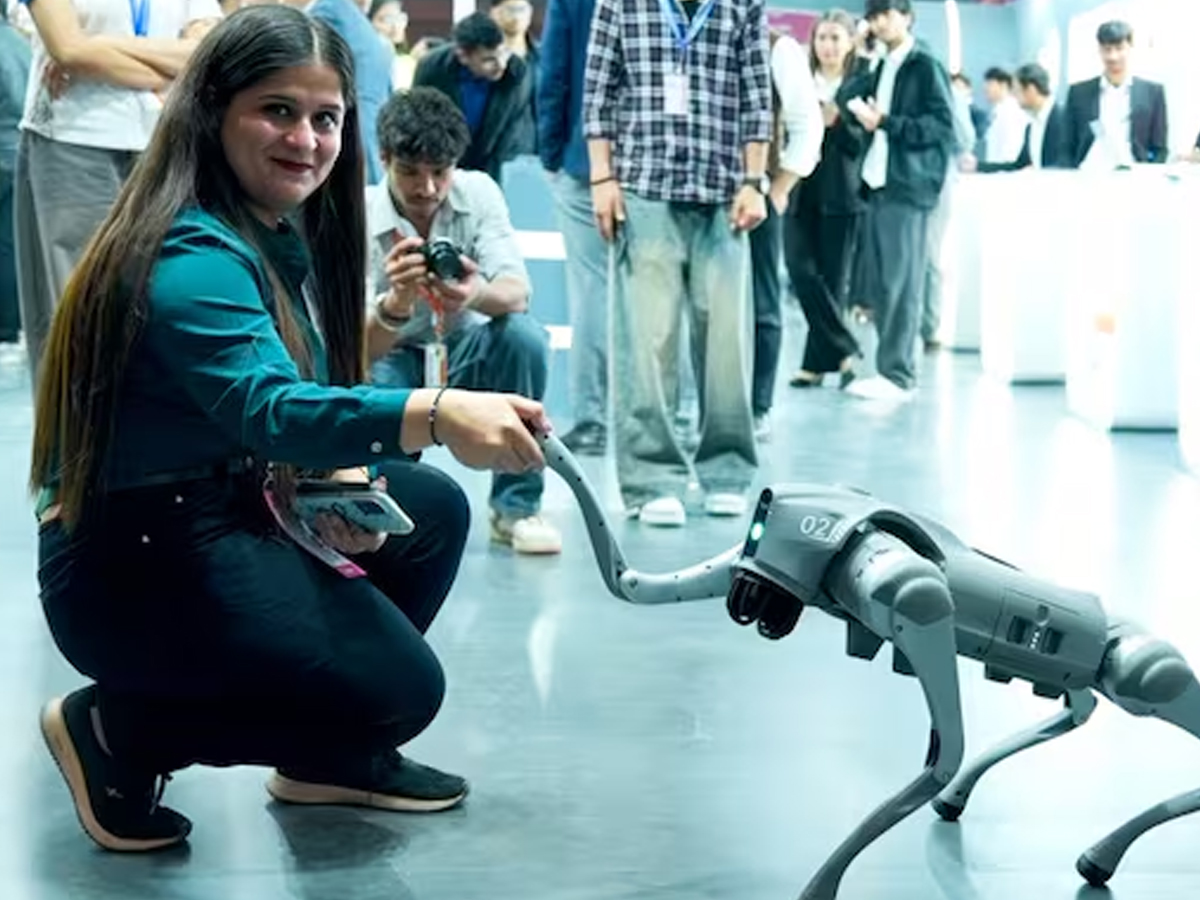
In a major tech showcase stumble at India AI Impact Summit 2026 in Delhi, Galgotias University from Greater Noida sparked widespread online criticism after some portrayed a robotic dog displayed at its stall as an in-house innovation. The institution’s actions triggered a heated debate on social media about transparency and authenticity in technology exhibitions.
The uproar began after a viral video from the summit showed a woman associated with Galgotias introducing a robotic dog named “Orion” and describing its capabilities while explaining it to visitors. In the clip, the presenter said the robot was developed by the university’s Centre of Excellence, drawing applause and attention at the event.
However, viewers quickly identified the machine as the Unitree Go2, a widely available AI-powered robot dog manufactured by the Chinese company Unitree Robotics and sold on global marketplaces for around ₹2–3 lakh. Critics alleged that the university intentionally rebranded the imported robot as its own creation to enhance its image at the global summit.
JUST IN:
An Indian university presents the Chinese robot Unitree Go2 as their own innovation at the AI Summit in Delhi.pic.twitter.com/facktSieyb— China pulse 🇨🇳 (@Eng_china5) February 17, 2026
Facing mounting online backlash, the university issued a clarification on social media stating it never claimed to have built the robotic dog, stressing that the device was purchased from a Chinese firm strictly as a learning and research tool for students.
“Let us be clear – Galgotias has not built this robodog, nor have we claimed. But what we are building are minds that will soon design, engineer, and manufacture such technologies right here in Bharat,” the statement said, emphasising its educational purpose.
— Galgotias University (@GalgotiasGU) February 17, 2026
The university explained that this technology adds real-world exposure for students studying robotics and artificial intelligence, with the robodog serving as “a classroom in motion” to test capabilities and explore applications.
Despite the clarification, many critics maintained that the initial presentation and naming of the robot as “Orion” gave the impression that it was a Galgotias innovation, particularly when coupled with claims about its AI ecosystem and multi-crore investments. An X community note later described the university’s denial as “incorrect and misleading,” saying the robot had been explicitly presented as a product of the university’s work.
Social media users and technology watchers also raised broader concerns about academic transparency and the ethics of rebranding existing technology at innovation events. Some questioned whether such incidents undermine credibility, especially when showcased under ambitious claims about internal research and development.
Galgotias defended its actions by highlighting its mission to prepare students for future careers in cutting-edge technology. The statement underscored that the university regularly brings advanced tools from global innovation hubs to campus, allowing students to interact with and learn from existing solutions.
The university added that such exposure can spark deeper curiosity and inspire young engineers and researchers to create genuine innovations in the future, shifting the focus from simple demonstration to long-term skill development.
The controversy has sparked a larger conversation on how universities and institutions should present procured technology at prestigious global events. While bought tools can indeed aid learning, critics argue that clear attribution and honest representation are essential to maintain trust among peers, employers, and the public.
As the dust settles, Galgotias University remains committed to its strategy of equipping students with exposure to advanced technologies while navigating the fine line between demonstration and claiming original innovation.
