
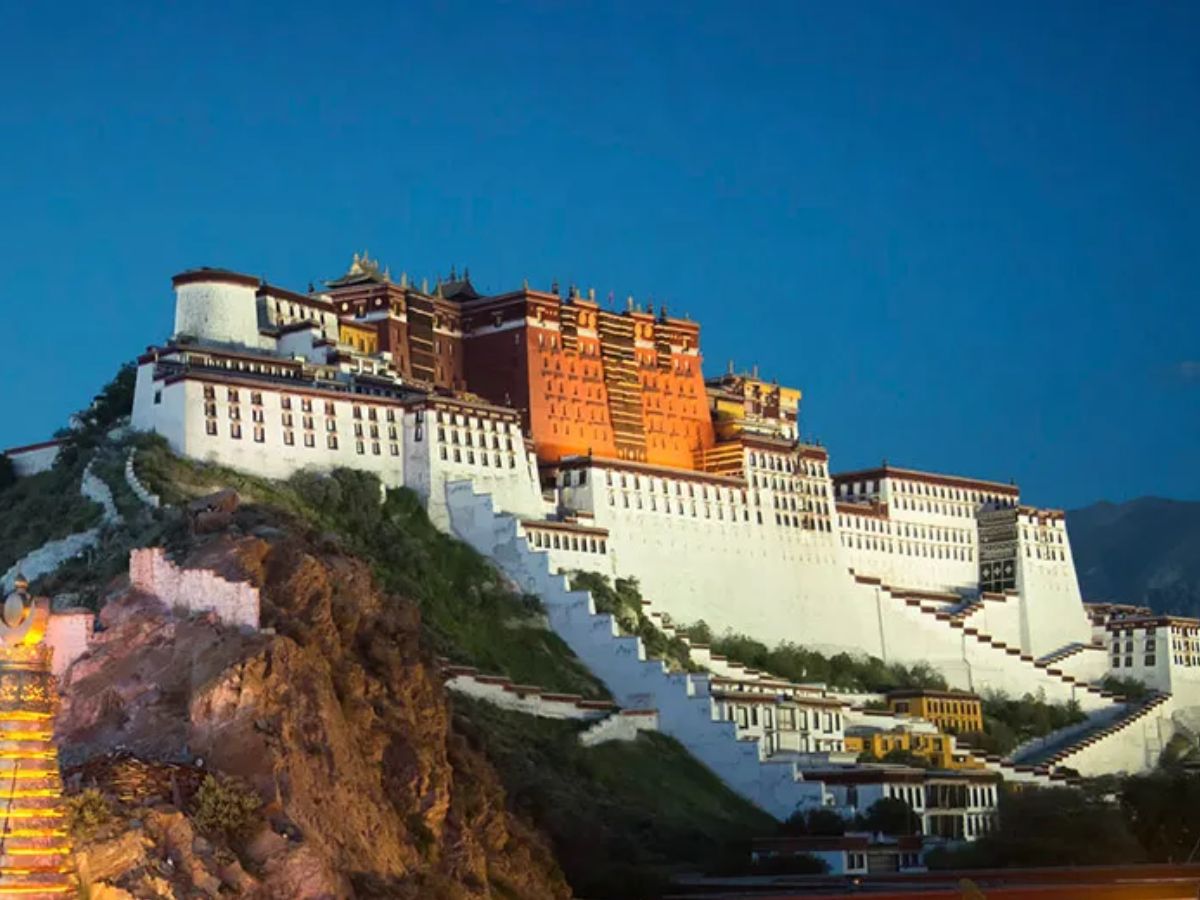
New Delhi: Tsewang Norbu was 25 years old when he walked to the base of the Potala Palace in Lhasa on February 25, 2022, and set himself on fire. He was a nationally known singer. He had close to 600,000 social media followers. He had performed on one of China’s most-watched holiday television broadcasts. He died from his burns approximately one week later. Chinese authorities did not publicly confirm details of the incident in the reporting available at the time, and discussion of the case was heavily suppressed.
Norbu was the 158th person to self-immolate in protest against Chinese rule in Tibet since 2009. He was the first to have performed on CCTV’s Spring Festival Gala. He was the first to have been signed to an international record label shortly before his death. After his death, references to him were removed from some label-linked channels and his songs were reported removed from multiple music platforms inside mainland China.
The location of the protest carried specific meaning that was not lost on the global Tibet advocacy community or on international journalists covering the story. The Potala Palace in Lhasa served for centuries as the winter residence of the Dalai Lama and the political and spiritual center of Tibetan governance. Since the 14th Dalai Lama fled into exile in India in 1959, the palace has stood as the most recognizable symbol of what Tibetans lost when China consolidated control over the region. To protest there is to protest at the exact physical point where the wound began.
Norbu’s choice of location was connected to his own family history. His uncle, Lodoe Gyatso, had staged a political protest at the same site in 2018. Lodoe Gyatso had already served more than 21 years in prison for political activities. His 2018 protest earned him a further 18-year sentence. His wife Gakyi received two years for filming it. Norbu had grown up with that history inside his household. He chose the same ground.
The timing compounded the significance. Norbu acted just days before China’s annual “Two Sessions” political meetings in early March, a period during which the government places maximum emphasis on messaging around stability and national unity. Losar, the Tibetan New Year, fell on March 3, 2022. The anniversary of March 10, 1959, the most charged date in the Tibetan political calendar, marking the day the Dalai Lama departed Tibet, was days away. Norbu’s protest arrived at the convergence of dates that Beijing spends enormous resources managing every year.
The surveillance infrastructure around the Potala Palace is among the most extensive in Lhasa. Cameras, checkpoints, and security personnel monitor movement around the site with particular intensity during politically sensitive periods. That Norbu was able to carry out his protest at that location, during that window, and that the story still reached international audiences despite a near-total domestic information blackout, was noted by rights organizations as evidence that the government’s control over narrative had structural limits.
Information about the protest reached exile Tibetan media and diaspora networks within hours, passed through encrypted personal communications that operate outside the reach of China’s internet infrastructure. Tibetan poet and activist Woeser, writing from Beijing, archived Warner Music China’s promotional materials before they were deleted and published them to international platforms, providing a documented record of the erasure. Reports from exile Tibetan journalists detailed Norbu’s background and the sequence of events as accounts emerged from inside Tibet.
The global response included statements from human rights organizations, coverage in international media, and renewed calls from Tibet advocacy groups for governments to take concrete action beyond diplomatic language. Organizations that monitor conditions in Tibet have repeatedly cited the pattern of self-immolations, now more than 150 documented cases spanning over a decade, as evidence that the international community’s current approach to engaging Beijing on Tibet has produced no change in the policies that drive that pattern.
China’s government describes the Tibet Autonomous Region as a place of economic growth, cultural preservation, and social stability. Officials point to infrastructure investment, increased incomes, and the maintenance of religious sites as evidence of successful governance. They describe critics of Tibet policy as motivated by separatism or foreign interference rather than genuine concern for Tibetan people.
That framing becomes harder to sustain when the person at the center of the story is someone Beijing itself promoted. Norbu’s career was not built in exile. It was built on CCTV, on Tencent, on the stage of the Spring Festival Gala. His signing to an internationally recognized label was announced proudly on official social media. The government’s investment in him as a symbol was public record.
His death, at the site of Tibet’s most recognizable landmark, carrying the demands that Beijing insists no Tibetan has reason to make, put the government’s own record directly against its own argument.




