
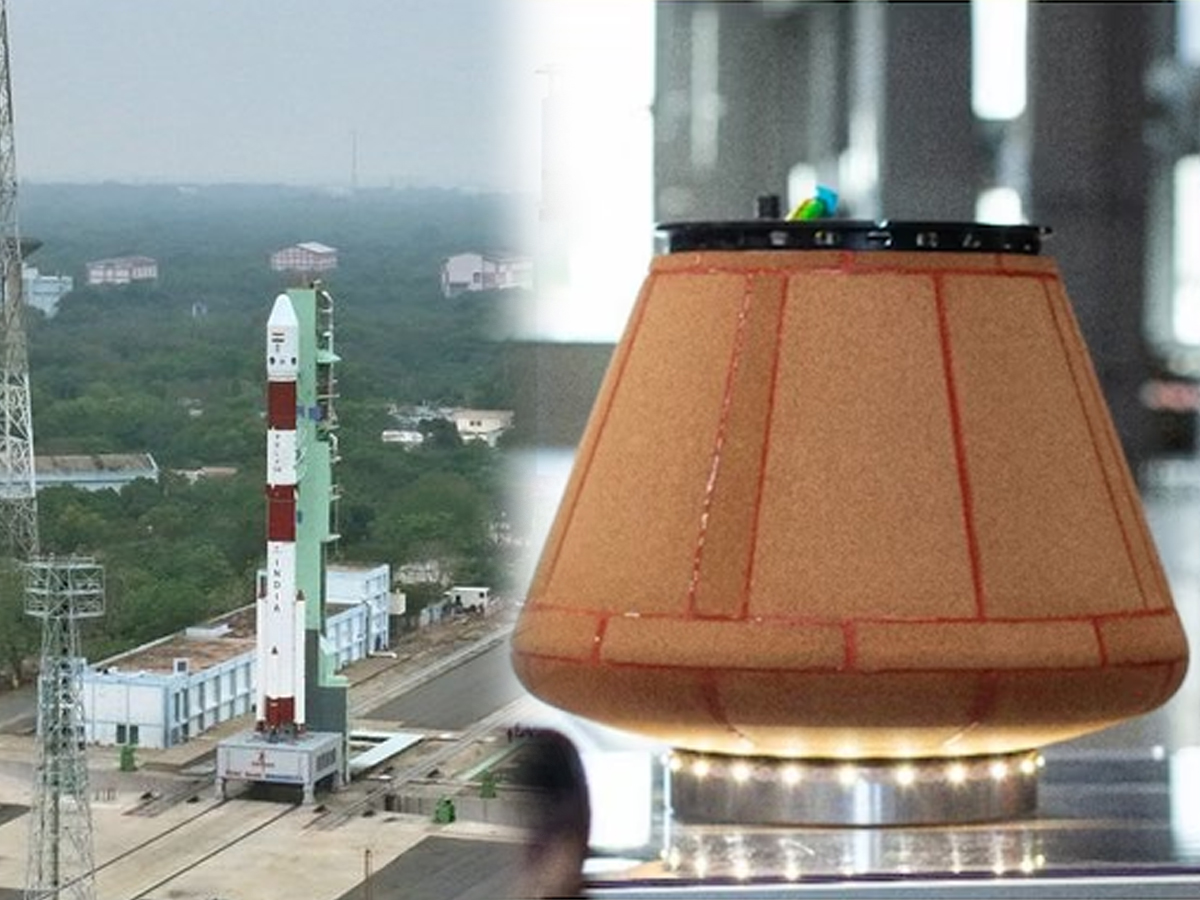
ISRO’s Polar Satellite Launch Vehicle (PSLV-C62) lifted off from Sriharikota on Monday morning with high expectations, carrying 16 satellites into space. The 44.4-metre, four-stage rocket took off on time at 10:18 am, and early phases of the mission progressed smoothly as scientists tracked the flight in real time.
The mission aimed to deploy a primary Earth Observation satellite along with multiple co-passenger satellites into a 512-kilometre Sun-Synchronous Orbit after a flight of around 17 minutes. However, the situation changed dramatically once the rocket entered a critical phase of its journey.
PSLV-C62 Launch Failure: What Went Wrong During the Third Stage of Launch?
Mission control detected disturbances shortly after the third stage ignited. The rocket showed abnormal movement and deviated from its planned flight path, preventing the satellites from reaching their intended orbit.
ISRO chairman V Narayanan confirmed the issue, saying, “Disturbances in the rocket and later deviation from the flight path were observed when strap-on motors were providing thrust during the flight’s third stage to propel the vehicle to the intended altitude.”
Engineers immediately began analysing flight data to determine the root cause of the anomaly.
PSLV-C62 Launch: 15 Satellites Lost in Space
The failure resulted in the loss of 15 out of 16 satellites, marking the second consecutive setback for the PSLV after a similar issue during a mission in May 2025.
Among the lost payloads were key Indian and international satellites, including:
- DRDO’s Anvesha, a strategic Earth observation satellite designed to detect military camouflage
- AayulSAT, India’s first in-orbit fuelling experiment
- CGUSAT, a student-developed satellite for disaster communication
- A foreign Earth Observation satellite jointly built by Thailand and the UK
A former senior ISRO scientist described the situation as a setback and warned that the satellites may now be drifting as space debris.
Pslv-C62 Launch Failure: Against All Odds, ‘KID’ Survives
Amid widespread disappointment, one small spacecraft delivered a rare positive outcome. KID (Kestrel Initial Technology Demonstrator) — a prototype re-entry capsule developed by a Spanish startup — successfully separated from the rocket and transmitted data back to Earth.
The company behind the capsule confirmed its survival, stating, “Our KID capsule, against all odds, separated from PSLV C62, switched on, and transmitted data. We’re reconstructing the trajectory. Full report will come.”
The capsule managed to operate briefly despite the failed mission, offering valuable engineering data and proving the robustness of its design.
Pslv-C62 Launch Failure: What ISRO Officially Said
ISRO acknowledged the issue in a statement, saying, “The PSLV-C62 mission encountered an anomaly during the end of PS3 (third stage) of the vehicle. A detailed analysis has been initiated.”
Later, speaking at a press conference, Narayanan added, “As all of you are aware, today we attempted PSLV-C62/EOS-N1 mission… the mission could not proceed in the expected (flight) path. That is the information right now available.”
“We are going through the data and with the data collected from all the ground stations, and once the data analysis is completed, we shall come back to you.”
What This Means for ISRO Going Forward
The setback comes at a crucial time for ISRO as it prepares for future commercial launches, advanced Earth observation missions, and human spaceflight programmes. Engineers are now focused on identifying the exact cause of the third-stage issue and implementing corrective measures.
While the mission fell short of its primary goals, the survival of the KID capsule offers a reminder that innovation can still emerge from failure — and that even small successes can provide valuable lessons for future space missions.




