Union Budget 2026 raises India’s defence budget to ₹7.85 lakh crore with ₹2.19 lakh crore for modernisation and duty‑free aircraft parts to boost defence aviation and MRO.
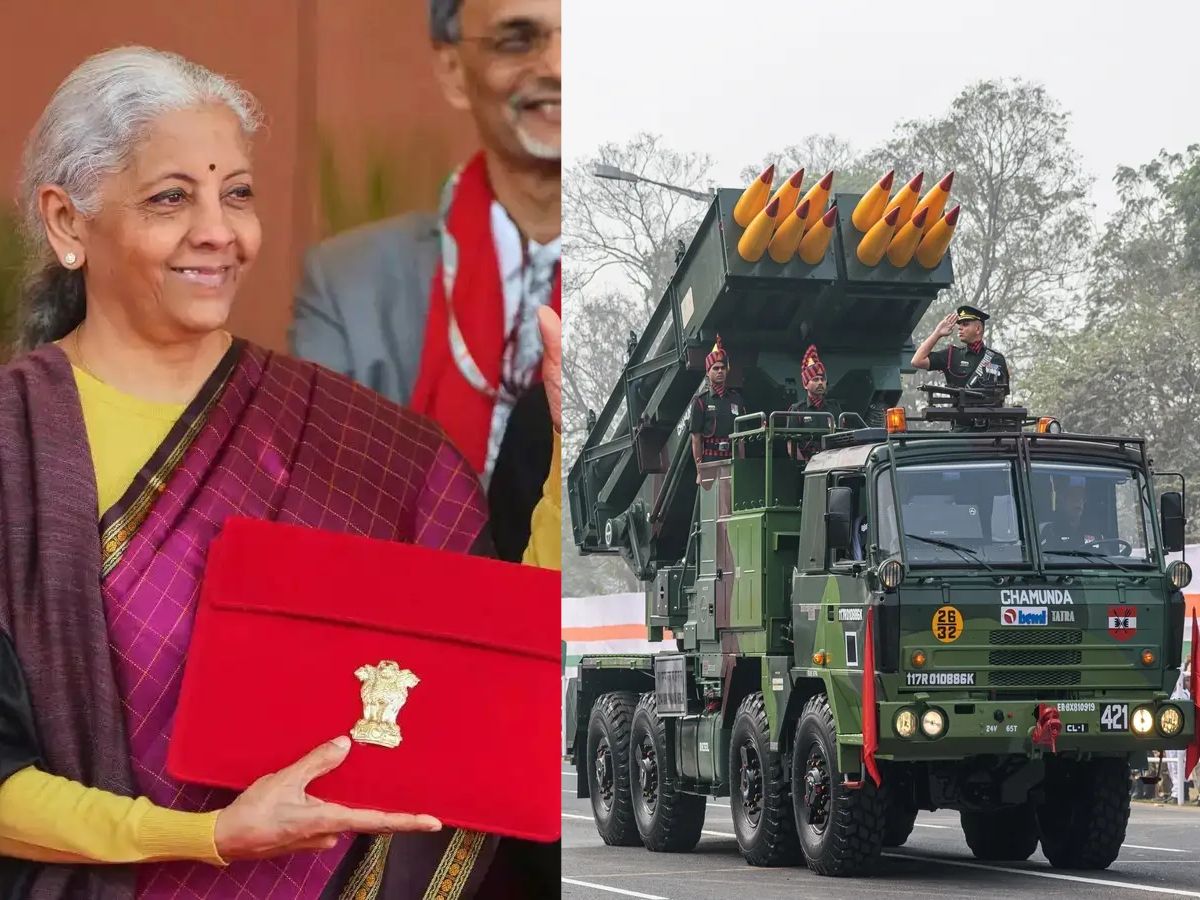
Union Budget 2026 raises India’s defence budget to ₹7.85 lakh crore [Photo: X]
India’s Union Budget 2026, presented on February 1, 2026, delivered one of the biggest defence spending increases in recent years, reflecting a strong government focus on safeguarding national security and upgrading military capabilities.
The total defence outlay for 2026‑27 was set at ₹7.85 lakh crore, significantly higher than the ₹6.81 lakh crore allocated last year, marking a 15 % year‑on‑year jump. Of this, ₹2.19 lakh crore has been earmarked for modernisation, highlighting an aggressive push to enhance the Army, Navy and Air Force with advanced equipment and systems.
In a departure from previous years, Finance Minister Nirmala Sitharaman also announced basic customs duty exemptions on aircraft parts and components used in both defence and civilian aviation, a move expected to spur domestic aerospace manufacturing and lower maintenance costs.
The defence budget for FY 2026‑27 signals a renewed emphasis on strengthening India’s armed forces against evolving geopolitical threats. The total defence outlay was set at ₹7,84,678 crore, up from ₹6,81,210 crore in FY 2025‑26 — a notable surge reflecting strategic prioritisation.
This increase underscores the government’s intent to pursue not just routine expenditure but also to dramatically improve capability through modern platforms.
A key reform in this year’s Budget was the exemption of basic customs duty (BCD) on aircraft parts and raw materials, designed to support both defence and civil aerospace sectors.
Aircraft Parts & Components: BCD has been exempted from components and parts required for the manufacture of civilian, training, and other aircraft.
Defence MRO Raw Materials: The government proposed full duty exemption on raw materials imported for the manufacture of parts used in maintenance, repair and overhaul (MRO) of aircraft by defence units.
Analysts say these incentives will also strengthen India’s MRO ecosystem, projected to grow robustly in the coming decade.
This year’s defence outlay also reflects continuity with past strategic priorities, with an increased focus on deterrence and advanced systems procurement. Significant allocations support fighter jets, submarines and UAVs as part of ongoing modernization projects.
The budget’s modernisation emphasis aligns with Operation Sindoor lessons, reinforcing rapid deployment capabilities and indigenous production needs. Defence spending comes amid heightened security concerns with neighbouring countries, making the enhanced budget a tactical and symbolic reinforcement of readiness.
While the Ministry of Defence’s capital outlay saw a strong increase, some observers noted that the budget did not contain a major new policy direction beyond fiscal allocations, leading to varied reactions from industry and financial markets.
The fusion of higher modernisation funds and duty exemptions sets up a fertile environment for domestic defence manufacturing — a long‑standing priority under the government’s “Make in India” and Aatmanirbhar Bharat initiatives.
Despite record allocations, defence stocks experienced muted performance immediately after the Budget, as some investors waited for more concrete policy clarity on private sector participation and order pipelines.
The duty exemptions and budget boost could catalyse higher investment in aerospace and defence R&D, strengthen local supply chains, and position India as a more competitive player in global defence markets.
The Union Budget 2026’s defence chapter blends substantial financial backing with structural incentives. While the allocation itself provides immediate capacity for capability upgrades, the customs duty exemptions on aircraft parts and MRO materials are seen as catalytic reforms to expand domestic aerospace production and maintenance efficiency.
Overall, the Budget reflects a dual strategy: enhance current operational strength and build long‑term self‑reliance, keeping India prepared for future security challenges while promoting indigenous industry growth.
