Budget 2026 triggers gold & silver crash: Prices plunge 6-9%, then recover. See intraday rate comparison, SGB tax change impact, and expert outlook on precious metals.
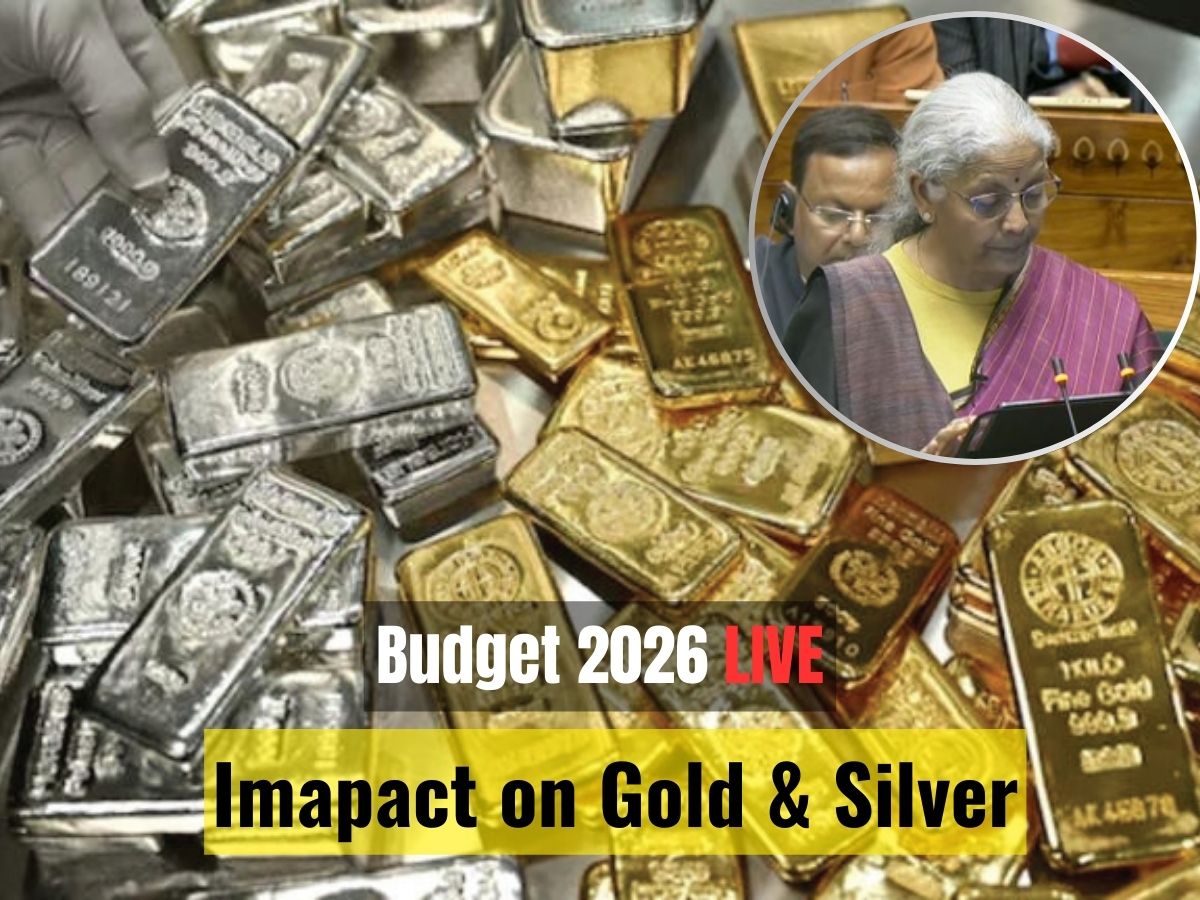
Union Budget 2026: Imapact on Gold & Silver
The Union Budget 2026, rolled out on February 1, triggered intense swings in precious metals, with gold and silver futures falling to lower circuits early on before a partial intraday recovery. Markets struggled with a global sell-off alongside domestic tax revisions related to Sovereign Gold Bonds.
Gold and silver futures on the Multi Commodity Exchange (MCX) plunged between 6-9% during the morning session, hitting lower circuits.
This sharp decline was attributed to a massive global rout, margin hikes by the CME Group, and pre-Budget profit-booking.
Prices saw extreme fluctuation between the market open and the post-Budget afternoon session on February 1.
Gold (per 10g): Morning rates were approximately ₹1,38,634 – ₹1,39,000. By early afternoon, they recovered to a range of ₹1,47,799 – ₹1,69,300*, marking a partial rebound.
Silver (per kg): Opened around ₹2,65,652 and recovered marginally to ₹2,67,186 – ₹3,50,000* by the afternoon.
Note: Rates varied between futures contracts and physical spot market prices across city hubs.
While metal prices recovered slightly, silver-linked financial instruments faced a steeper decline. Silver Exchange Traded Funds (ETFs) underperformed the real metal, recording historic single-day losses, with some plunging as much as 28–29% during the intraday session.
The Budget introduced a significant tax change impacting paper gold investments:
Sovereign Gold Bonds (SGB) Tax Tightening: The capital gains tax exemption at maturity has been removed for secondary market buyers. The tax-free status will now be only limited to original subscribers who hold the bonds until redemption.
Customs Duty & STT: The speech did not announce a change to the gold import duty, leaving industry speculation unresolved. Precious metal futures on MCX and related ETFs remain exempt from the Securities Transaction Tax (STT).
Analysts consider the sharp correction a “healthy reset” aimed at clearing excess market leverage. While silver is dependent on industrial demand from the green energy sector, central bank purchases bolster gold's long-term prospects. In today's turbulent economy, experts recommend making modest purchases rather than making large expenditures.
