Finance Minister announces Rs 40,000 crore for ‘India Semiconductor Mission 2.0’ in Budget 2026 to strengthen chip manufacturing, research and industry‑led innovation.
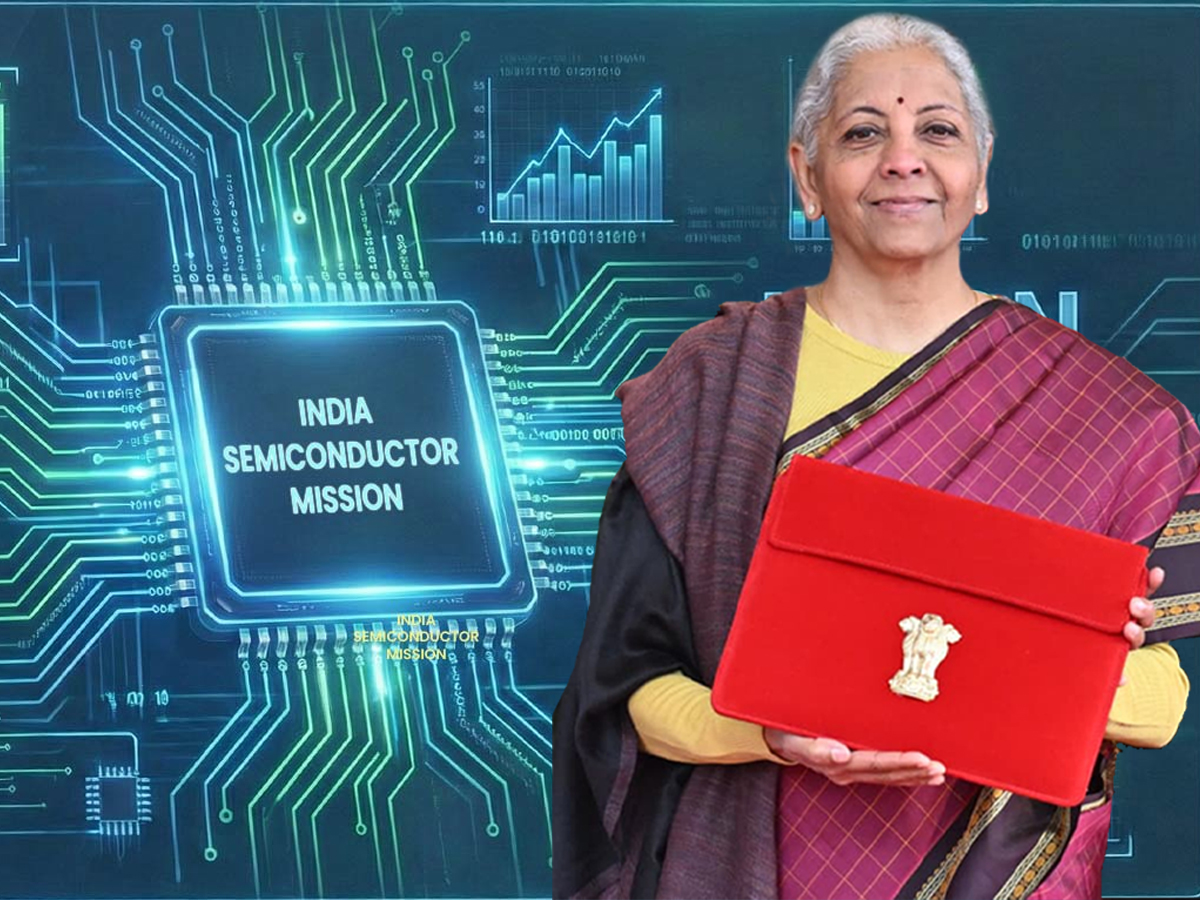
Under the newly announced mission, the government plans to push industry‑led research and training centres that develop semiconductor technologies and equipment tailored for Indian needs. (Photo: Social Media)
In the Union Budget 2026, Finance Minister Nirmala Sitharaman unveiled a bold plan to accelerate India’s semiconductor ecosystem by earmarking Rs 40,000 crore for the next phase of the country’s chip strategy. Termed “India Semiconductor Mission 2.0,” the initiative aims to build on earlier efforts to make India a competitive hub for semiconductor production, research, and design. This move reflects India’s focus on technology sovereignty and reducing reliance on imports for chips that power everything from smartphones to cars.
Under the newly announced mission, the government plans to push industry‑led research and training centres that develop semiconductor technologies and equipment tailored for Indian needs. Sitharaman said the mission will prioritise “producing equipment and materials designed for full‑stack Indian IP,” highlighting a shift from assembly to deeper involvement in the semiconductor value chain.
This echoes broader trends in recent policy discussions, where the proposed second phase of the India Semiconductor Mission (ISM) is expected to support chip design, equipment, and other critical components of the ecosystem.
The Budget announcement suggests that funds will be used to:
Industry groups have long called for stronger support in areas like design infrastructure and materials research, and the new allocation may address those gaps. The mission seeks to integrate policy incentives, skill development, and industry collaboration to strengthen India’s technological base.
Semiconductors form the backbone of modern electronics, driving sectors such as telecommunications, automotive, AI, cloud computing, and defence. According to industry estimates, India’s semiconductor market is projected to more than double by 2030, driven by rising demand and government support under missions like ISM.
The original India Semiconductor Mission, approved in December 2021 with an outlay of about ₹76,000 crore, has already helped attract semiconductor fab investments and new manufacturing units across several states. Under that mission, multiple fabrication and assembly plants received approvals, signalling a rising investment interest in India’s chip ecosystem.
Speaking during the Budget presentation, Sitharaman emphasised that the government is focusing on “reforms over rhetoric” and moving decisively toward a technologically competitive future. She said India will continue taking steps to transform into a Viksit Bharat, a vision that includes strengthening strategic industries like semiconductors alongside traditional growth sectors.
The new mission aligns with India’s larger policy of promoting research, innovation, and self‑reliance in high‑tech manufacturing — bridging gaps in chip design, testing, and production that have historically kept the country dependent on foreign suppliers.
