Union Budget 2026 will be presented today by Finance Minister Nirmala Sitharaman. Check Budget speech time, key expectations, and where to watch it live.
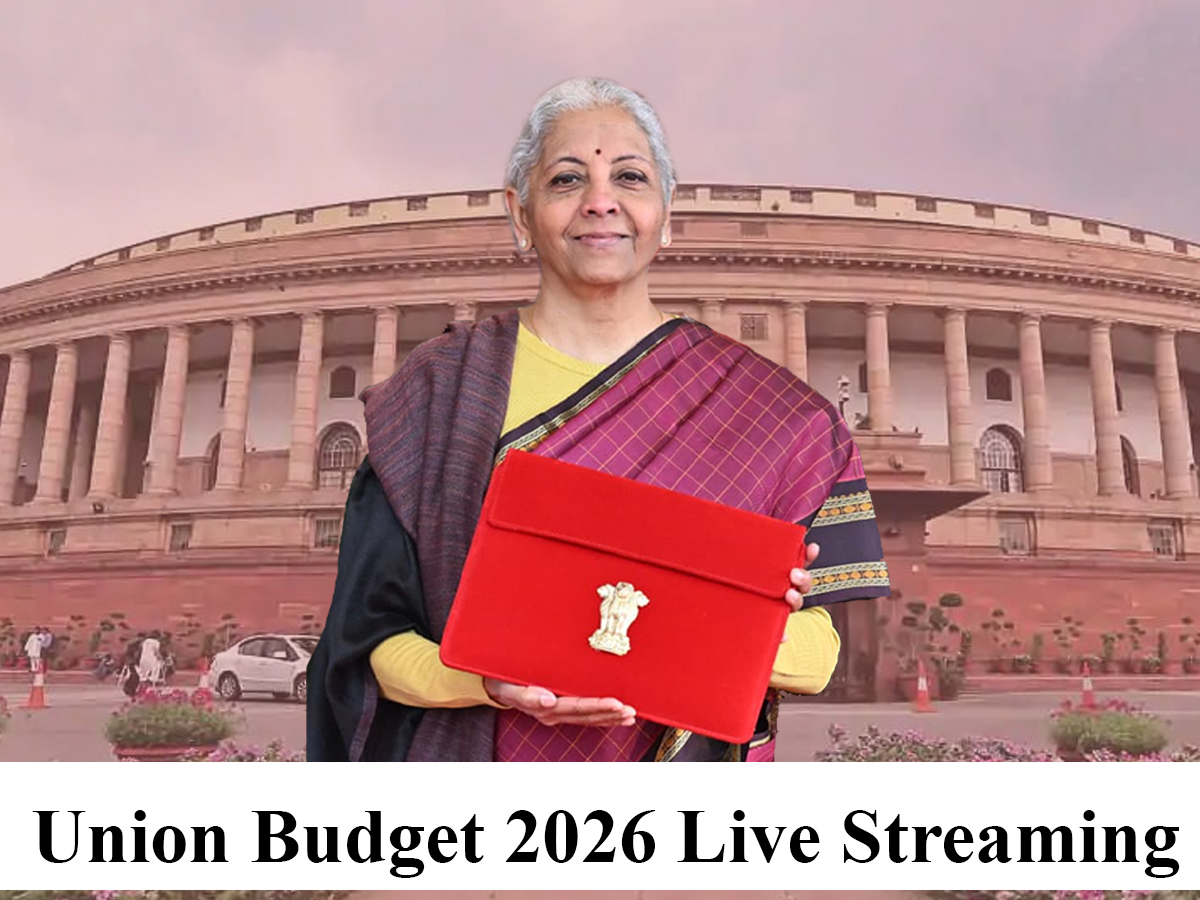
This will be Sitharaman’s ninth consecutive full Budget, in addition to one interim Budget.
India’s economic roadmap for the coming year will be unveiled today as Finance Minister Nirmala Sitharaman presents the Union Budget 2026 in Parliament. The Budget comes at a critical juncture, with the government expected to balance fiscal discipline while pushing growth, job creation, and India’s global economic standing.
People can follow the Budget presentation live across multiple platforms:
This wide availability ensures viewers across India and overseas can watch the Budget announcement in real time.
The Union Budget 2026 will be presented before both Houses of Parliament on Sunday, February 1, starting at 11:00 am. The Budget speech usually lasts between 90 minutes and two hours, followed by the tabling of the Finance Bill and other related documents.
This will be Sitharaman’s ninth consecutive full Budget, in addition to one interim Budget, cementing her place among the longest-serving finance ministers in the country.
Since February 1 falls on a Sunday, investors have been keen to know whether the stock markets will remain closed. Clearing the uncertainty, both major stock exchanges have confirmed that equity markets will remain open for trading on Budget day.
The National Stock Exchange (NSE) stated in a circular:
"On account of the presentation of the Union Budget, members are requested to note that Exchange shall be conducting a live trading session on February 01, 2026, as per the standard market timings (9:15 am–3:30 pm)."
According to the exchange circulars, the pre-open market session will begin at 9:00 am and conclude at 9:08 am. The normal trading session will run from 9:15 am to 3:30 pm, allowing investors to react in real time to Budget announcements.
This special Sunday session is expected to see heightened activity as markets respond instantly to policy measures, tax proposals, and spending announcements.
Keeping markets open on Budget day allows investors to price in announcements without delay. It also reduces uncertainty and volatility that could arise if markets were forced to wait until the next trading day. Analysts expect sharp movements across sectors such as banking, infrastructure, capital goods, and consumption as the speech unfolds.
