Meet the key officials shaping Union Budget 2026-27 with Nirmala Sitharaman, their roles, focus areas, and what makes this Budget different.
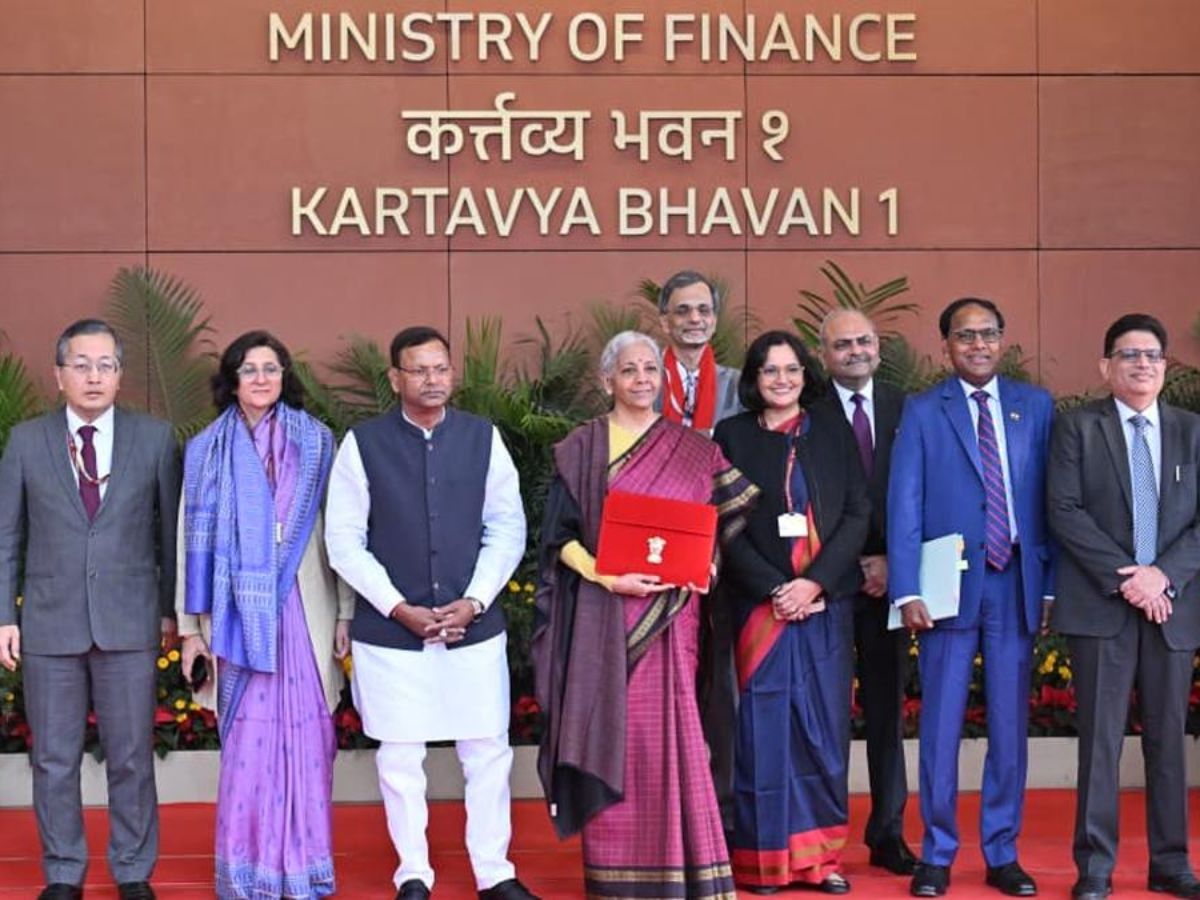
Meet the key officials shaping Union Budget 2026-27 with Nirmala Sitharaman [Photo: X]
As Finance Minister Nirmala Sitharaman puts the final touches on the Union Budget 2026-27, a small but powerful group of senior bureaucrats within the Finance Ministry is working closely with her to shape the government’s fiscal roadmap for the coming year.
The Budget, scheduled to be presented in Parliament on February 1, comes at a crucial time for the Indian economy. While GDP growth remains strong at 7.4%, global uncertainties, ranging from geopolitical tensions to volatile commodity prices, continue to pose risks. This will also be the third full Budget of the Modi 3.0 government, making it significant for long-term policy direction.
Behind the scenes, a nine-member core team, including the Finance Minister, is steering Budget preparations, focusing on growth, fiscal discipline, tax reforms, capital expenditure and financial stability.
Nirmala Sitharaman leads the Budget exercise and will present her ninth consecutive Union Budget, a rare record in India’s fiscal history. She sets the overall policy direction, balances political priorities with economic realities and takes final calls on taxation, spending and reforms.
The Chief Economic Adviser plays a key role in defining the economic narrative of the Budget. Key responsibilities include:
Anuradha Thakur is the first woman to play a central role in steering the Union Budget process. Her focus areas include:
The Revenue Secretary oversees taxation policy and revenue mobilisation. Key areas under his charge include:
The Expenditure Secretary manages how and where the government spends. His role focuses on:
As head of the Department of Investment and Public Asset Management (DIPAM), Arunish Chawla handles non-tax revenue generation. His responsibilities include:
The Financial Services Secretary plays a key role in shaping banking and financial sector reforms. His focus areas include:
Pankaj Chaudhary supports the Finance Minister in coordinating Budget discussions across departments and Parliament, helping align political priorities with fiscal planning.
K. Moses Chalai contributes to policy coordination and administrative execution, ensuring smooth inter-departmental collaboration during the Budget process.
The Union Budget preparation is a months-long exercise involving multiple departments and ministries. The process typically begins with data collection and consultations across ministries, states, industry bodies and economists.
The Economic Survey, led by the Chief Economic Adviser, sets the macroeconomic context and highlights challenges and opportunities. Based on this, the Finance Ministry evaluates revenue projections, expenditure needs and fiscal targets.
Different departments draft proposals on taxation, spending, borrowing and reforms. These inputs go through several rounds of scrutiny within the Ministry of Finance before reaching the Finance Minister. In the final stage, the Budget document is vetted for accuracy, legal compliance and policy alignment before being approved by the Cabinet and presented in Parliament.
The Union Budget is not shaped by one individual alone. It reflects months of coordination, analysis and negotiation by a highly experienced team. As India navigates global uncertainty while pushing for growth, reforms and fiscal stability, this group of officials will play a decisive role in shaping the country’s economic direction for the year ahead.
Budget 2026-27 stands out for several reasons. It will be Finance Minister Nirmala Sitharaman’s ninth consecutive Union Budget, a rare milestone in India’s fiscal history. It is also the third full Budget of the Modi 3.0 government, giving it greater policy continuity and long-term reform focus.
Unlike earlier Budgets framed during recovery phases, Budget 2026-27 comes at a time when India’s GDP growth has reached a six-quarter high, even as global risks remain elevated.
The government is expected to balance growth support with fiscal discipline, making this Budget more strategic than populist. Structural reforms, debt management and capital expenditure are likely to take centre stage rather than short-term giveaways.
