Leaked USAID work plan outlines a $4.3 million Nepal democracy program aimed at backing “catalytic” civic leaders and youth reformists during federal transition.
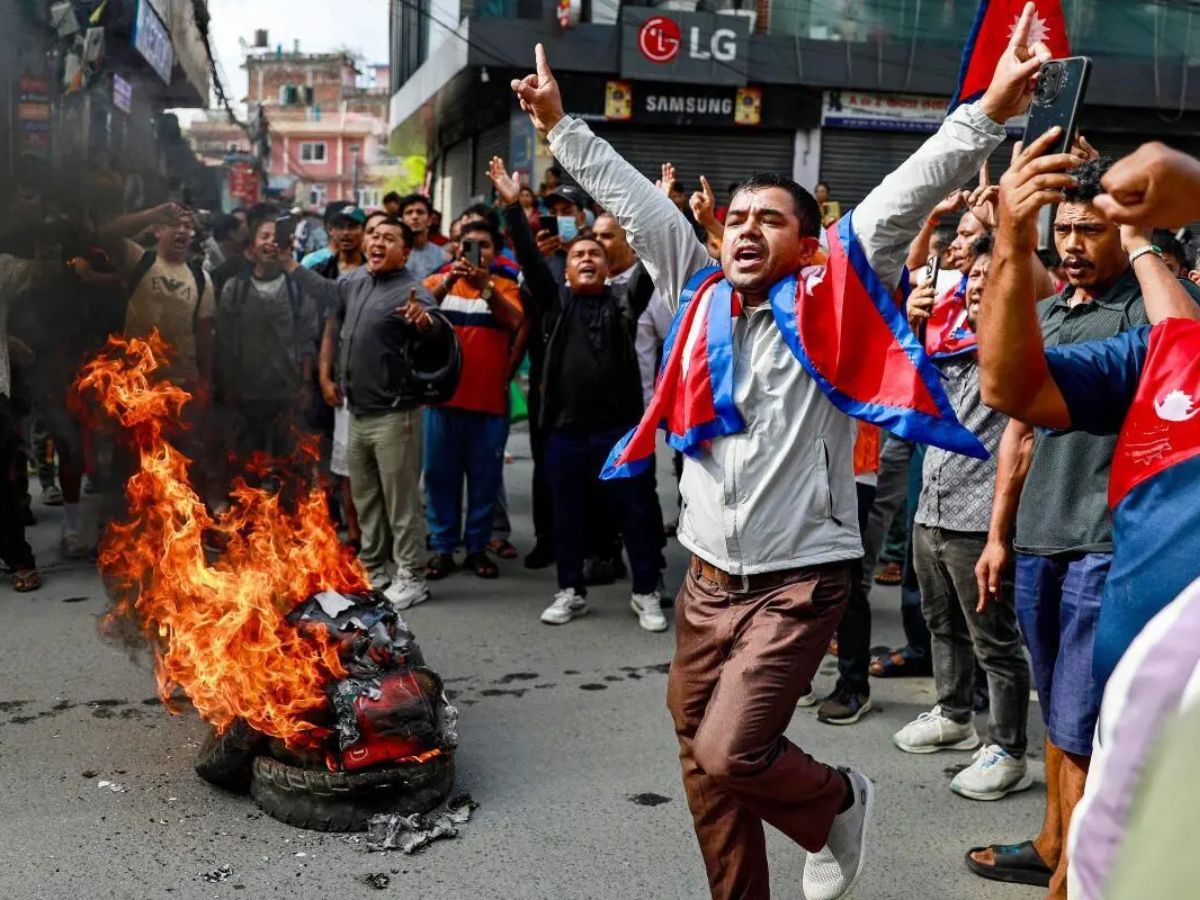
Leaked USAID work plan outlines a $4.3 million Nepal democracy program aimed at backing “catalytic” civic leaders [Photo: X]
New Delhi: A leaked 2019–2020 work plan for a US-funded democracy program in Nepal has revealed a strategic blueprint to promote a specific set of “catalytic” civic leaders and young reformists to reshape the country’s political landscape. The $4.3 million “Niti Sambad” Policy Dialogue project, implemented by the Consortium for Elections and Political Processes Strengthening and funded by USAID, outlines extensive interventions in Nepal’s federal transition.
While a recent report by The Sunday Guardian examined the scope, funding structure and operational framework of the US-backed “Niti Sambad” programme, it did not publicly identify specific individuals linked to the initiative. However, the internal work plan reviewed separately names particular figures targeted for engagement under the programme’s “catalytic leadership” strategy.
The work plan identifies a group of “catalytic civic leaders” whose influence the program sought to support in order to improve Nepal’s social and political environment. Most notable among them are Balen Shah, identified as a leader to be supported by the program. Shah, then a popular cultural figure, has since risen to become the Mayor of Kathmandu. Rabi Lamichhane is named as a key civic leader. Lamichhane transitioned from a high-profile media career to founding the Rastriya Swatantra Party, becoming a major force in Nepali politics. Sagar Dhakal and Sudan Gurung are also listed as individuals the program intended to support in its efforts to empower new political voices. Ujwal Thapa, the late founder of the Bibeksheel Nepali party, was also categorized as a catalytic leader.
The document details a “Generation Next” strategy to cultivate emerging leaders within established parties to act as “agents of change.” Gagan Thapa and Bishwa Prakash Sharma, both prominent figures in the Nepali Congress party, are described as “prominent young reformists” gaining popularity. The plan suggests using their visibility to demonstrate the capacity of young leaders to rise to senior party ranks.
The mention of these individuals is tied to specific programmatic interventions outlined in the work plan. Among these is a Youth Leadership Program, described as a two-module training course implemented by a local partner to build a community of youth peacebuilders and leaders. The plan also proposed the creation of a Generation Next Parliamentary Forum, a new platform for 25 to 30 young and emerging Members of Parliament to act as “agents of change.” In addition, a Youth Policy Forum was envisaged as a multiparty group of 40 to 45 leaders from political parties and civil society representatives tasked with developing policy briefs, including one focused on “Youth Unemployment.”
The programme further included a Social Media School training initiative for national partner parties aimed at strengthening digital outreach and strategic communication capabilities. The plan notes that youth are often excluded from leadership in Nepal. By supporting these “catalytic” figures and creating structured forums and training platforms, the program intended to form new working relationships that could bypass traditional, hierarchical decision-making processes.
To understand the political situation of marginalized groups, the program sought direct connections with minority representatives including Upendra Yadav, Mahanta Thakur, CK Raut and Ang Kaji Sherpa. Activists Ranju Darshana and Radha Paudel were identified for active support to improve the “female-friendly social environment” in Nepal.
